CW Skimmer

CW Skimmer is a popular amateur radio software program used for decoding Morse code signals on the HF bands. The program is widely used by ham radio operators, DX chasers, and contest stations because it can monitor and decode many CW signals at the same time. Unlike traditional Morse code listening, CW Skimmer displays signals visually on a waterfall screen and automatically shows callsigns as they appear on the band.

The software works especially well with SDR radios and modern HF transceivers. Many amateur radio operators connect CW Skimmer to radios such as the Icom IC-7300, IC-7610, FlexRadio systems, SDRplay receivers, and RTL-SDR dongles. When connected to a software defined radio, CW Skimmer can monitor a large section of the amateur radio band and decode multiple Morse code transmissions simultaneously.

One of the main features of CW Skimmer is its real-time waterfall display. Signals appear as visible traces on the screen, allowing operators to quickly find active stations. Users can click directly on a signal to tune their radio to that frequency. This makes CW contesting and DX hunting much faster and easier compared to manually tuning across the band.

CW Skimmer also includes advanced DSP filtering and automatic Morse code decoding technology. The program can identify callsigns, display signal strength, filter background noise, and improve weak signal readability. Many operators use the software together with amateur radio logging programs and DX cluster networks to track stations around the world.

The program is well known for its connection to the Reverse Beacon Network. Thousands of CW signals are automatically uploaded by monitoring stations using CW Skimmer. This allows amateur radio operators to instantly check where their signal is being heard and how strong it is on different HF bands around the world.

CW Skimmer is especially popular during major amateur radio contests because it helps operators quickly identify CQ stations and multipliers. Contest stations often use the software to improve band awareness and increase operating efficiency during events such as CQ World Wide DX Contest and ARRL contests.

CW Skimmer is commercial Windows software created by amateur radio operator Alex Shovkoplyas VE3NEA. A free trial version is available, and the program remains one of the most widely used Morse code decoder applications in amateur radio today.

I have made contact with Alex a few times, and he was very responsive. I have done a short video below showing how I went installing it and using it. The website is at https://dxatlas.com/cwskimmer/

While at this website, you can see a lot of other programs he has written, most are free.


If you have enjoyed this read, here are a few more you may enjoy:

  • ADIF Master
    ADIF Master is a popular amateur radio logging software tool used for editing and managing ADIF log files. ADIF stands for Amateur Data Interchange Format, which is the worldwide standard used by ham radio operators to share QSO log information between different logging programs and online logbook services.…
  • BlueDV Windows 10 GD-77
    I found it hard to find useful information on how to run the OpenGD-77 hotpot mode with Windows 10. At the time of writing this, there is a lot about this topic using a pistar and even android or ISO, but not much with Windows 10. This is my experence with BlueDV and Open GD-77 using a Windows 10 PC.…
  • CW Skimmer
    CW Skimmer is a popular amateur radio software program used for decoding Morse code signals on the HF bands. The program is widely used by ham radio operators, DX chasers, and contest stations because it can monitor and decode many CW signals at the same time. Unlike traditional…
  • DudeStar
    Here is a free windows program that will connect your PC to: DMR Yaesu Fusion DStar M17 P25 NXDN You can do all this without needing to purchase a radio. I prefer to use a radio, however I thought I would put this review together to help others…
  • EchoLink CQ
    I’ve been using EchoLink well before smartphones where the only way I knew how to connect to a different station was via the radio. The internet wasn’t as extensive as it is now and you had to dial the node you wanted via the radio. You can still…
  • Flrig
    Flrig is a transceiver control program designed to be used either stand alone or as an adjunct to fldigi (see my review on this). The supported transceivers all have some degree of CAT. The flrig user interface changes to accommodate the degree of CAT support available for the…
  • GD-77 Won’t connect to PC
    I have been using my Radioddity now for some years and love it.  Though upgrading this to the OpenGD77 opened a whole new world and it gets better all the time. One issue I had for a period was not being able to connect to it via my…
  • HamClock
    HamClock has always fascinated me, as it seems such an amazing program specifically set up for Amateur Radio. I have seen countless videos on it but the draw back was always needing to have a Raspberry Pi. While I am not afraid to get one, and learn how…
  • Iphone won’t download photos
    I get the “Device is unreachable” Error message when trying to import media from iPhone to Windows 10 PC. …
  • NanoVNA H4 USB Control to PC
    If you haven’t seen my previous blog on the NanoVNA Analyser, then I suggest you look at that first before reading this blog. This one will talk about how to connect your NanoVNA to your PC via the USB cable, so I am assuming you know the basics…

ADIF Master

ADIF Master is a popular amateur radio logging software tool used for editing and managing ADIF log files. ADIF stands for Amateur Data Interchange Format, which is the worldwide standard used by ham radio operators to share QSO log information between different logging programs and online logbook services. Many amateur radio enthusiasts use ADIF Master to organise contacts, repair corrupted log files, and prepare logs for upload to systems such as Logbook of The World, QRZ, Club Log, and eQSL.

The software is designed mainly as an ADIF editor rather than a full live logging program. One of the reasons ADIF Master is widely used in the amateur radio community is because of its simple spreadsheet-style layout. The rows and columns make it easy to edit callsigns, frequencies, modes, signal reports, dates, times, DXCC information, and other ham radio logging details quickly and easily.

ADIF Master includes many useful features for amateur radio operators. It can open, edit, merge, sort, filter, and convert ADIF files from different logging software programs. The software can also import Cabrillo contest logs and convert older log formats into modern ADIF files. This makes it very useful for contest operators, portable activators, DX hunters, and digital mode users.

Many radio amateurs use ADIF Master for cleaning up FT8 and FT4 logs created by WSJT-X or other digital mode software such as what I show you in the video, my excel log book. It is also commonly used to remove duplicate contacts, correct incorrect time entries, fix formatting problems, and prepare logs for awards and confirmations. The software supports modern ADIF standards and works well with current amateur radio digital modes.

Another advantage of ADIF Master is that it is lightweight and easy to run on most Windows computers, including Windows 10 and Windows 11 systems. Because the program is small and portable, many ham radio operators keep a copy on a USB drive or shack computer for quick log maintenance and backup work.

ADIF Master is especially helpful for amateur radio operators who regularly exchange log files between different ham radio programs. It provides a fast and simple way to manage amateur radio contacts while keeping logs accurate and compatible with modern logging systems and online amateur radio databases.


If you enjoyed this read, here are some more you may be interested in:

  • USB Device Error PL2303HXA
    I went into the device manager and found the error, my cable no longer worked. This same issue happened to a USB Card reader also.…
  • ProScan and ProScan Client
    I recently started using ProScan after years of using FreeScan. I have always enjoyed using FreeScan as it is easy to setup, I can download outputs from the software, and the main reason “it works”. However ProScan seems to be more graphical and has different features also.…
  • ProScan and ProScan Client Update
    I recently started using ProScan after years of using FreeScan. I have always enjoyed using FreeScan as it is easy to setup, I can download outputs from the software, and the main reason “it works”. However ProScan seems to be more graphical and has different features also.…
  • Iphone won’t download photos
    I get the “Device is unreachable” Error message when trying to import media from iPhone to Windows 10 PC. …
  • BlueDV Windows 10 GD-77
    I found it hard to find useful information on how to run the OpenGD-77 hotpot mode with Windows 10. At the time of writing this, there is a lot about this topic using a pistar and even android or ISO, but not much with Windows 10. This is my experence with BlueDV and Open GD-77 using a Windows 10 PC.…
  • Software Defined Radio (SDR)
    If you don’t have one of the latest and greatest expensive scanners, you will struggle to listen to a lot of transmissions. While there is still a lot of Analogue transmissions today, even a lot still on AM especially when it comes to Aviation, however…
  • Treehouse
    An unusual name, but a catchy name no less, just like Peanut that was written by the same person, David PA7LIM. If you like Peanut, then you will like this project also. This project, like Peanut, includes some amazing coding and thinking.…
  • Welle.io
    Welle.io is a DAB and DAB+ software defined radio (SDR). It runs on Windows, Linux and embedded devices like the Raspberry Pi 2 and 3. You can find the program and where to download it from their website. Using the Software With all these things,…
  • DudeStar
    Here is a free windows program that will connect your PC to: DMR Yaesu Fusion DStar M17 P25 NXDN You can do all this without needing to purchase a radio. I prefer to use a radio, however I thought I would put this review together…

  • GD-77 Won’t connect to PC
    I have been using my Radioddity now for some years and love it.  Though upgrading this to the OpenGD77 opened a whole new world and it gets better all the time. One issue I had for a period was not being able to connect to…
  • NetTime
    When using digital over the radio, it is particularly important you have the correct time. Even a second out will stop you from making contacts. I relied on Windows to update the time and got an email from a helpful amateur telling me my time…
  • EchoLink CQ
    I’ve been using EchoLink well before smartphones where the only way I knew how to connect to a different station was via the radio. The internet wasn’t as extensive as it is now and you had to dial the node you wanted via the radio.…
  • VARA – VARAC
    Ever heard this sound on HF / VHF / UHF? I know I have more and more recently. After a bit of research, someone told me it was VARAC. https://www.varac-hamradio.com/ As I understand it, the project started with Irad Deutsch 4Z1AC. It is free of…
  • Flrig
    Flrig is a transceiver control program designed to be used either stand alone or as an adjunct to fldigi (see my review on this). The supported transceivers all have some degree of CAT. The flrig user interface changes to accommodate the degree of CAT support…
  • NanoVNA H4 USB Control to PC
    If you haven’t seen my previous blog on the NanoVNA Analyser, then I suggest you look at that first before reading this blog. This one will talk about how to connect your NanoVNA to your PC via the USB cable, so I am assuming you…

15 Metre band

The 15 metre band is one of the most popular HF amateur radio bands for long-distance communication, offering an excellent balance between reliability and worldwide reach.

Frequency Range

The standard frequency range for the 15m band is 21.000 MHz to 21.450 MHz. Within this range, different segments are commonly used for specific modes: CW (Morse code), digital modes like FT8 cluster around 21.074 MHz, and SSB voice communications are usually active above 21.150 MHz. These frequency allocations make it easy for operators to find activity depending on their preferred operating mode. Check your area as this is Australia settings.

Set Frequencies

On the lower end of the band, CW (Morse code) activity is concentrated but they can be anywhere within the band.

For digital modes, there are a few very well-known frequencies. The most popular is 21.074 MHz, which is the standard calling frequency for FT8, one of the most widely used weak-signal digital modes. Just above that, around 21.090–21.100 MHz, you’ll find modes like FT4, PSK31, and other digital activity depending on band conditions and operator preference.

In the upper portion of the band, SSB voice communications dominate. A widely recognised DX calling frequency is 21.300 MHz, where stations often call CQ looking for international contacts. General SSB ragchewing and contesting typically take place between 21.150 and 21.450 MHz, with activity spreading out depending on how busy the band is.

There are also a few special-purpose or informal gathering spots. For example, 21.360 MHz is sometimes used by international nets, and various maritime or traveller nets may appear in the upper SSB segment. During contests, however, these informal frequencies can become very busy or shift as operators spread across the band.

Overall, these set frequencies on 15 metres act like meeting points:

  • 21.000–21.450 MHz → CW DX activity
  • 21.074 MHz → FT8 digital frequency
  • 21.070 – 21.150 MHz → other digital modes
  • 21.300 MHz → SSB DX calling frequency
  • 21.150–21.450 MHz → general SSB voice

Knowing these frequencies helps you quickly find activity and understand what to expect when tuning across the 15m band.

Ionosphere

The 15 metre band works primarily through ionospheric propagation, specifically via the F layer of the ionosphere. Signals transmitted on 21 MHz travel upward and are refracted back to Earth, allowing DX (long-distance communication) over thousands of kilometres. This band is highly dependent on solar activity, especially the sunspot cycle. During periods of high solar activity, the maximum usable frequency (MUF) increases, allowing 15m signals to propagate globally with strong signals. During low solar activity, the band can appear quiet or “closed,” especially for long-distance paths.

What can you expect

Operators can expect fast-changing propagation conditions on 15 metres. When the band is open, signals are often strong, with low noise compared to lower HF bands like 40m or 80m. This makes it ideal for DX contacts, contesting, and digital modes. However, when the band is closed, there may be little to no activity except for occasional short skip (regional contacts) or sporadic openings. Unlike lower bands, 15m does not usually support reliable nighttime propagation, as the ionosphere loses its ability to refract higher frequencies after sunset.

Antennas

Common 15 metre antennas include dipole antennas, vertical antennas, and directional beam antennas (Yagi). A simple half-wave dipole for 15m is about 7 metres long (total length), making it relatively compact and easy to install. Vertical antennas are popular for low-angle radiation, which is ideal for long-distance DX. More advanced operators often use Yagi beams mounted on towers, which provide gain and directionality, significantly improving performance on this band.

Performance

The interaction with ionospheric layers is key to understanding 15m performance. The F1 and F2 layers are responsible for most long-distance propagation, particularly during the daytime. The D layer, which forms during daylight hours, can absorb lower-frequency signals but has less effect on 15m, helping keep noise levels lower. Occasionally, sporadic E propagation can also open the band, especially in summer, allowing unexpected medium-distance contacts even when the F layer is weak.

Band opens

The 15 metre band is generally open during daylight hours, especially from mid-morning to late afternoon. Peak performance often occurs around local noon, when the ionosphere is most ionised. Openings are more frequent during solar maximum years, and less reliable during solar minimum. The band typically closes after sunset, although limited openings can sometimes occur around greyline (sunrise and sunset), offering unique DX opportunities.

Summary

Overall, the 15 metre amateur radio band is valued for its strong DX capability, low noise levels, and relatively small antenna size requirements. It is an excellent band for both beginners and experienced operators who want to explore worldwide HF communication, especially during favourable solar conditions.


  • Solar Data & Propagation
    There are several website that tell you what bands are open in your area. Most people paste them on their QRZ page, but there are some examples below that update every hour. You can see more on their webpage https://www.hamqsl.com/solar.html where all you have to do is paste the code and put on your website.…
  • NetTime
    When using digital over the radio, it is particularly important you have the correct time. Even a second out will stop you from making contacts. I relied on Windows to update the time and got an email from a helpful amateur telling me my time was out. You can see below it wasn’t out by…
  • Barefoot
    I’ve heard several amateur radio operators say they are running a Barefoot setup. But what does it mean? It has nothing to do with what is or is not on your feet. But simply means transmitting without an amplifier. While power helps, the best thing you can do to fix your signal is your antenna.…
  • Diamond Antenna W-8010 and expanding it to all bands
    I purchased the Diamond W series W8010 antenna and quickly put it together. The instructions were a bit hard to read as it was exceedingly small. However, I found someone who did a video on how to put it together. (this is not my video) To me, an antenna is far more important than the…
  • NanoVNA-H 4 Antenna Analyser
    The Nano VNA-H 4 is my new toy that has just arrived after purchasing via Banggood. This Antenna Analyser is a complicated device, but doesn’t have to be, and can be a powerful tool for the Amateur Radio hobbyist. Charging the device Your NanoVNA should come with a USB cord. To charge it, simply plug…
  • DXHeat.com
    DXHeat.com is a great website that can update you the current conditions on each band. The website has filtering of incoming DX Spots which can be displayed instantly using great graphical tools. From the main landing page dxheat.com you can do a search by call sign or open DX Cluster. You can also scroll down…
  • VARA – VARAC
    Ever heard this sound on HF / VHF / UHF? I know I have more and more recently. After a bit of research, someone told me it was VARAC. https://www.varac-hamradio.com/ As I understand it, the project started with Irad Deutsch 4Z1AC. It is free of charge for amateur radio operators. This software provides text base…
  • Converting dB to S-metre
    The S-meter is an instrument on most radio receivers that measures the strength of the signal being received. It uses a unit: the S-point. HF radios usually have a needle scale, whereas other bands often have LEDs displaying the S-Points. S-Points is the common method of measuring signal strength between operators, however many programs like…
  • DNR – Digital Noise Reduction
    As per the Yaesu FT-710 manual, the Digital Noise Reduction (DNR) system is designed to reduce the level of ambient noise found on the HF and 50 MHz bands. The (DNR) system is especially effective during SSB operation. Any of 15 different noise-reduction algorithms can be selected; each of these algorithms was created to deal…
  • Portable HF all band Antenna and Mount
    I recently got the Radioddity M916 Heavy duty antenna magnetic mound with the Radioditty HF-008 all band portable antenna. I had always wanted to use HF more while camping or going on adventures around Australia (see our adventures page if you are interested), and now I am a step closer to doing that. This quick…

AOR AR1000XLT Fix

The AOR AR1000XLT is a popular wideband scanner receiver that became well known among radio enthusiasts, amateur radio operators, aviation listeners, and shortwave hobbyists during the late 1980s and early 1990s. The scanner was designed to receive a massive range of radio frequencies, making it one of the most versatile handheld scanners available at the time. Many people used the AR1000XLT for aircraft monitoring, emergency service listening, marine radio, amateur radio, and shortwave reception.

One of the biggest features of the AOR AR1000XLT scanner is its extremely wide frequency coverage. The receiver can monitor frequencies from around 500 kHz up to 1300 MHz depending on the model version. This allows users to listen to HF shortwave bands, VHF communications, UHF signals, FM broadcast radio, aircraft radio channels, marine frequencies, and amateur radio bands all in one portable device. The scanner supports AM, FM, and Wide FM modes, giving users flexibility across different radio services.

The AR1000XLT scanner became popular because of its advanced features for the time. It included 1000 memory channels, fast scanning speeds, search banks, and strong receiver sensitivity. Radio hobbyists appreciated how quickly it could scan channels and search for unknown frequencies. Many users connected external antennas to improve reception for long-distance radio monitoring and weak signal listening.

Another reason the AOR AR1000XLT gained popularity was its compact handheld design. The radio was portable, battery powered, and easy to carry for field use. Aviation enthusiasts often used it for airband listening at airports, while amateur radio operators used it for monitoring repeaters and HF communications. Shortwave listeners also enjoyed using the scanner to explore international radio stations and utility frequencies.

Although the AOR AR1000XLT is still respected by vintage scanner collectors and radio hobbyists today, it does have limitations compared to modern digital scanners. The radio does not support modern digital communication modes such as P25, DMR, NXDN, or trunked radio systems. Because many emergency services now use digital or encrypted communications, the scanner is mainly used today for analog radio monitoring, aircraft listening, amateur radio, marine radio, and shortwave scanning.

Even many years after its release, the AOR AR1000XLT remains a well-known classic scanner receiver in the radio hobby community. Its wide frequency coverage, strong analog performance, and portable design helped make it one of the most recognised handheld scanners of its era.

My keyboard on the scanner stopped working and even though this is an old scanner, I wanted to get it working mainly for old time sake. I knew if I could get the keyboard out, I could clean it and hopefully get it working. But see in my video as to how I went and what I discovered.


  • 10 metres 28.490
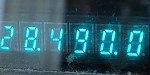
    On the 10-metre band, 28.490 is the unofficial calling frequency for Australia and New Zealand. This is interesting as the Band plans state it is 28.390 as the recommended intra-VK calling frequency. That said, 28.490 is more recognised as the unofficial calling frequency down under. Most amateurs down under will listen to 28.490 on ten…
  • 15 Metre band
    The 15 metre band is one of the most popular HF amateur radio bands for long-distance communication, offering an excellent balance between reliability and worldwide reach. Frequency Range The standard frequency range for the 15m band is 21.000 MHz to 21.450 MHz. Within this range, different segments are commonly used for specific modes: CW (Morse…
  • 160 Meters Band
    160 meters band is known as the “Gentlemen’s band”. It is right next to the AM commercial band, known as medium wave. The 160-meter band is the radio frequencies between 1.8 and 2 MHz. For many decades it was the lowest radio frequency band allocated for use by amateur radio, before the 630 and 2200…
  • 6m and TV Channel 0
    Prior to 1989, it was illegal to operate between 50 MHz and 52 MHz in Australia. It was a real pain as that was where all the action was when the band opened up. However, after many requests from the WIA to the DoTC back in 1989, it was agreed that this section of the…
  • ADIF Master
    ADIF Master is a popular amateur radio logging software tool used for editing and managing ADIF log files. ADIF stands for Amateur Data Interchange Format, which is the worldwide standard used by ham radio operators to share QSO log information between different logging programs and online logbook services. Many amateur radio enthusiasts use ADIF Master…
  • Amateur Radio Nets
    A list of Radio nets we have gathered from web pages around the world, as well as friends etc.…
  • Amateur TV
    Amateur Radio Television (ATV), often called “ham TV,” is a niche part of amateur television where licensed radio operators transmit live video and audio over radio frequencies instead of traditional broadcast networks. It is essentially an extension of amateur (ham) radio, using higher bandwidth signals to carry moving images, typically on UHF and microwave bands.…
  • Antennas
    Amateur radio operators use many different antenna types, each designed for specific bands, space limits, and operating goals. Here’s a clear overview of the most common ones and why hams choose them. Wire Antennas These are some of the simplest and most popular antennas that include: Dipole Antennas End-fed wire Inverted-V Vertical antennas Vertical antennas…
  • Anytone 778UV Key Assignment
    Key Assignment For some reason, not all the key assignment options are in the manual and after a bit of searching, I found no complete list.  Hopefully this below helps you in selecting your Key Assignments on the main unit P1-P6 keys, as well as on the microphone PA-PD keys. I have listed them in…
  • Anytone AT-778UV
    Overview The Anytone AT-778UV is a dual-band VHF/UHF mobile transceiver designed for amateur radio operators. It operates on the 136–174 MHz (VHF) and 400–490 MHz (UHF) bands, offering reliable two-way communication for both ham radio and commercial use (depending on firmware version). Power Output This transceiver provides selectable power levels — typically 25 W, 15…
  • AOR AR1000XLT Fix
    The AOR AR1000XLT is a popular wideband scanner receiver that became well known among radio enthusiasts, amateur radio operators, aviation listeners, and shortwave hobbyists during the late 1980s and early 1990s. The scanner was designed to receive a massive range of radio frequencies, making it one of the most versatile handheld scanners available at the…
  • Australian DMR Repeaters
    There are several DMR networks around the world, and more and more start all the time. The Australian DMR network currently covers the entire country and is for Australian residents only. It can often be hard to find which DMR repeaters are online, offline and where they are, especially if you travel a bit like…
  • Band Stacking
    Have you ever tried Band Stacking before? This is where you have three options per band every time you go to that band. For example, you may have one set up on SSB, one on CW and another on Data, all on the same band. You can easily switch between them all. For example, if…

Maximum Usable Frequency (MUF) in HF Radio Propagation

Maximum Usable Frequency (MUF) is an important concept in HF radio propagation and amateur radio communications. It refers to the highest frequency that can be used for reliable communication between two locations by reflecting off the ionosphere. If a radio signal is transmitted above the MUF, it will not return to Earth and will instead pass through the ionosphere into space, making long-distance communication impossible on that frequency.

In high frequency (HF) bands between 3 MHz and 30 MHz, radio signals rely on the ionosphere to travel beyond the horizon. The ionosphere contains charged particles that can refract radio waves back toward the Earth, enabling long-distance or DX communication. Lower HF frequencies tend to bend more easily, while higher frequencies require stronger ionisation to reflect. The MUF represents the cutoff point where signals stop being reflected and begin escaping into space.

The MUF changes constantly due to several environmental factors. Solar activity, including sunspots and solar radiation, has a major influence, with higher solar activity increasing ionisation and raising the MUF. The time of day also plays a role, with daytime conditions generally producing a higher MUF due to stronger ionisation, while nighttime conditions lower the MUF as the ionosphere weakens. Additionally, the distance between stations (radio path length) affects the MUF, with longer paths often requiring higher frequencies to achieve successful propagation.

Another important concept related to MUF is the Lowest Usable Frequency (LUF). While MUF defines the upper limit, LUF defines the lowest frequency that can be used effectively without excessive signal loss or noise. The usable frequency range for communication lies between these two limits, often referred to as the optimum working frequency range. Operators typically choose a frequency slightly below the MUF for the most reliable performance.

Understanding Maximum Usable Frequency (MUF) is essential for amateur radio operators, particularly those interested in HF DXing, contesting, and propagation prediction. By knowing the current MUF, operators can select the most effective bands, such as 20 metres, 17 metres, or 15 metres, and better understand why certain bands open or close throughout the day.

In summary, MUF is the highest frequency that will be reflected by the ionosphere for a given path and time, making it a critical factor in successful long-distance HF radio communication.

This one is for your Shack including all bands

How do you check MUF in real time?

Checking the Maximum Usable Frequency (MUF) in real time is something many amateur radio operators do to decide which HF bands are open for DX communication. There are several easy ways to monitor live MUF and ionospheric conditions using online tools and software.

Online MUF Maps and Propagation Tools

One of the most popular methods is using real-time propagation websites. These display global or regional MUF based on ionospheric data (foF2 measurements).

Common tools:

  • Space Weather / Propagation sites (e.g. NOAA, SpaceWeatherLive)
  • VOACAP Online (predicts HF propagation paths)
  • DXMaps / PSKReporter (shows real contacts happening live)

Ionosonde Data (foF2)

A more technical way to check MUF is by looking at ionosonde readings, specifically the foF2 value.

  • foF2 = critical frequency of the F2 layer
  • MUF is roughly calculated from this value depending on path angle

Using SDR to Observe Band Openings

With your RTL-SDR + SDR# setup, you can actually see MUF effects:

  • Tune across HF bands
  • Watch the waterfall display
  • Look for signals appearing/disappearing

Beacon and Reverse Beacon Networks

Another real-time method is using beacon networks:

  • NCDXF/IARU beacons transmit on multiple HF bands
  • Reverse Beacon Network (RBN) shows who is hearing what
Feel free to print this out for your shack

Hopefully you have enjoyed reading this. If so, please like and subscribe and feel free to comment below.

Here are some other reads you might enjoy.

  • CW Skimmer
    CW Skimmer is a popular amateur radio software program used for decoding Morse code signals on the HF bands. The program is widely used by ham radio operators, DX chasers, and contest stations because it can monitor and decode many CW signals at the same time. Unlike traditional Morse code listening, CW Skimmer displays signals…
  • ADIF Master
    ADIF Master is a popular amateur radio logging software tool used for editing and managing ADIF log files. ADIF stands for Amateur Data Interchange Format, which is the worldwide standard used by ham radio operators to share QSO log information between different logging programs and online logbook services. Many amateur radio enthusiasts use ADIF Master…
  • 15 Metre band
    The 15 metre band is one of the most popular HF amateur radio bands for long-distance communication, offering an excellent balance between reliability and worldwide reach. Frequency Range The standard frequency range for the 15m band is 21.000 MHz to 21.450 MHz. Within this range, different segments are commonly used for specific modes: CW (Morse…
  • AOR AR1000XLT Fix
    The AOR AR1000XLT is a popular wideband scanner receiver that became well known among radio enthusiasts, amateur radio operators, aviation listeners, and shortwave hobbyists during the late 1980s and early 1990s. The scanner was designed to receive a massive range of radio frequencies, making it one of the most versatile handheld scanners available at the…
  • Maximum Usable Frequency (MUF) in HF Radio Propagation
    Maximum Usable Frequency (MUF) is an important concept in HF radio propagation and amateur radio communications. It refers to the highest frequency that can be used for reliable communication between two locations by reflecting off the ionosphere. If a radio signal is transmitted above the MUF, it will not return to Earth and will instead…
  • World Amateur Radio Day
    World Amateur Radio Day is celebrated every year on April 18, marking the founding of the International Amateur Radio Union (IARU) in 1925. The organisation was established in Paris when amateur radio societies from around the world joined together to represent radio operators and protect access to important radio frequencies. This date is now recognised…
  • Amateur TV
    Amateur Radio Television (ATV), often called “ham TV,” is a niche part of amateur television where licensed radio operators transmit live video and audio over radio frequencies instead of traditional broadcast networks. It is essentially an extension of amateur (ham) radio, using higher bandwidth signals to carry moving images, typically on UHF and microwave bands.…
  • Baofeng UV-5R Mini
    The Baofeng UV-5R Mini handheld radio is a popular and affordable dual-band amateur radio transceiver widely used by beginners and experienced ham radio operators. Designed as a compact version of the original UV-5R, this small and lightweight VHF/UHF walkie talkie offers solid performance for everyday communication, making it a common choice for those getting started…
  • Lightning Storm & HF Radio
    HF radio and lightning storms are closely connected because lightning creates strong radio frequency interference that affects HF radio communication (3–30 MHz). High Frequency radio is commonly used for amateur radio (ham radio), marine radio, aviation HF communication, emergency communications, and long-distance shortwave listening. HF signals travel long distances by reflecting off the ionosphere, which…
  • OpenHamClock
    OpenHamClock is an open-source amateur radio dashboard designed as a modern successor to the original HamClock used by radio amateurs worldwide. It provides a real-time visual display of essential ham radio propagation data, world clocks, DX activity, and space weather information in a single, easy-to-read interface. Built with modern web technology, OpenHamClock runs in any…
  • Radtel P8 PoC radio
    The Radtel P8 PoC radio is a Push-to-Talk over Cellular (PoC) device that looks like a traditional walkie-talkie but communicates using 4G/LTE mobile networks instead of UHF/VHF radio frequencies. This means its effective range is not limited to a few kilometres like standard two-way radios, but instead depends on cellular coverage, allowing communication across cities,…

World Amateur Radio Day

World Amateur Radio Day is celebrated every year on April 18, marking the founding of the International Amateur Radio Union (IARU) in 1925. The organisation was established in Paris when amateur radio societies from around the world joined together to represent radio operators and protect access to important radio frequencies. This date is now recognised globally as the “birthday” of organised amateur radio.

World Amateur Radio Day is important because it highlights the role of amateur radio (ham radio) in emergency communication, especially during natural disasters when internet and mobile phone networks fail. Amateur radio operators are often able to provide reliable communication using simple equipment and radio frequencies, making them a critical part of disaster response and community safety.

The day also celebrates ham radio communication, radio technology, and experimentation. Amateur radio has played a major role in advancing wireless communication, and many operators enjoy building antennas, testing radio equipment, and making long-distance (DX) contacts around the world.

For many people searching online, World Amateur Radio Day is also about the global ham radio community. It brings together licensed operators, hobbyists, and clubs who share an interest in radio communication, electronics, and learning new skills. Each year, the International Amateur Radio Union often promotes a theme focused on innovation, youth in amateur radio, or emergency preparedness.

In simple terms, World Amateur Radio Day is a celebration of ham radio history, global communication, and the importance of amateur radio operators in both everyday life and emergency situations.


If you enjoyed that read, here are some more you may enjoy:

  • Zastone D9000 Number Lock
    I purchased this radio from a friend, and it worked well. He hadn’t really used it, so I did a factory reset. This was a bit of a mistake, as it did a few things like turning everything to Chinese. I had to use my phone and google translate to decode it and get it…
  • Yaesu FT-620
    The Yaesu FT-620 (and its updated version, the FT-620B) is a vintage amateur radio transceiver designed specifically for the 6-meter band (50–54 MHz). Produced in the 1970s, it offers support for AM, CW, and SSB (USB/LSB) modes, making it a versatile rig for its time, especially during the era when 6 meters was gaining popularity for both local and DX communications. It…
  • Yaesu FT-225R
    The 2m band has always been an interesting one for me. It used to be swamped with pager interference, but it actually is a great band. Inversion allows your signal to travel long distances at times, especially on SSB. This video is about the Yaesu FT-225R 2m all band radio. While the radio is huge,…
  • Yaesu 857D
    A great radio that does all bands up to 70cm. Using all modes also you can talk on SSB on VHF and UHF. If you haven’t done SSB on 2m and 70cm, then I’d encourage you to do so. it is a lot of fun. This radio will do it and so will a lot…
  • World Amateur Radio Day
    World Amateur Radio Day is celebrated every year on April 18, marking the founding of the International Amateur Radio Union (IARU) in 1925. The organisation was established in Paris when amateur radio societies from around the world joined together to represent radio operators and protect access to important radio frequencies. This date is now recognised…
  • WizNet DMR
    The WizNet DMR app is still in beta testing, and at the time of writing this, you have to not only have a currently have a licence as an Amateur Radio Operator, but approved to be part of the beta testing group. You can do this by googling the web site, submitt a few details,…
  • What is an Antenna Coupler
    An antenna coupler (also called an antenna tuner or matching network) is a device used in radio systems to ensure impedance matching between a transmitter and an antenna. Most transmitters are designed for a specific impedance, commonly 50 ohms, while antennas often vary depending on frequency and design. When the impedance is not matched, reflected…
  • What does this Antenna do?
    Have you ever had an antenna and forgotten what it is for? Maybe you have been given one and wasn’t told exactly what it was used for. I got given an antenna at at ham fest because it didn’t sell. Funny enough after I got it, many came to me very interested in it. I…
  • Welle.io
    Welle.io is a DAB and DAB+ software defined radio (SDR). It runs on Windows, Linux and embedded devices like the Raspberry Pi 2 and 3. You can find the program and where to download it from their website. Using the Software With all these things, the software is updated regularly. You can see on the…

Amateur TV

Amateur Radio Television (ATV), often called “ham TV,” is a niche part of amateur television where licensed radio operators transmit live video and audio over radio frequencies instead of traditional broadcast networks. It is essentially an extension of amateur (ham) radio, using higher bandwidth signals to carry moving images, typically on UHF and microwave bands. Unlike commercial TV, ATV is non-commercial and used for experimentation, hobby activity, and technical learning.

In Melbourne Australia, amateur radio TV activity is centred around the well-known VK3RTV system. This is a digital amateur television repeater that broadcasts across much of the metropolitan area, allowing operators to transmit and receive video signals. It operates continuously and uses modern digital TV standards (DVB-T2 HD), transmitting on 445.5 MHz. The system supports multiple input formats (such as DVB-S/S2 and DVB-T) and provides wide coverage across Melbourne and even towards Geelong.

Melbourne’s ATV community has a long history, with amateur television transmissions dating back to the late 1970s. Originally analogue, the system transitioned to digital broadcasting in the 2000s and was re-established in 2020 after a temporary shutdown. Today it is considered technically advanced, featuring multiplexed digital channels, HD video, and even internet-linked streaming to international amateur TV networks.

Activity in Melbourne ATV is typically community-driven. Enthusiasts participate in scheduled “net nights” (weekly on-air meetups), experimental broadcasts, and live video contacts between stations. Operators may transmit a wide range of content including technical demonstrations, hobby projects, model aircraft footage, or informal chats. Voice coordination is often done on separate 2meter FM frequency, 147.400 MHz, while video is transmitted through the ATV repeater.

Amateur TV is also known as High-Scan TV. A related but distinct mode is Slow-Scan Television, which is also used by amateur radio operators in Australia. Instead of live video, SSTV sends still images over radio, taking several seconds to minutes per picture. This mode is popular for long-distance (HF) communication and even space-related transmissions, complementing the faster “full-motion” ATV systems used locally in Melbourne.

Overall, amateur Radio TV in Melbourne is a small but technically rich hobby combining radio engineering, digital broadcasting, and experimentation. It operates outside mainstream media, relying on licensed operators, shared infrastructure like VK3RTV, and a collaborative community that keeps the technology evolving.

This view shows how I got involved, and found out how to reveive it with the help of people in this video. Although I only show one set top box, I actually have two, plus two screens, so I can receive channel 1 and 2 at the same time. These two channels are independent of each other in some ways, but transmit from the same site.

I really hope you enjoy this video, and it encourages you to this part of the hobby. Please put what comments or questions you have below as I will try to answer them. I am not an expert in this area at all, but still learning and hope to one day transmit onto VK3RTV. If you live away from Melbourne, you can still access it via Discord (see link on video) or via Youtube as shown in the video.

Thank you again to Peter, Steven and Clint for your your endless help.

Some good links are available here:
http://www.vk3rtv.com/
https://amateurradio.com.au/repeaters/vk3rtv
https://www.emdrc.com.au/datv-repeater-vk3rtv/

Have a look at my video for more info


Other Reads

If you enjoyed this article, here are some more you may be interested in:

  • Zastone D9000 Number Lock
    I purchased this radio from a friend, and it worked well. He hadn’t really used it, so I did a factory reset. This was a bit of a mistake, as it did a few things like turning everything to Chinese. I had to use my phone…
  • Yaesu FT-620
    The Yaesu FT-620 (and its updated version, the FT-620B) is a vintage amateur radio transceiver designed specifically for the 6-meter band (50–54 MHz). Produced in the 1970s, it offers support for AM, CW, and SSB (USB/LSB) modes, making it a versatile rig for its time, especially during the era when 6 meters was…
  • Yaesu FT-225R
    The 2m band has always been an interesting one for me. It used to be swamped with pager interference, but it actually is a great band. Inversion allows your signal to travel long distances at times, especially on SSB. This video is about the Yaesu FT-225R…
  • Yaesu 857D
    A great radio that does all bands up to 70cm. Using all modes also you can talk on SSB on VHF and UHF. If you haven’t done SSB on 2m and 70cm, then I’d encourage you to do so. it is a lot of fun. This…
  • World Amateur Radio Day
    World Amateur Radio Day is celebrated every year on April 18, marking the founding of the International Amateur Radio Union (IARU) in 1925. The organisation was established in Paris when amateur radio societies from around the world joined together to represent radio operators and protect access…
  • WizNet DMR
    The WizNet DMR app is still in beta testing, and at the time of writing this, you have to not only have a currently have a licence as an Amateur Radio Operator, but approved to be part of the beta testing group. You can do this…
  • What is an Antenna Coupler
    An antenna coupler (also called an antenna tuner or matching network) is a device used in radio systems to ensure impedance matching between a transmitter and an antenna. Most transmitters are designed for a specific impedance, commonly 50 ohms, while antennas often vary depending on frequency…
  • What does this Antenna do?
    Have you ever had an antenna and forgotten what it is for? Maybe you have been given one and wasn’t told exactly what it was used for. I got given an antenna at at ham fest because it didn’t sell. Funny enough after I got it,…
  • Welle.io
    Welle.io is a DAB and DAB+ software defined radio (SDR). It runs on Windows, Linux and embedded devices like the Raspberry Pi 2 and 3. You can find the program and where to download it from their website. Using the Software With all these things, the…
  • Welcome to the site
    Hi there from Down Under, Melbourne Australia. Thank you for visiting my radio web site. Below is what items by category is available on this web site. Thanks again for visiting. This web site is still being built, so don’t forget to Follow us to get…
  • VK3AHR Ron
    Today (20/06/25) I head Ron, VK3AHR, on the 7.100 40-meter net. I understand he ran this net for over 7 years, but hasn’t been able to for the last few weeks due to bad health. At 10am this morning he gave the group an announcement stating…
  • VARA – VARAC
    Ever heard this sound on HF / VHF / UHF? I know I have more and more recently. After a bit of research, someone told me it was VARAC. https://www.varac-hamradio.com/ As I understand it, the project started with Irad Deutsch 4Z1AC. It is free of charge…
  • Using an Android TV Box for Ham Radio
    If you want to get onto Digital Radio for less (way less) than $100, then you may be interested in this. I have Apple equipment, and therefore miss out on a lot of the testing apps that are only available on Android. There seem to be…
  • USB Device Error PL2303HXA
    I went into the device manager and found the error, my cable no longer worked. This same issue happened to a USB Card reader also.…
  • Upgrade to OpenGD77
    This page is just a help to friends I have spoke to who are interested in upgrading the Radioditty GD-77 to the OpenGD77 software. This is not my work, however I really do appreciate Roger and his team have done to put this together. I claim no responsibility if it breaks your radio, however I have not hear this happen now in some time. I am not an expert at all with OpenGD77, I have just put this together to help people who have asked me how to do it.…

Baofeng UV-5R Mini

The Baofeng UV-5R Mini handheld radio is a popular and affordable dual-band amateur radio transceiver widely used by beginners and experienced ham radio operators. Designed as a compact version of the original UV-5R, this small and lightweight VHF/UHF walkie talkie offers solid performance for everyday communication, making it a common choice for those getting started in amateur radio (ham radio).

The UV-5R Mini operates on both VHF (136–174 MHz) and UHF (400–520 MHz) frequencies, supporting communication on the 2 metre and 70 centimetre amateur bands. With a typical output power of around 5 watts, it is suitable for short to medium range communication, including simplex operation and repeater use. Many versions include features such as CTCSS and DCS tones, allowing access to repeaters and private channel setups.

This compact handheld radio includes a range of useful functions, such as 128 memory channels, a built-in FM broadcast radio receiver, VOX hands-free operation, and a small LED flashlight. Some newer UV-5R Mini models also support USB-C charging and Bluetooth programming, making them easier to configure using smartphone apps or software like CHIRP programming software on a computer.

Compared to the standard UV-5R, the Mini version is more portable and pocket-friendly, though it often comes with a smaller battery and display. Despite the reduced size, the RF performance is generally similar, making it a convenient option for portable use, hiking, or as a backup two-way radio.

The Baofeng UV-5R Mini is known for being a budget-friendly handheld transceiver, which is one of its biggest advantages. It provides access to amateur radio communication, repeater networks, and frequency scanning at a very low cost.

In Australia, the UV-5R Mini can be used legally for listening to radio frequencies, but transmitting requires an amateur radio licence issued by the ACMA. It is important to note that this radio is not approved for UHF CB (477 MHz) or commercial radio use, which are governed by different regulations.

In real-world use, the Baofeng UV-5R Mini typically achieves a range of 1 to 3 kilometres in urban environments, and up to 5 to 10 kilometres or more when using repeaters or operating from elevated locations. Performance can be significantly improved by upgrading to a better antenna or connecting the radio to an external base antenna.

Overall, the Baofeng UV-5R Mini dual-band handheld radio is a great entry-level option for those interested in ham radio communication, repeater operation, and portable VHF/UHF use. It is especially useful as a backup radio or learning tool.

Please comment if you have any thoughts.

If you go via this link, you will get a discount:
https://radioddity.refr.cc/bensangster then search for your item

Direct link here:


If you enjoyed this review, here are some more you may enjoy:

  • Anytone 778UV Key Assignment
    Key Assignment For some reason, not all the key assignment options are in the manual and after a bit of searching, I found no complete list.  Hopefully this below helps you in selecting your Key Assignments on the main unit P1-P6…
  • Anytone AT-778UV
    Overview The Anytone AT-778UV is a dual-band VHF/UHF mobile transceiver designed for amateur radio operators. It operates on the 136–174 MHz (VHF) and 400–490 MHz (UHF) bands, offering reliable two-way communication for both ham radio and commercial use (depending on firmware…
  • Baofeng GT-5R Pro
    The first thing I noticed after receiving the radio was the size of the radio. It is small yet not to small that it is hard to use. It fits comfortably in your hand. Not only is it physically small, the…
  • Baofeng K5 Plus Radio
    I managed to get one of these radios and was rather impressed with it and what it came with. Have a look what my box had in it. Some of the things I liked included: It is a Tri-Band radio which…
  • Baofeng Radios
    You could say every amateur radio operator knows about the Baofeng if they have been around long enough. Most have held one of their radios and lots have at least one. They have made a huge amount of radios. According to…
  • Baofeng UV-17R Plus Series Review
    I recently got my hands on a new Baofeng UV-17R Plus Series radio. It didn’t take long at all to arrive and was not expensive at all. People these days pay more for a UHF CB radio than a radio that…
  • Baofeng UV-5R Mini
    The Baofeng UV-5R Mini handheld radio is a popular and affordable dual-band amateur radio transceiver widely used by beginners and experienced ham radio operators. Designed as a compact version of the original UV-5R, this small and lightweight VHF/UHF walkie talkie offers…
  • Daiwa CN-460M Meter
    The Daiwa CN-460M is a small cross-needle meter displays both forward and reflected power for 2m and 70cm. It measures in ranges of 15/150 watts forward and 5/50 watts reflected. SO-239 jacks. It includes a mobile mounting bracket and meter illumination option if…
  • DNR – Digital Noise Reduction
    As per the Yaesu FT-710 manual, the Digital Noise Reduction (DNR) system is designed to reduce the level of ambient noise found on the HF and 50 MHz bands. The (DNR) system is especially effective during SSB operation. Any of 15…
  • HF Mobile Antenna CBL-561
    CBL-561 Review The new CBL-561 antenna is strong and light that is fit for mobile work, camping or remote radio use. I plan to use this on our next outback trip! This antenna supports a frequency range of 25-30MHz, covering both…
  • Hiroyasu IC-980 Pro
    I recently got my hands on the Hiroyasu IC-980 Pro dual band base radio. This is pronounced as “Hiro-Yasu”. When I say, got my hands on it, the unit is so small, you only need one hand really! This analogue radio…
  • Portable HF all band Antenna and Mount
    I recently got the Radioddity M916 Heavy duty antenna magnetic mound with the Radioditty HF-008 all band portable antenna. I had always wanted to use HF more while camping or going on adventures around Australia (see our adventures page if you…
  • Radioddity QT80
    The new QT80 radio by Radioddity is a fantastic radio and I have a lot of contacts on it already. QT60 Vs QT80 This is a QT80 model but there is also the QT60 model so what’s the difference? One thing…
  • Radioddity RA-UV712 Magnet Mount Antenna
    There are lots of duel band antennas available, but most required extra mounting brackets. These brackets often restrict you as to where you can mount the antenna on your car. One of my first mobile antennas for the car was a…
  • Radtel P8 PoC radio
    The Radtel P8 PoC radio is a Push-to-Talk over Cellular (PoC) device that looks like a traditional walkie-talkie but communicates using 4G/LTE mobile networks instead of UHF/VHF radio frequencies. This means its effective range is not limited to a few kilometres…

Lightning Storm & HF Radio

HF radio and lightning storms are closely connected because lightning creates strong radio frequency interference that affects HF radio communication (3–30 MHz). High Frequency radio is commonly used for amateur radio (ham radio), marine radio, aviation HF communication, emergency communications, and long-distance shortwave listening. HF signals travel long distances by reflecting off the ionosphere, which makes them ideal for worldwide communication without repeaters — but also makes them very sensitive to atmospheric noise.

During a lightning storm, each lightning strike produces a powerful burst of electromagnetic interference (EMI) across a wide range of frequencies. This is known as atmospheric radio noise or QRN (natural static noise). On an HF receiver, lightning interference sounds like loud static crashes, popping, and crackling across the band. The noise can raise the HF noise floor significantly, making weak signals difficult or impossible to copy.

Lightning interference does not need to be local to affect your station. Distant thunderstorms hundreds or even thousands of kilometres away can generate broadband RF noise that travels via ground wave and skywave propagation. Because HF signals reflect off the ionosphere, lightning noise can also propagate long distances. This is why operators often experience heavy static on the 40 metre band or 20 metre band even when the weather is clear overhead.

HF radio is more affected by lightning than VHF or UHF radio because lower frequencies are more susceptible to atmospheric static. Storm activity in tropical regions, including northern Australia during the wet season, can noticeably increase static levels across the HF bands in southern states such as Victoria.

Using HF radio during a thunderstorm can also pose a safety risk. Lightning strikes can induce high voltage into antenna systems, travel down coaxial feedlines, damage transceivers, destroy power supplies, and in severe cases cause fire. Even a nearby lightning strike can create a voltage surge through electromagnetic induction.

To protect HF radio equipment from lightning damage, operators commonly install lightning arrestors, use proper station grounding systems, fit surge protection devices, and disconnect antenna feedlines during storms. Many amateur radio operators physically unplug their coax cable when thunderstorms approach as an added precaution.

Lightning detection systems and weather monitoring networks also use radio frequency monitoring to track storm activity. The radio noise generated by lightning can be detected over long distances, making RF monitoring an effective method for identifying thunderstorm activity.


If you enjoyed this read, there’s more below:

  • CW Skimmer
    CW Skimmer is a popular amateur radio software program used for decoding Morse code signals on the HF bands. The program is widely used by ham radio operators, DX chasers, and contest stations because…
  • ADIF Master
    ADIF Master is a popular amateur radio logging software tool used for editing and managing ADIF log files. ADIF stands for Amateur Data Interchange Format, which is the worldwide standard used by ham radio…
  • 15 Metre band
    The 15 metre band is one of the most popular HF amateur radio bands for long-distance communication, offering an excellent balance between reliability and worldwide reach. Frequency Range The standard frequency range for the…
  • AOR AR1000XLT Fix
    The AOR AR1000XLT is a popular wideband scanner receiver that became well known among radio enthusiasts, amateur radio operators, aviation listeners, and shortwave hobbyists during the late 1980s and early 1990s. The scanner was…
  • Maximum Usable Frequency (MUF) in HF Radio Propagation
    Maximum Usable Frequency (MUF) is an important concept in HF radio propagation and amateur radio communications. It refers to the highest frequency that can be used for reliable communication between two locations by reflecting…
  • World Amateur Radio Day
    World Amateur Radio Day is celebrated every year on April 18, marking the founding of the International Amateur Radio Union (IARU) in 1925. The organisation was established in Paris when amateur radio societies from…
  • Amateur TV
    Amateur Radio Television (ATV), often called “ham TV,” is a niche part of amateur television where licensed radio operators transmit live video and audio over radio frequencies instead of traditional broadcast networks. It is…
  • Baofeng UV-5R Mini
    The Baofeng UV-5R Mini handheld radio is a popular and affordable dual-band amateur radio transceiver widely used by beginners and experienced ham radio operators. Designed as a compact version of the original UV-5R, this…
  • Lightning Storm & HF Radio
    HF radio and lightning storms are closely connected because lightning creates strong radio frequency interference that affects HF radio communication (3–30 MHz). High Frequency radio is commonly used for amateur radio (ham radio), marine…

OpenHamClock

OpenHamClock is an open-source amateur radio dashboard designed as a modern successor to the original HamClock used by radio amateurs worldwide. It provides a real-time visual display of essential ham radio propagation data, world clocks, DX activity, and space weather information in a single, easy-to-read interface. Built with modern web technology, OpenHamClock runs in any web browser and adapts to screens ranging from small Raspberry Pi displays to large 4K shack monitors.

The project is community-driven and open source, allowing amateur radio operators to contribute features, host their own instance, or customise the display. Unlike the original HamClock, which relied on specific servers and hardware constraints, OpenHamClock is designed to be flexible, future-proof, and not dependent on a single data source. This ensures long-term reliability for hams who rely on propagation and solar data for HF operation.

OpenHamClock includes many features familiar to HamClock users, such as a world map with day/night grey line, UTC and local time zones, and real-time solar indices like solar flux, sunspot numbers, and geomagnetic activity. It also displays DX Cluster spots, satellite tracking, and propagation modelling directly on the map, helping operators quickly identify openings on the HF bands.

Because it is web-based, OpenHamClock can be used instantly in a browser or installed locally on devices such as a Raspberry Pi, desktop computer, or via Docker for advanced users. This makes it ideal as a permanent ham shack display or a portable dashboard accessible from anywhere.

OpenHamClock continues the legacy of the original HamClock created by Elwood Downey, WB0OEW, ensuring that amateur radio operators still have access to a powerful propagation monitoring tool, DX spotting map, and space weather dashboard long after the original service ends.

Don’t forget to see my video on this:


If you enjoyed this read, here are some more things you may enjoy:

  • CW Skimmer
    CW Skimmer is a popular amateur radio software program used for decoding Morse code signals on the HF bands. The program is widely used by ham radio operators, DX chasers, and contest stations because it can monitor and decode many CW signals…
  • 15 Metre band
    The 15 metre band is one of the most popular HF amateur radio bands for long-distance communication, offering an excellent balance between reliability and worldwide reach. Frequency Range The standard frequency range for the 15m band is 21.000 MHz to 21.450 MHz.…
  • Maximum Usable Frequency (MUF) in HF Radio Propagation
    Maximum Usable Frequency (MUF) is an important concept in HF radio propagation and amateur radio communications. It refers to the highest frequency that can be used for reliable communication between two locations by reflecting off the ionosphere. If a radio signal is…
  • Lightning Storm & HF Radio
    HF radio and lightning storms are closely connected because lightning creates strong radio frequency interference that affects HF radio communication (3–30 MHz). High Frequency radio is commonly used for amateur radio (ham radio), marine radio, aviation HF communication, emergency communications, and long-distance…
  • OpenHamClock
    OpenHamClock is an open-source amateur radio dashboard designed as a modern successor to the original HamClock used by radio amateurs worldwide. It provides a real-time visual display of essential ham radio propagation data, world clocks, DX activity, and space weather information in…
  • What is an Antenna Coupler
    An antenna coupler (also called an antenna tuner or matching network) is a device used in radio systems to ensure impedance matching between a transmitter and an antenna. Most transmitters are designed for a specific impedance, commonly 50 ohms, while antennas often…
  • Antennas
    Amateur radio operators use many different antenna types, each designed for specific bands, space limits, and operating goals. Here’s a clear overview of the most common ones and why hams choose them. Wire Antennas These are some of the simplest and most…
  • Dipole Antenna for Portable Use – Make your own!
    A dipole antenna is a basic radio antenna made of two conductive elements fed at the center. It is typically a half-wavelength long and is widely used as a reference antenna in antenna theory and practice. Dipole antennas work by converting alternating…
  • Interference
    Interference in Amateur Radio refers to unwanted signals that disrupt radio communication. This interference can reduce signal clarity, make contacts difficult, or completely block communication between amateur radio operators. Radio Frequency Interference (RFI) is one of the most common problems in amateur…
  • 6m and TV Channel 0
    Prior to 1989, it was illegal to operate between 50 MHz and 52 MHz in Australia. It was a real pain as that was where all the action was when the band opened up. However, after many requests from the WIA to…
  • Dipole Antennas Vs Long Wire Antennas
    I’ve heard a lot about dipole antennas, and I’ve heard a lot about long wire antennas also. I would say I’ve seen more dipoles than long wire antennas. So why is that? What is the difference between them? Which is better? If…