
The AOR AR1000XLT is a popular wideband scanner receiver that became well known among radio enthusiasts, amateur radio operators, aviation listeners, and shortwave hobbyists during the late 1980s and early 1990s. The scanner was designed to receive a massive range of radio frequencies, making it one of the most versatile handheld scanners available at the time. Many people used the AR1000XLT for aircraft monitoring, emergency service listening, marine radio, amateur radio, and shortwave reception.

One of the biggest features of the AOR AR1000XLT scanner is its extremely wide frequency coverage. The receiver can monitor frequencies from around 500 kHz up to 1300 MHz depending on the model version. This allows users to listen to HF shortwave bands, VHF communications, UHF signals, FM broadcast radio, aircraft radio channels, marine frequencies, and amateur radio bands all in one portable device. The scanner supports AM, FM, and Wide FM modes, giving users flexibility across different radio services.
The AR1000XLT scanner became popular because of its advanced features for the time. It included 1000 memory channels, fast scanning speeds, search banks, and strong receiver sensitivity. Radio hobbyists appreciated how quickly it could scan channels and search for unknown frequencies. Many users connected external antennas to improve reception for long-distance radio monitoring and weak signal listening.
Another reason the AOR AR1000XLT gained popularity was its compact handheld design. The radio was portable, battery powered, and easy to carry for field use. Aviation enthusiasts often used it for airband listening at airports, while amateur radio operators used it for monitoring repeaters and HF communications. Shortwave listeners also enjoyed using the scanner to explore international radio stations and utility frequencies.
Although the AOR AR1000XLT is still respected by vintage scanner collectors and radio hobbyists today, it does have limitations compared to modern digital scanners. The radio does not support modern digital communication modes such as P25, DMR, NXDN, or trunked radio systems. Because many emergency services now use digital or encrypted communications, the scanner is mainly used today for analog radio monitoring, aircraft listening, amateur radio, marine radio, and shortwave scanning.
Even many years after its release, the AOR AR1000XLT remains a well-known classic scanner receiver in the radio hobby community. Its wide frequency coverage, strong analog performance, and portable design helped make it one of the most recognised handheld scanners of its era.
My keyboard on the scanner stopped working and even though this is an old scanner, I wanted to get it working mainly for old time sake. I knew if I could get the keyboard out, I could clean it and hopefully get it working. But see in my video as to how I went and what I discovered.
- 10 metres 28.490
 On the 10-metre band, 28.490 is the unofficial calling frequency for Australia and New Zealand. This is interesting as the Band plans state it is 28.390 as the recommended intra-VK calling frequency. That said, 28.490 is more recognised as the unofficial calling frequency down under. Most amateurs down under will listen to 28.490 on ten…
 - 15 Metre band
 The 15 metre band is one of the most popular HF amateur radio bands for long-distance communication, offering an excellent balance between reliability and worldwide reach. Frequency Range The standard frequency range for the 15m band is 21.000 MHz to 21.450 MHz. Within this range, different segments are commonly used for specific modes: CW (Morse…
 - 160 Meters Band
 160 meters band is known as the “Gentlemen’s band”. It is right next to the AM commercial band, known as medium wave. The 160-meter band is the radio frequencies between 1.8 and 2 MHz. For many decades it was the lowest radio frequency band allocated for use by amateur radio, before the 630 and 2200…
 - 20m vs 17m
 One day I was checking the bands and noticed the 17m band is open for a short period. I have noticed this over a long period that it often opens and provides reliable DX contacts at a similar time each day. I often could clearly hear operators who were midway through conversation, then suddenly the…
 - 6m and TV Channel 0
 Prior to 1989, it was illegal to operate between 50 MHz and 52 MHz in Australia. It was a real pain as that was where all the action was when the band opened up. However, after many requests from the WIA to the DoTC back in 1989, it was agreed that this section of the…
 - ADIF Master
 ADIF Master is a popular amateur radio logging software tool used for editing and managing ADIF log files. ADIF stands for Amateur Data Interchange Format, which is the worldwide standard used by ham radio operators to share QSO log information between different logging programs and online logbook services. Many amateur radio enthusiasts use ADIF Master…
 - Amateur Radio NetsA list of Radio nets we have gathered from web pages around the world, as well as friends etc.…
- Amateur TV
 Amateur Radio Television (ATV), often called “ham TV,” is a niche part of amateur television where licensed radio operators transmit live video and audio over radio frequencies instead of traditional broadcast networks. It is essentially an extension of amateur (ham) radio, using higher bandwidth signals to carry moving images, typically on UHF and microwave bands.…
 - Antennas
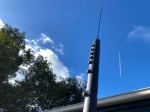 Amateur radio operators use many different antenna types, each designed for specific bands, space limits, and operating goals. Here’s a clear overview of the most common ones and why hams choose them. Wire Antennas These are some of the simplest and most popular antennas that include: Dipole Antennas Two equal wire sections fed in the…
 - Anytone 778UV Key Assignment
 Key Assignment For some reason, not all the key assignment options are in the manual and after a bit of searching, I found no complete list. Hopefully this below helps you in selecting your Key Assignments on the main unit P1-P6 keys, as well as on the microphone PA-PD keys. I have listed them in…
 - Anytone AT-778UV
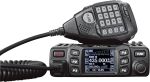 Overview The Anytone AT-778UV is a dual-band VHF/UHF mobile transceiver designed for amateur radio operators. It operates on the 136–174 MHz (VHF) and 400–490 MHz (UHF) bands, offering reliable two-way communication for both ham radio and commercial use (depending on firmware version). Power Output This transceiver provides selectable power levels — typically 25 W, 15…
 - AOR AR1000XLT Fix
 The AOR AR1000XLT is a popular wideband scanner receiver that became well known among radio enthusiasts, amateur radio operators, aviation listeners, and shortwave hobbyists during the late 1980s and early 1990s. The scanner was designed to receive a massive range of radio frequencies, making it one of the most versatile handheld scanners available at the…
 - Australian DMR RepeatersThere are several DMR networks around the world, and more and more start all the time. The Australian DMR network currently covers the entire country and is for Australian residents only. It can often be hard to find which DMR repeaters are online, offline and where they are, especially if you travel a bit like…


