The Radioddity Nodara is an upcoming, highly anticipated off-grid mesh communication device built for the LoRa network. Developed by Radioddity primarily as an official Meshtastic radio, its robust hardware has captured the attention of the MeshCore community. The device features an ultra-low-power Nordic nRF52840 MCU, an efficient SX1262 LoRa module, and an E-ink display, all housed in a military-grade, IP67 waterproof rugged enclosure.
While natively built for Meshtastic, the hardware is a prime target for MeshCore firmware. Unlike standard packet-flooding protocols, MeshCore utilizes intelligent, point-to-point path routing optimized for large mesh networks. Community developers have already successfully ported the alternative firmware to Nodara prototypes, confirming excellent hardware compatibility.
Official MeshCore support for the Radioddity Nodara is currently in active development. Once the public firmware build is officially released, this hardware will provide a durable, standalone alternative to existing MeshCore devices like the Lilygo T-Deck. It will offer users a reliable, tactical solution for decentralised text messaging without relying on cellular infrastructure.
Radioddity kindly sent me one of the devices to provide feedback on before it is released. I gave them my feedback and they allowed me to give you a sneak preview prior to it’s release.
The Baofeng UV-29 Pro is a powerful dual-band handheld radio designed for amateur radio operators, outdoor activities, emergency communications and general VHF/UHF radio use. With up to 10 watts of transmit power, a large battery and a range of useful features, the UV-29 Pro offers more power and functionality than many basic handheld ham radios.
The Baofeng UV-29 Pro operates on VHF and UHF frequencies, making it suitable for 2 metre and 70 centimetre amateur radio operation where permitted. It has selectable transmit power levels of 10 W, 5 W and 2 W, allowing operators to balance transmission range, battery life and heat generation.
One of the standout features of the UV-29 Pro is its cross-band repeater function. This allows the radio to receive on one band and retransmit on another, effectively turning the handheld into a small portable repeater. This can be useful for field days, 4WD trips, outdoor activities and amateur radio operations where extending local coverage is important.
The UV-29 Pro also includes a 2,600 mAh rechargeable lithium-ion battery and USB-C charging. The USB-C connection makes it convenient to recharge the radio from modern power banks, vehicle chargers and other USB power sources. The radio also includes a desktop charging option.
Another useful feature is Bluetooth connectivity. The UV-29 Pro can be programmed using a smartphone through the appropriate Baofeng application, reducing the need for a traditional programming cable and computer. Bluetooth can also be used with compatible wireless audio and PTT accessories.
The radio provides a large memory capacity of up to 1,000 channels, allowing users to store a substantial number of VHF and UHF frequencies, repeaters and other channels. For an amateur radio operator, this makes it possible to create separate memory groups for local repeaters, simplex channels, travel frequencies and other commonly used frequencies.
The receiver also covers frequencies outside the normal amateur radio bands, including FM broadcast and aviation reception, depending on the radio’s configuration and local regulations. Receiving other radio services can be useful for monitoring, although transmitting is only permitted on frequencies and services for which the operator and equipment are authorised.
Overall, the Baofeng UV-29 Pro 10 W dual-band handheld radio is an interesting option for operators looking for higher transmit power, a large battery, Bluetooth programming, extensive channel memory and cross-band repeater capability. Its combination of VHF/UHF operation and portable design makes it particularly suited to amateur radio, outdoor communications and field operations.
See my full review on this radio and let me know in the comments what you think
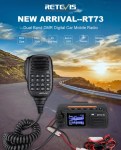
The Retevis RT73 and Kydera CDR300UV are identical radios. They are a DMR/FM duel band radio for Amateur radio use. This is great, as most of the early DMR radios available were commercial radios that were used for Amateur operations.…
I recently got my hands on a new Baofeng UV-17R Plus Series radio. It didn’t take long at all to arrive and was not expensive at all. People these days pay more for a UHF CB radio than a radio…
As per the Yaesu FT-710 manual, the Digital Noise Reduction (DNR) system is designed to reduce the level of ambient noise found on the HF and 50 MHz bands. The (DNR) system is especially effective during SSB operation. Any of…
I recently got the Radioddity M916 Heavy duty antenna magnetic mound with the Radioditty HF-008 all band portable antenna. I had always wanted to use HF more while camping or going on adventures around Australia (see our adventures page if…
The first thing I noticed after receiving the radio was the size of the radio. It is small yet not to small that it is hard to use. It fits comfortably in your hand. Not only is it physically small,…
The new QT80 radio by Radioddity is a fantastic radio and I have a lot of contacts on it already. QT60 Vs QT80 This is a QT80 model but there is also the QT60 model so what’s the difference? QT80…
CBL-561 Review The new CBL-561 antenna is strong and light that is fit for mobile work, camping or remote radio use. I plan to use this on our next outback trip! This antenna supports a frequency range of 25-30MHz, covering…
There are lots of duel band antennas available, but most required extra mounting brackets. These brackets often restrict you as to where you can mount the antenna on your car. One of my first mobile antennas for the car was…
Why does a radio need a cup holder? I agree it’s a bit odd. But this isn’t a product that involves a cup. Rather it uses a cup holder. Almost every car now has a cup holder, but they are…
The 2m band has always been an interesting one for me. It used to be swamped with pager interference, but it actually is a great band. Inversion allows your signal to travel long distances at times, especially on SSB. This…
The Daiwa CN-460M is a small cross-needle meter displays both forward and reflected power for 2m and 70cm. It measures in ranges of 15/150 watts forward and 5/50 watts reflected. SO-239 jacks. It includes a mobile mounting bracket and meter illumination option…
I recently got my hands on the Hiroyasu IC-980 Pro dual band base radio. This is pronounced as “Hiro-Yasu”. When I say, got my hands on it, the unit is so small, you only need one hand really! This analogue…
A great radio that does all bands up to 70cm. Using all modes also you can talk on SSB on VHF and UHF. If you haven’t done SSB on 2m and 70cm, then I’d encourage you to do so. it…
You could say every amateur radio operator knows about the Baofeng if they have been around long enough. Most have held one of their radios and lots have at least one. They have made a huge amount of radios. According…
I purchased this radio from a friend, and it worked well. He hadn’t really used it, so I did a factory reset. This was a bit of a mistake, as it did a few things like turning everything to Chinese.…
Radioditty sent the new GS-10B Pro to me before it was released as they wanted you to see it first. When sending it, they never told me what to say, only to review it. So below is what I honestly experienced.
This handheld radio is not only dualband UHF, VHF radio, it also receives HF, single sideband, and CW. It has a waterfall display as well, plus a load of other goodies which I hadn’t seen in a handheld before. So, let’s have a look.
Some of the things this radio includes is a realtime spectrum display, which is the same as a waterfall. It’s got full HF, single sideband and CW reception. It’s an all band scanner receiver that covers most of UHF, VHF, HF, airband, and FM radio stations. It also connects to the weather station if you have them in your country.
It has two SMA connectors on the top. One that does for UHF and VHF and the other one is for the donut antennas that’s supplied which I will look at soon. You can program the radio either via computer or even by your mobile phone or direct input or each frequency. The direct option is a lot easier than has been before as the menu seems a lot better.
It has a 250 milliamp rechargeable battery that can be charged using USB-C cord and it has dual PTT and dual watch as well.
The 1.77 inch color screen is fantastic especially for the waterfall and I love the display how it shows not only the frequency the frequency name and the channel number when in memory mode it shows a whole lot more like signal strength and all sorts of things.
This upgraded PRO model has 999 channels, so you can store a lot more in there than you ever have before. It can transmit on the normal VHF and UHF bands, but it will also receive right down to 150 kHz.
Looking at the radio itself, the speaker is behind the keypad, which gives the radio a little bit more real estate.
They got quite a lot of menus in the radio making it a lot more functional. I have done a video below on this, which I receomend you watch it.
As an example, menu item 32 is autolock. So you can change that to how many seconds.
So one of the things you might like to do is to listen to HF. So how do you do that? If you go into the menu and I’m going to go to menu 2 4 (which takes me to menu 24). This menu item is where you program what the PF3 key is. I’m going to make sure that that is set to radio, then press confirm. So then if I press this PF3, it’ll go to radio. The next thing you should do is change the antenna to the donut antenna.
Take off the VHF/UHF antenna and next to it is a knob that screws off to reviel where you attach the donut antenna. You can plug in an external antenna if you like.
When listening to HF, if you press and hold down the home key, you get a waterfall right across the band.
The Radioddity GS-10B Pro is a high-power 8W handheld ham radio designed for long-range communication. At the time of this video, it had not been released yet. This new radio is built as an upgraded version of the popular tri-band radio, however, this portable transceiver features a real-time spectrum analyser (waterfall display) on a 1.77-inch color display, allowing you to instantly scan, view, and locate active frequencies in your area. Its precious model without all the extras is widely used by amateur radio operators for satellite communication, emergency readiness, and Parks on the Air (POTA) activations.
This handheld radio has advanced shortwave listening. The GS-10B Pro handheld transceiver includes wideband HF monitoring with SSB (Single Sideband) and CW modes. Unlike standard analog radios, it has a dual-antenna path system with two SMA ports to keep high-frequency and VHF/UHF signals clear and separate. It also comes with two donut antennas.
To make setup simple, the radio features built-in Bluetooth wireless programming, so you can easily configure channels, update your codeplug, and manage repeater offsets directly from an Android or iOS smartphone app without a computer programming cable.
The hardware is optimized for survival gear and off-grid use, with a 2500mAh USB-C rechargeable battery that supports 2A fast charging. It comes equipped with dual PTT (Push-to-Talk) switches for seamless dual-band monitoring and an extra physical channel knob for quick frequency tuning. If you are buying your first ham radio or looking for a budget-friendly backup radio, custom noise reduction, and standard Kenwood 2-pin accessories.
The Baofeng UV-29 Pro is a powerful dual-band handheld radio designed for amateur radio operators, outdoor activities, emergency communications and general VHF/UHF radio use. With up to 10 watts of transmit power, a large battery and a range of useful features, the UV-29 Pro offers more power and functionality than many basic handheld ham radios.…
In 2026, Baofeng celebrates 25 years as one of the world’s best-known manufacturers of affordable two-way radios. Founded in 2001 as Fujian Baofeng Electronics Co., Ltd., the company has grown from a small Chinese radio manufacturer into a global brand supplying handheld radios for amateur radio operators, emergency communications, outdoor activities, security, and commercial users.…
One day I was checking the bands and noticed the 17m band is open for a short period. I have noticed this over a long period that it often opens and provides reliable DX contacts at a similar time each day. I often could clearly hear operators who were midway through conversation, then suddenly the…
Radioditty sent the new GS-10B Pro to me before it was released as they wanted you to see it first. When sending it, they never told me what to say, only to review it. So below is what I honestly experienced. This handheld radio is not only dualband UHF, VHF radio, it also receives HF,…
CW Skimmer is a popular amateur radio software program used for decoding Morse code signals on the HF bands. The program is widely used by ham radio operators, DX chasers, and contest stations because it can monitor and decode many CW signals at the same time. Unlike traditional Morse code listening, CW Skimmer displays signals…
The 15 metre band is one of the most popular HF amateur radio bands for long-distance communication, offering an excellent balance between reliability and worldwide reach. Frequency Range The standard frequency range for the 15m band is 21.000 MHz to 21.450 MHz. Within this range, different segments are commonly used for specific modes: CW (Morse…
Maximum Usable Frequency (MUF) is an important concept in HF radio propagation and amateur radio communications. It refers to the highest frequency that can be used for reliable communication between two locations by reflecting off the ionosphere. If a radio signal is transmitted above the MUF, it will not return to Earth and will instead…
The Baofeng UV-5R Mini handheld radio is a popular and affordable dual-band amateur radio transceiver widely used by beginners and experienced ham radio operators. Designed as a compact version of the original UV-5R, this small and lightweight VHF/UHF walkie talkie offers solid performance for everyday communication, making it a common choice for those getting started…
HF radio and lightning storms are closely connected because lightning creates strong radio frequency interference that affects HF radio communication (3–30 MHz). High Frequency radio is commonly used for amateur radio (ham radio), marine radio, aviation HF communication, emergency communications, and long-distance shortwave listening. HF signals travel long distances by reflecting off the ionosphere, which…
OpenHamClock is an open-source amateur radio dashboard designed as a modern successor to the original HamClock used by radio amateurs worldwide. It provides a real-time visual display of essential ham radio propagation data, world clocks, DX activity, and space weather information in a single, easy-to-read interface. Built with modern web technology, OpenHamClock runs in any…
The Radtel P8 PoC radio is a Push-to-Talk over Cellular (PoC) device that looks like a traditional walkie-talkie but communicates using 4G/LTE mobile networks instead of UHF/VHF radio frequencies. This means its effective range is not limited to a few kilometres like standard two-way radios, but instead depends on cellular coverage, allowing communication across cities,…
An antenna coupler (also called an antenna tuner or matching network) is a device used in radio systems to ensure impedance matching between a transmitter and an antenna. Most transmitters are designed for a specific impedance, commonly 50 ohms, while antennas often vary depending on frequency and design. When the impedance is not matched, reflected…
Amateur radio operators use many different antenna types, each designed for specific bands, space limits, and operating goals. Here’s a clear overview of the most common ones and why hams choose them. Wire Antennas These are some of the simplest and most popular antennas that include: Dipole Antennas Two equal wire sections fed in the…
A dipole antenna is a basic radio antenna made of two conductive elements fed at the center. It is typically a half-wavelength long and is widely used as a reference antenna in antenna theory and practice. Dipole antennas work by converting alternating current into electromagnetic waves. Their radiation pattern is strongest perpendicular to the antenna…
Interference in Amateur Radio refers to unwanted signals that disrupt radio communication. This interference can reduce signal clarity, make contacts difficult, or completely block communication between amateur radio operators. Radio Frequency Interference (RFI) is one of the most common problems in amateur radio. It often comes from man-made electronic devices such as phone chargers, computers,…
The AOR AR1000XLT is a popular wideband scanner receiver that became well known among radio enthusiasts, amateur radio operators, aviation listeners, and shortwave hobbyists during the late 1980s and early 1990s. The scanner was designed to receive a massive range of radio frequencies, making it one of the most versatile handheld scanners available at the time. Many people used the AR1000XLT for aircraft monitoring, emergency service listening, marine radio, amateur radio, and shortwave reception.
One of the biggest features of the AOR AR1000XLT scanner is its extremely wide frequency coverage. The receiver can monitor frequencies from around 500 kHz up to 1300 MHz depending on the model version. This allows users to listen to HF shortwave bands, VHF communications, UHF signals, FM broadcast radio, aircraft radio channels, marine frequencies, and amateur radio bands all in one portable device. The scanner supports AM, FM, and Wide FM modes, giving users flexibility across different radio services.
The AR1000XLT scanner became popular because of its advanced features for the time. It included 1000 memory channels, fast scanning speeds, search banks, and strong receiver sensitivity. Radio hobbyists appreciated how quickly it could scan channels and search for unknown frequencies. Many users connected external antennas to improve reception for long-distance radio monitoring and weak signal listening.
Another reason the AOR AR1000XLT gained popularity was its compact handheld design. The radio was portable, battery powered, and easy to carry for field use. Aviation enthusiasts often used it for airband listening at airports, while amateur radio operators used it for monitoring repeaters and HF communications. Shortwave listeners also enjoyed using the scanner to explore international radio stations and utility frequencies.
Although the AOR AR1000XLT is still respected by vintage scanner collectors and radio hobbyists today, it does have limitations compared to modern digital scanners. The radio does not support modern digital communication modes such as P25, DMR, NXDN, or trunked radio systems. Because many emergency services now use digital or encrypted communications, the scanner is mainly used today for analog radio monitoring, aircraft listening, amateur radio, marine radio, and shortwave scanning.
Even many years after its release, the AOR AR1000XLT remains a well-known classic scanner receiver in the radio hobby community. Its wide frequency coverage, strong analog performance, and portable design helped make it one of the most recognised handheld scanners of its era.
My keyboard on the scanner stopped working and even though this is an old scanner, I wanted to get it working mainly for old time sake. I knew if I could get the keyboard out, I could clean it and hopefully get it working. But see in my video as to how I went and what I discovered.
On the 10-metre band, 28.490 is the unofficial calling frequency for Australia and New Zealand. This is interesting as the Band plans state it is 28.390 as the recommended intra-VK calling frequency. That said, 28.490 is more recognised as the unofficial calling frequency down under. Most amateurs down under will listen to 28.490 on ten…
The 15 metre band is one of the most popular HF amateur radio bands for long-distance communication, offering an excellent balance between reliability and worldwide reach. Frequency Range The standard frequency range for the 15m band is 21.000 MHz to 21.450 MHz. Within this range, different segments are commonly used for specific modes: CW (Morse…
160 meters band is known as the “Gentlemen’s band”. It is right next to the AM commercial band, known as medium wave. The 160-meter band is the radio frequencies between 1.8 and 2 MHz. For many decades it was the lowest radio frequency band allocated for use by amateur radio, before the 630 and 2200…
One day I was checking the bands and noticed the 17m band is open for a short period. I have noticed this over a long period that it often opens and provides reliable DX contacts at a similar time each day. I often could clearly hear operators who were midway through conversation, then suddenly the…
Prior to 1989, it was illegal to operate between 50 MHz and 52 MHz in Australia. It was a real pain as that was where all the action was when the band opened up. However, after many requests from the WIA to the DoTC back in 1989, it was agreed that this section of the…
ADIF Master is a popular amateur radio logging software tool used for editing and managing ADIF log files. ADIF stands for Amateur Data Interchange Format, which is the worldwide standard used by ham radio operators to share QSO log information between different logging programs and online logbook services. Many amateur radio enthusiasts use ADIF Master…
Amateur Radio Television (ATV), often called “ham TV,” is a niche part of amateur television where licensed radio operators transmit live video and audio over radio frequencies instead of traditional broadcast networks. It is essentially an extension of amateur (ham) radio, using higher bandwidth signals to carry moving images, typically on UHF and microwave bands.…
Amateur radio operators use many different antenna types, each designed for specific bands, space limits, and operating goals. Here’s a clear overview of the most common ones and why hams choose them. Wire Antennas These are some of the simplest and most popular antennas that include: Dipole Antennas Two equal wire sections fed in the…
Key Assignment For some reason, not all the key assignment options are in the manual and after a bit of searching, I found no complete list. Hopefully this below helps you in selecting your Key Assignments on the main unit P1-P6 keys, as well as on the microphone PA-PD keys. I have listed them in…
Overview The Anytone AT-778UV is a dual-band VHF/UHF mobile transceiver designed for amateur radio operators. It operates on the 136–174 MHz (VHF) and 400–490 MHz (UHF) bands, offering reliable two-way communication for both ham radio and commercial use (depending on firmware version). Power Output This transceiver provides selectable power levels — typically 25 W, 15…
The AOR AR1000XLT is a popular wideband scanner receiver that became well known among radio enthusiasts, amateur radio operators, aviation listeners, and shortwave hobbyists during the late 1980s and early 1990s. The scanner was designed to receive a massive range of radio frequencies, making it one of the most versatile handheld scanners available at the…
There are several DMR networks around the world, and more and more start all the time. The Australian DMR network currently covers the entire country and is for Australian residents only. It can often be hard to find which DMR repeaters are online, offline and where they are, especially if you travel a bit like…
Yes, this popular girl name is actually an Amateur Radio term.
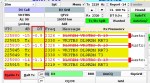
Christian, DK8EW, put me onto Olivia after we chatted on VARA HF. I had heard about Olivia before, but he encouraged me to give it ago.
Soon I made contact with VK4XP and must say it is a great digital format, though I understand a lot feel voice to voice is better (as I do). That said, this digital mode doesn’t require as much bandwidth, so has the potential to go further. The typical Olivia signal can still be decoded when the amplitude of the noise is over ten times that of the Olivia signal which is amazing.
Olivia is part of the family of MFSK modes and has a high redundancy Forward Error Correction system similar to MT63. The MFSK family is very large with many modes, so it can make it very difficult to work out which is which when you hear it. Olivia works really well on poor HF paths.
Olivia digital modes are commonly referred to by the number of tones and the bandwidth, in Hertz, used. Therefore, it is common to express the Olivia digital mode as Olivia X/Y (or Olivia Y/X ), where X refers to the number of different audio tones transmitted and Y refers to the bandwidth in hertz over which these signals are spread. Examples of common Olivia modes are 8/250 (meaning, 8 tones/250-Hertz bandwidth), 16/500, and, 32/1000. There are three popular Olivia modes, which is 8-FSK, 16-FSK and 32-FSK, that have three, four or five bits per symbol.
Olivia QSO Formats
Format Bandwidth / Tones
Audio Centre Marker (Hz)
Baud
Decode S/N Radio (dB)
Speed WPM
500/16*
750
31.25
-13
19.5
1000/32*
1000
31.25
-12
24.4
500/8
750
62.5
-11
29.3
1000/16
1000
62.5
-10
39.1
500/4
750
125
-10
39.1
250/8
625
31.25
-14
14.6
* Is the most common Olivia format in use currently
Here is a video that will give you more information:
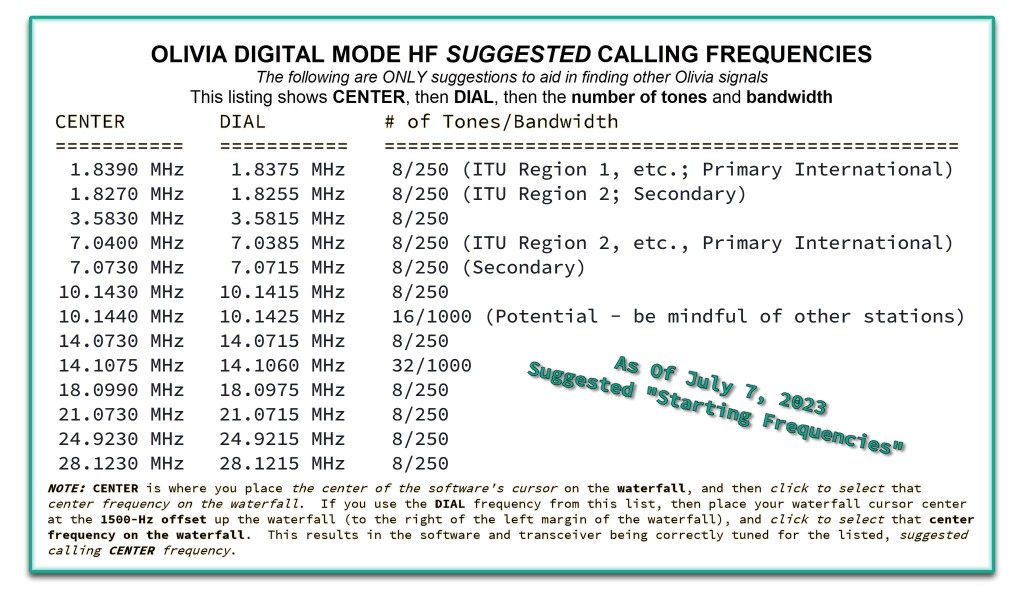
While Olivia could acutally be used anywhere in the data allocated area on HF, however you may not find anyone if you are not on the right frequency. Below is the suggested calling frequencies used around the world:
I’ve typed to many people around the world on this mode and surprised how well it works when conditions are not great. The software tells you if there is another conversation on the band also which is handy.
There are a few protocols, like using BTU (back to you) on your last line and some shortcut typing which isn’t the same as the youth of today use in text messages!
While I still prefer voice contacts with people, at least this option is a conversation and something different when conditions are not favourable.
What are your thoughts on this mode? Have you tried it? Have you had success? What radio and band did you try?
If you enjoyed that, here are some other interesting reads:
When using digital over the radio, it is particularly important you have the correct time. Even a second out will stop you from making contacts. I relied on…
I purchased the Diamond W series W8010 antenna and quickly put it together. The instructions were a bit hard to read as it was exceedingly small. However, I…
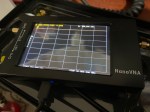
The Nano VNA-H 4 is my new toy that has just arrived after purchasing via Banggood. This Antenna Analyser is a complicated device, but doesn’t have to be,…
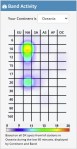
DXHeat.com is a great website that can update you the current conditions on each band. The website has filtering of incoming DX Spots which can be displayed instantly…
The S-meter is an instrument on most radio receivers that measures the strength of the signal being received. It uses a unit: the S-point. HF radios usually have…
I recently got the Radioddity M916 Heavy duty antenna magnetic mound with the Radioditty HF-008 all band portable antenna. I had always wanted to use HF more while…