HF on a Hand Held?

Radioditty sent the new GS-10B Pro to me before it was released as they wanted you to see it first. When sending it, they never told me what to say, only to review it. So below is what I honestly experienced.

This handheld radio is not only dualband UHF, VHF radio, it also receives HF, single sideband, and CW. It has a waterfall display as well, plus a load of other goodies which I hadn’t seen in a handheld before. So, let’s have a look.

Some of the things this radio includes is a realtime spectrum display, which is the same as a waterfall. It’s got full HF, single sideband and CW reception. It’s an all band scanner receiver that covers most of UHF, VHF, HF, airband, and FM radio stations. It also connects to the weather station if you have them in your country.

It has two SMA connectors on the top. One that does for UHF and VHF and the other one is for the donut antennas that’s supplied which I will look at soon. You can program the radio either via computer or even by your mobile phone or direct input or each frequency. The direct option is a lot easier than has been before as the menu seems a lot better.

It has a 250 milliamp rechargeable battery that can be charged using USB-C cord and it has dual PTT and dual watch as well.

The 1.77 inch color screen is fantastic especially for the waterfall and I love the display how it shows not only the frequency the frequency name and the channel number when in memory mode it shows a whole lot more like signal strength and all sorts of things.

This upgraded PRO model has 999 channels, so you can store a lot more in there than you ever have before. It can transmit on the normal VHF and UHF bands, but it will also receive right down to 150 kHz.

Looking at the radio itself, the speaker is behind the keypad, which gives the radio a little bit more real estate.

They got quite a lot of menus in the radio making it a lot more functional. I have done a video below on this, which I receomend you watch it.

As an example, menu item 32 is autolock. So you can change that to how many seconds.

So one of the things you might like to do is to listen to HF. So how do you do that? If you go into the menu and I’m going to go to menu 2 4 (which takes me to menu 24). This menu item is where you program what the PF3 key is. I’m going to make sure that that is set to radio, then press confirm. So then if I press this PF3, it’ll go to radio. The next thing you should do is change the antenna to the donut antenna.

Take off the VHF/UHF antenna and next to it is a knob that screws off to reviel where you attach the donut antenna. You can plug in an external antenna if you like.

When listening to HF, if you press and hold down the home key, you get a waterfall right across the band.

The Radioddity GS-10B Pro is a high-power 8W handheld ham radio designed for long-range communication. At the time of this video, it had not been released yet. This new radio is built as an upgraded version of the popular tri-band radio, however, this portable transceiver features a real-time spectrum analyser (waterfall display) on a 1.77-inch color display, allowing you to instantly scan, view, and locate active frequencies in your area. Its precious model without all the extras is widely used by amateur radio operators for satellite communication, emergency readiness, and Parks on the Air (POTA) activations.

This handheld radio has advanced shortwave listening. The GS-10B Pro handheld transceiver includes wideband HF monitoring with SSB (Single Sideband) and CW modes. Unlike standard analog radios, it has a dual-antenna path system with two SMA ports to keep high-frequency and VHF/UHF signals clear and separate. It also comes with two donut antennas.

To make setup simple, the radio features built-in Bluetooth wireless programming, so you can easily configure channels, update your codeplug, and manage repeater offsets directly from an Android or iOS smartphone app without a computer programming cable.

The hardware is optimized for survival gear and off-grid use, with a 2500mAh USB-C rechargeable battery that supports 2A fast charging. It comes equipped with dual PTT (Push-to-Talk) switches for seamless dual-band monitoring and an extra physical channel knob for quick frequency tuning. If you are buying your first ham radio or looking for a budget-friendly backup radio, custom noise reduction, and standard Kenwood 2-pin accessories.

If you go via this link, you will get a discount:
https://radioddity.refr.cc/bensangster then search for your item


If you enjoyed this, here are some more posts you may enjoy:

  • HF on a Hand Held?
    Radioditty sent the new GS-10B Pro to me before it was released as they wanted you to see it first. When sending it, they never told me what to say, only to review it. So below is what I honestly experienced. This handheld radio is not only dualband UHF, VHF radio, it also receives HF,…
  • CW Skimmer
    CW Skimmer is a popular amateur radio software program used for decoding Morse code signals on the HF bands. The program is widely used by ham radio operators, DX chasers, and contest stations because it can monitor and decode many CW signals at the same time. Unlike traditional Morse code listening, CW Skimmer displays signals…
  • 15 Metre band
    The 15 metre band is one of the most popular HF amateur radio bands for long-distance communication, offering an excellent balance between reliability and worldwide reach. Frequency Range The standard frequency range for the 15m band is 21.000 MHz to 21.450 MHz. Within this range, different segments are commonly used for specific modes: CW (Morse…
  • Maximum Usable Frequency (MUF) in HF Radio Propagation
    Maximum Usable Frequency (MUF) is an important concept in HF radio propagation and amateur radio communications. It refers to the highest frequency that can be used for reliable communication between two locations by reflecting off the ionosphere. If a radio signal is transmitted above the MUF, it will not return to Earth and will instead…
  • Baofeng UV-5R Mini
    The Baofeng UV-5R Mini handheld radio is a popular and affordable dual-band amateur radio transceiver widely used by beginners and experienced ham radio operators. Designed as a compact version of the original UV-5R, this small and lightweight VHF/UHF walkie talkie offers solid performance for everyday communication, making it a common choice for those getting started…
  • Lightning Storm & HF Radio
    HF radio and lightning storms are closely connected because lightning creates strong radio frequency interference that affects HF radio communication (3–30 MHz). High Frequency radio is commonly used for amateur radio (ham radio), marine radio, aviation HF communication, emergency communications, and long-distance shortwave listening. HF signals travel long distances by reflecting off the ionosphere, which…
  • OpenHamClock
    OpenHamClock is an open-source amateur radio dashboard designed as a modern successor to the original HamClock used by radio amateurs worldwide. It provides a real-time visual display of essential ham radio propagation data, world clocks, DX activity, and space weather information in a single, easy-to-read interface. Built with modern web technology, OpenHamClock runs in any…
  • Radtel P8 PoC radio
    The Radtel P8 PoC radio is a Push-to-Talk over Cellular (PoC) device that looks like a traditional walkie-talkie but communicates using 4G/LTE mobile networks instead of UHF/VHF radio frequencies. This means its effective range is not limited to a few kilometres like standard two-way radios, but instead depends on cellular coverage, allowing communication across cities,…
  • What is an Antenna Coupler
    An antenna coupler (also called an antenna tuner or matching network) is a device used in radio systems to ensure impedance matching between a transmitter and an antenna. Most transmitters are designed for a specific impedance, commonly 50 ohms, while antennas often vary depending on frequency and design. When the impedance is not matched, reflected…
  • Antennas
    Amateur radio operators use many different antenna types, each designed for specific bands, space limits, and operating goals. Here’s a clear overview of the most common ones and why hams choose them. Wire Antennas These are some of the simplest and most popular antennas that include: Dipole Antennas End-fed wire Inverted-V Vertical antennas Vertical antennas…
  • Dipole Antenna for Portable Use – Make your own!
    A dipole antenna is a basic radio antenna made of two conductive elements fed at the center. It is typically a half-wavelength long and is widely used as a reference antenna in antenna theory and practice. Dipole antennas work by converting alternating current into electromagnetic waves. Their radiation pattern is strongest perpendicular to the antenna…
  • Interference
    Interference in Amateur Radio refers to unwanted signals that disrupt radio communication. This interference can reduce signal clarity, make contacts difficult, or completely block communication between amateur radio operators. Radio Frequency Interference (RFI) is one of the most common problems in amateur radio. It often comes from man-made electronic devices such as phone chargers, computers,…
  • 6m and TV Channel 0
    Prior to 1989, it was illegal to operate between 50 MHz and 52 MHz in Australia. It was a real pain as that was where all the action was when the band opened up. However, after many requests from the WIA to the DoTC back in 1989, it was agreed that this section of the…
  • Dipole Antennas Vs Long Wire Antennas
    I’ve heard a lot about dipole antennas, and I’ve heard a lot about long wire antennas also. I would say I’ve seen more dipoles than long wire antennas. So why is that? What is the difference between them? Which is better? If one is a clear winner, why does anyone build the other? A dipole antenna is…
  • Repeater-START
    Repeater-START is a multi-platform app designed for ham radio and radio-operator enthusiasts who need fast access to repeater information. The app provides a detailed repeater map as well as a distance-sorted list, allowing users to easily locate nearby communication points wherever they travel. Because it uses open repeater databases, the information remains current, community-supported, and…

Amateur TV

Amateur Radio Television (ATV), often called “ham TV,” is a niche part of amateur television where licensed radio operators transmit live video and audio over radio frequencies instead of traditional broadcast networks. It is essentially an extension of amateur (ham) radio, using higher bandwidth signals to carry moving images, typically on UHF and microwave bands. Unlike commercial TV, ATV is non-commercial and used for experimentation, hobby activity, and technical learning.

In Melbourne Australia, amateur radio TV activity is centred around the well-known VK3RTV system. This is a digital amateur television repeater that broadcasts across much of the metropolitan area, allowing operators to transmit and receive video signals. It operates continuously and uses modern digital TV standards (DVB-T2 HD), transmitting on 445.5 MHz. The system supports multiple input formats (such as DVB-S/S2 and DVB-T) and provides wide coverage across Melbourne and even towards Geelong.

Melbourne’s ATV community has a long history, with amateur television transmissions dating back to the late 1970s. Originally analogue, the system transitioned to digital broadcasting in the 2000s and was re-established in 2020 after a temporary shutdown. Today it is considered technically advanced, featuring multiplexed digital channels, HD video, and even internet-linked streaming to international amateur TV networks.

Activity in Melbourne ATV is typically community-driven. Enthusiasts participate in scheduled “net nights” (weekly on-air meetups), experimental broadcasts, and live video contacts between stations. Operators may transmit a wide range of content including technical demonstrations, hobby projects, model aircraft footage, or informal chats. Voice coordination is often done on separate 2meter FM frequency, 147.400 MHz, while video is transmitted through the ATV repeater.

Amateur TV is also known as High-Scan TV. A related but distinct mode is Slow-Scan Television, which is also used by amateur radio operators in Australia. Instead of live video, SSTV sends still images over radio, taking several seconds to minutes per picture. This mode is popular for long-distance (HF) communication and even space-related transmissions, complementing the faster “full-motion” ATV systems used locally in Melbourne.

Overall, amateur Radio TV in Melbourne is a small but technically rich hobby combining radio engineering, digital broadcasting, and experimentation. It operates outside mainstream media, relying on licensed operators, shared infrastructure like VK3RTV, and a collaborative community that keeps the technology evolving.

This view shows how I got involved, and found out how to reveive it with the help of people in this video. Although I only show one set top box, I actually have two, plus two screens, so I can receive channel 1 and 2 at the same time. These two channels are independent of each other in some ways, but transmit from the same site.

I really hope you enjoy this video, and it encourages you to this part of the hobby. Please put what comments or questions you have below as I will try to answer them. I am not an expert in this area at all, but still learning and hope to one day transmit onto VK3RTV. If you live away from Melbourne, you can still access it via Discord (see link on video) or via Youtube as shown in the video.

Thank you again to Peter, Steven and Clint for your your endless help.

Some good links are available here:
http://www.vk3rtv.com/
https://amateurradio.com.au/repeaters/vk3rtv
https://www.emdrc.com.au/datv-repeater-vk3rtv/

Have a look at my video for more info


Other Reads

If you enjoyed this article, here are some more you may be interested in:

  • Zastone D9000 Number Lock
    I purchased this radio from a friend, and it worked well. He hadn’t really used it, so I did a factory reset. This was a bit of a mistake, as it did a few things like turning everything to Chinese. I had to use my phone…
  • Yaesu FT-620
    The Yaesu FT-620 (and its updated version, the FT-620B) is a vintage amateur radio transceiver designed specifically for the 6-meter band (50–54 MHz). Produced in the 1970s, it offers support for AM, CW, and SSB (USB/LSB) modes, making it a versatile rig for its time, especially during the era when 6 meters was…
  • Yaesu FT-225R
    The 2m band has always been an interesting one for me. It used to be swamped with pager interference, but it actually is a great band. Inversion allows your signal to travel long distances at times, especially on SSB. This video is about the Yaesu FT-225R…
  • Yaesu 857D
    A great radio that does all bands up to 70cm. Using all modes also you can talk on SSB on VHF and UHF. If you haven’t done SSB on 2m and 70cm, then I’d encourage you to do so. it is a lot of fun. This…
  • World Amateur Radio Day
    World Amateur Radio Day is celebrated every year on April 18, marking the founding of the International Amateur Radio Union (IARU) in 1925. The organisation was established in Paris when amateur radio societies from around the world joined together to represent radio operators and protect access…
  • WizNet DMR
    The WizNet DMR app is still in beta testing, and at the time of writing this, you have to not only have a currently have a licence as an Amateur Radio Operator, but approved to be part of the beta testing group. You can do this…
  • What is an Antenna Coupler
    An antenna coupler (also called an antenna tuner or matching network) is a device used in radio systems to ensure impedance matching between a transmitter and an antenna. Most transmitters are designed for a specific impedance, commonly 50 ohms, while antennas often vary depending on frequency…
  • What does this Antenna do?
    Have you ever had an antenna and forgotten what it is for? Maybe you have been given one and wasn’t told exactly what it was used for. I got given an antenna at at ham fest because it didn’t sell. Funny enough after I got it,…
  • Welle.io
    Welle.io is a DAB and DAB+ software defined radio (SDR). It runs on Windows, Linux and embedded devices like the Raspberry Pi 2 and 3. You can find the program and where to download it from their website. Using the Software With all these things, the…
  • Welcome to the site
    Hi there from Down Under, Melbourne Australia. Thank you for visiting my radio web site. Below is what items by category is available on this web site. Thanks again for visiting. This web site is still being built, so don’t forget to Follow us to get…
  • VK3AHR Ron
    Today (20/06/25) I head Ron, VK3AHR, on the 7.100 40-meter net. I understand he ran this net for over 7 years, but hasn’t been able to for the last few weeks due to bad health. At 10am this morning he gave the group an announcement stating…
  • VARA – VARAC
    Ever heard this sound on HF / VHF / UHF? I know I have more and more recently. After a bit of research, someone told me it was VARAC. https://www.varac-hamradio.com/ As I understand it, the project started with Irad Deutsch 4Z1AC. It is free of charge…
  • Using an Android TV Box for Ham Radio
    If you want to get onto Digital Radio for less (way less) than $100, then you may be interested in this. I have Apple equipment, and therefore miss out on a lot of the testing apps that are only available on Android. There seem to be…
  • USB Device Error PL2303HXA
    I went into the device manager and found the error, my cable no longer worked. This same issue happened to a USB Card reader also.…
  • Upgrade to OpenGD77
    This page is just a help to friends I have spoke to who are interested in upgrading the Radioditty GD-77 to the OpenGD77 software. This is not my work, however I really do appreciate Roger and his team have done to put this together. I claim no responsibility if it breaks your radio, however I have not hear this happen now in some time. I am not an expert at all with OpenGD77, I have just put this together to help people who have asked me how to do it.…

What does this Antenna do?

Have you ever had an antenna and forgotten what it is for? Maybe you have been given one and wasn’t told exactly what it was used for.

I got given an antenna at at ham fest because it didn’t sell. Funny enough after I got it, many came to me very interested in it. I wasn’t sure what it did, but I could tell someone had put a lot of effort into it.


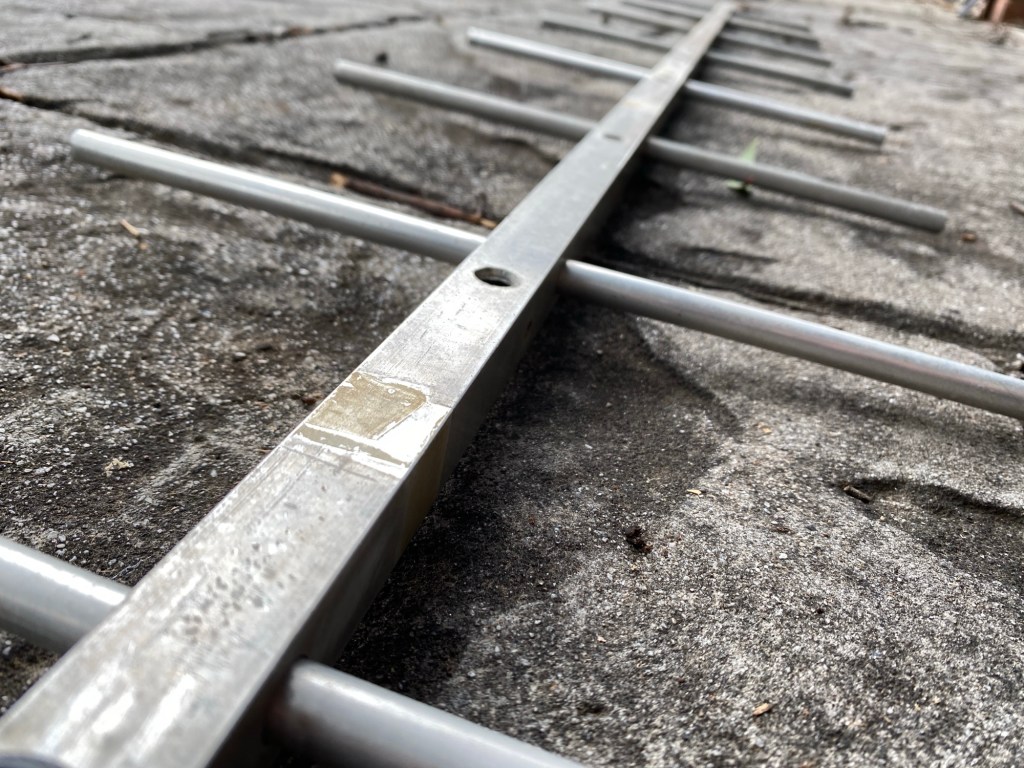
I had my theories as to what band it was resonate on, but I wanted to be sure. By just looking at it, it gave me many clues, like the length of the antenna, the length of the radials, the amount of radials, and how it was made.

Watch this video as I unlock my theory on what the antenna was made for. See if you can guess. Do you think I am right or wrong? Perhaps you have another theory or even know who made it. I would love to hear in the comments what you think.


If you enjoyed this, below are some more items you may enjoy:

  • HF on a Hand Held?
    Radioditty sent the new GS-10B Pro to me before it was released as they wanted you to see it first. When sending it, they never told me what to say, only to review it.…
  • CW Skimmer
    CW Skimmer is a popular amateur radio software program used for decoding Morse code signals on the HF bands. The program is widely used by ham radio operators, DX chasers, and contest stations because…
  • ADIF Master
    ADIF Master is a popular amateur radio logging software tool used for editing and managing ADIF log files. ADIF stands for Amateur Data Interchange Format, which is the worldwide standard used by ham radio…
  • 15 Metre band
    The 15 metre band is one of the most popular HF amateur radio bands for long-distance communication, offering an excellent balance between reliability and worldwide reach. Frequency Range The standard frequency range for the…
  • AOR AR1000XLT Fix
    The AOR AR1000XLT is a popular wideband scanner receiver that became well known among radio enthusiasts, amateur radio operators, aviation listeners, and shortwave hobbyists during the late 1980s and early 1990s. The scanner was…
  • Maximum Usable Frequency (MUF) in HF Radio Propagation
    Maximum Usable Frequency (MUF) is an important concept in HF radio propagation and amateur radio communications. It refers to the highest frequency that can be used for reliable communication between two locations by reflecting…
  • World Amateur Radio Day
    World Amateur Radio Day is celebrated every year on April 18, marking the founding of the International Amateur Radio Union (IARU) in 1925. The organisation was established in Paris when amateur radio societies from…
  • Amateur TV
    Amateur Radio Television (ATV), often called “ham TV,” is a niche part of amateur television where licensed radio operators transmit live video and audio over radio frequencies instead of traditional broadcast networks. It is…
  • Baofeng UV-5R Mini
    The Baofeng UV-5R Mini handheld radio is a popular and affordable dual-band amateur radio transceiver widely used by beginners and experienced ham radio operators. Designed as a compact version of the original UV-5R, this…
  • Lightning Storm & HF Radio
    HF radio and lightning storms are closely connected because lightning creates strong radio frequency interference that affects HF radio communication (3–30 MHz). High Frequency radio is commonly used for amateur radio (ham radio), marine…
  • OpenHamClock
    OpenHamClock is an open-source amateur radio dashboard designed as a modern successor to the original HamClock used by radio amateurs worldwide. It provides a real-time visual display of essential ham radio propagation data, world…
  • Radtel P8 PoC radio
    The Radtel P8 PoC radio is a Push-to-Talk over Cellular (PoC) device that looks like a traditional walkie-talkie but communicates using 4G/LTE mobile networks instead of UHF/VHF radio frequencies. This means its effective range…