The Radioddity Nodara is an upcoming, highly anticipated off-grid mesh communication device built for the LoRa network. Developed by Radioddity primarily as an official Meshtastic radio, its robust hardware has captured the attention of the MeshCore community. The device features an ultra-low-power Nordic nRF52840 MCU, an efficient SX1262 LoRa module, and an E-ink display, all housed in a military-grade, IP67 waterproof rugged enclosure.
While natively built for Meshtastic, the hardware is a prime target for MeshCore firmware. Unlike standard packet-flooding protocols, MeshCore utilizes intelligent, point-to-point path routing optimized for large mesh networks. Community developers have already successfully ported the alternative firmware to Nodara prototypes, confirming excellent hardware compatibility.
Official MeshCore support for the Radioddity Nodara is currently in active development. Once the public firmware build is officially released, this hardware will provide a durable, standalone alternative to existing MeshCore devices like the Lilygo T-Deck. It will offer users a reliable, tactical solution for decentralised text messaging without relying on cellular infrastructure.
Radioddity kindly sent me one of the devices to provide feedback on before it is released. I gave them my feedback and they allowed me to give you a sneak preview prior to it’s release.
The Baofeng UV-29 Pro is a powerful dual-band handheld radio designed for amateur radio operators, outdoor activities, emergency communications and general VHF/UHF radio use. With up to 10 watts of transmit power, a large battery and a range of useful features, the UV-29 Pro offers more power and functionality than many basic handheld ham radios.
The Baofeng UV-29 Pro operates on VHF and UHF frequencies, making it suitable for 2 metre and 70 centimetre amateur radio operation where permitted. It has selectable transmit power levels of 10 W, 5 W and 2 W, allowing operators to balance transmission range, battery life and heat generation.
One of the standout features of the UV-29 Pro is its cross-band repeater function. This allows the radio to receive on one band and retransmit on another, effectively turning the handheld into a small portable repeater. This can be useful for field days, 4WD trips, outdoor activities and amateur radio operations where extending local coverage is important.
The UV-29 Pro also includes a 2,600 mAh rechargeable lithium-ion battery and USB-C charging. The USB-C connection makes it convenient to recharge the radio from modern power banks, vehicle chargers and other USB power sources. The radio also includes a desktop charging option.
Another useful feature is Bluetooth connectivity. The UV-29 Pro can be programmed using a smartphone through the appropriate Baofeng application, reducing the need for a traditional programming cable and computer. Bluetooth can also be used with compatible wireless audio and PTT accessories.
The radio provides a large memory capacity of up to 1,000 channels, allowing users to store a substantial number of VHF and UHF frequencies, repeaters and other channels. For an amateur radio operator, this makes it possible to create separate memory groups for local repeaters, simplex channels, travel frequencies and other commonly used frequencies.
The receiver also covers frequencies outside the normal amateur radio bands, including FM broadcast and aviation reception, depending on the radio’s configuration and local regulations. Receiving other radio services can be useful for monitoring, although transmitting is only permitted on frequencies and services for which the operator and equipment are authorised.
Overall, the Baofeng UV-29 Pro 10 W dual-band handheld radio is an interesting option for operators looking for higher transmit power, a large battery, Bluetooth programming, extensive channel memory and cross-band repeater capability. Its combination of VHF/UHF operation and portable design makes it particularly suited to amateur radio, outdoor communications and field operations.
See my full review on this radio and let me know in the comments what you think
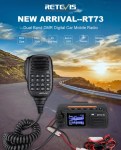
The Retevis RT73 and Kydera CDR300UV are identical radios. They are a DMR/FM duel band radio for Amateur radio use. This is great, as most of the early DMR radios available were commercial radios that were used for Amateur operations.…
I recently got my hands on a new Baofeng UV-17R Plus Series radio. It didn’t take long at all to arrive and was not expensive at all. People these days pay more for a UHF CB radio than a radio…
As per the Yaesu FT-710 manual, the Digital Noise Reduction (DNR) system is designed to reduce the level of ambient noise found on the HF and 50 MHz bands. The (DNR) system is especially effective during SSB operation. Any of…
I recently got the Radioddity M916 Heavy duty antenna magnetic mound with the Radioditty HF-008 all band portable antenna. I had always wanted to use HF more while camping or going on adventures around Australia (see our adventures page if…
The first thing I noticed after receiving the radio was the size of the radio. It is small yet not to small that it is hard to use. It fits comfortably in your hand. Not only is it physically small,…
The new QT80 radio by Radioddity is a fantastic radio and I have a lot of contacts on it already. QT60 Vs QT80 This is a QT80 model but there is also the QT60 model so what’s the difference? QT80…
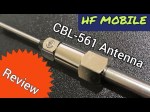
CBL-561 Review The new CBL-561 antenna is strong and light that is fit for mobile work, camping or remote radio use. I plan to use this on our next outback trip! This antenna supports a frequency range of 25-30MHz, covering…
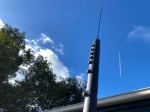
There are lots of duel band antennas available, but most required extra mounting brackets. These brackets often restrict you as to where you can mount the antenna on your car. One of my first mobile antennas for the car was…
Why does a radio need a cup holder? I agree it’s a bit odd. But this isn’t a product that involves a cup. Rather it uses a cup holder. Almost every car now has a cup holder, but they are…
The 2m band has always been an interesting one for me. It used to be swamped with pager interference, but it actually is a great band. Inversion allows your signal to travel long distances at times, especially on SSB. This…
The Daiwa CN-460M is a small cross-needle meter displays both forward and reflected power for 2m and 70cm. It measures in ranges of 15/150 watts forward and 5/50 watts reflected. SO-239 jacks. It includes a mobile mounting bracket and meter illumination option…
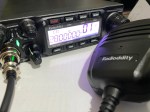
I recently got my hands on the Hiroyasu IC-980 Pro dual band base radio. This is pronounced as “Hiro-Yasu”. When I say, got my hands on it, the unit is so small, you only need one hand really! This analogue…
A great radio that does all bands up to 70cm. Using all modes also you can talk on SSB on VHF and UHF. If you haven’t done SSB on 2m and 70cm, then I’d encourage you to do so. it…
You could say every amateur radio operator knows about the Baofeng if they have been around long enough. Most have held one of their radios and lots have at least one. They have made a huge amount of radios. According…
I purchased this radio from a friend, and it worked well. He hadn’t really used it, so I did a factory reset. This was a bit of a mistake, as it did a few things like turning everything to Chinese.…
In 2026, Baofeng celebrates 25 years as one of the world’s best-known manufacturers of affordable two-way radios. Founded in 2001 as Fujian Baofeng Electronics Co., Ltd., the company has grown from a small Chinese radio manufacturer into a global brand supplying handheld radios for amateur radio operators, emergency communications, outdoor activities, security, and commercial users.
Baofeng became especially popular in the amateur radio community thanks to the release of the Baofeng UV-5R. This low-cost dual-band handheld radio made it possible for thousands of new amateur radio operators to get on the air without spending a lot of money. The UV-5R supports VHF and UHF frequencies, is compatible with CHIRP programming software, and has become one of the best-selling amateur radio handheld transceivers ever produced.
Over the past 25 years, Baofeng has expanded its product range well beyond the original UV-5R. The company now manufactures a wide variety of analogue and digital two-way radios, waterproof models, commercial radios, and accessories for users around the world. Baofeng radios are used by amateur radio enthusiasts, emergency volunteers, event organisers, businesses, hikers, campers, and off-road travellers in more than 100 countries.
Baofeng’s success has been driven by its ability to offer reliable communication equipment at affordable prices. While the company continues to improve its radio designs and introduce new features, its products remain known for providing excellent value for beginners and experienced operators alike.
Reaching its 25th anniversary is an important milestone for Baofeng. During the past quarter-century, the company has helped make amateur radio and two-way radio communications more accessible than ever before, encouraging countless people to discover the hobby and stay connected through reliable radio communication.
Baofeng UV-5R 25th Anniversary Edition
The Baofeng UV-5R 25th Anniversary Edition by Radioddity is a limited-edition dual-band handheld amateur radio released to celebrate 25 years of Baofeng. Based on the popular Baofeng UV-5R, this special edition combines the proven performance of one of the world’s best-selling handheld ham radios with modern upgrades, collector’s styling, and USB-C charging. It is designed for amateur radio operators, emergency communication, camping, hiking, off-road touring, and anyone looking for an affordable VHF/UHF handheld transceiver.
Transparent Design and Special Edition Features
One of the standout features of the Baofeng UV-5R 25th Anniversary Edition is its transparent housing, available in Glacier Ice and Solar Flare colours. The clear case showcases the internal electronics, giving the radio a unique appearance that sets it apart from standard UV-5R models. Exclusive anniversary branding includes a commemorative startup screen, a custom 25th Anniversary keypad button, a collector’s badge, and premium packaging, making it appealing to both new operators and long-time Baofeng fans.
See my review below:
Baofeng UV-5R 25th Anniversary Specifications
The Baofeng UV-5R 25th Anniversary Edition operates on the 136–174 MHz VHF and 400–520 MHz UHF frequency ranges. It delivers up to 5 watts of transmit power, stores 128 programmable memory channels, and includes dual watch, dual standby, VOX hands-free operation, CTCSS and DCS signalling, an FM broadcast receiver, LED flashlight, and emergency alarm. Like the standard UV-5R, it is fully compatible with CHIRP programming software, making it easy to program repeaters and memory channels from a computer.
USB-C Charging and Everyday Convenience
A major upgrade over many earlier UV-5R models is the included 1800 mAh USB-C rechargeable battery. Users can charge the radio with a standard USB-C cable, reducing the need to carry a dedicated desktop charger while travelling or operating in the field. The package also includes a durable hard-shell carry case that helps protect the radio during transport, making it well suited for portable amateur radio, four-wheel driving, hiking, camping, and emergency preparedness.
Performance and Compatibility
The Baofeng UV-5R 25th Anniversary Edition offers the same reliable performance that has made the UV-5R one of the most popular handheld ham radios in the world. It performs well for local repeaters, simplex communication, public service events, emergency communication, and general amateur radio use. Existing UV-5R accessories, including antennas, speaker microphones, batteries, programming cables, and headsets, remain compatible, allowing current Baofeng owners to continue using their existing equipment.
Is the Baofeng UV-5R 25th Anniversary Edition Worth Buying?
If you are looking for an affordable handheld ham radio with modern features, the Baofeng UV-5R 25th Anniversary Edition is an excellent option. While the radio performs similarly to the standard UV-5R, the addition of USB-C charging, the transparent collector’s design, premium accessories, and anniversary branding make it an attractive upgrade. Whether you are a beginner studying for your amateur radio licence or an experienced operator wanting a unique addition to your radio collection, the Baofeng UV-5R 25th Anniversary Edition offers excellent value for money.
Interference in Amateur Radio refers to unwanted signals that disrupt radio communication. This interference can reduce signal clarity, make contacts difficult, or completely block communication between amateur radio operators.
Radio Frequency Interference (RFI) is one of the most common problems in amateur radio. It often comes from man-made electronic devices such as phone chargers, computers, LED lights, televisions, and power supplies. These devices can produce continuous noise or buzzing sounds across radio bands.
Natural Interference also affects amateur radio operations. Lightning causes static noise, while solar activity can disrupt or enhance signals, especially on HF bands. Atmospheric conditions play a major role in how radio waves travel and how much noise is present.
Adjacent Channel Interference and Harmonics occur when signals spill over into nearby frequencies or when transmitters emit unwanted signals outside their assigned band. This is usually caused by poor filtering, excessive power, or improperly adjusted equipment.
Managing and Reducing Interference is an important responsibility for amateur radio operators. Techniques include proper grounding, using quality cables, installing filters, adding ferrite chokes, and ensuring transmitters produce clean signals.
Rules and Responsibilities in Amateur Radio require operators to avoid causing harmful interference, accept interference from other legal users, and correct any problems their station may cause. Cooperation among amateur radio operators helps identify and resolve interference issues effectively.
Options
Amateur radio interference can be reduced by controlling unwanted radio-frequency (RF) energy and improving how equipment handles it. One of the most effective methods is using ferrite chokes on coaxial cables, power leads, and the cables of affected devices. These chokes block RF from traveling along cables and significantly reduce interference.
Good grounding and bonding are also essential. The radio, power supply, and antenna system should be properly grounded, with metal parts bonded together using short, thick wires. A single, well-designed ground point helps prevent RF from spreading into household wiring and electronics.
The antenna system plays a major role in interference. A properly tuned antenna with low SWR reduces stray RF, and placing the antenna farther from buildings and electronics helps limit interference. Using baluns or common-mode chokes at the antenna feed point can further prevent RF from flowing back along the coax.
Interference can also be reduced by lowering transmit power to only what is necessary and by using filters such as low-pass or band-pass filters. Replacing or relocating noisy household electronics—like cheap power adapters or LED lights—can improve reception. Finally, using shielded cables, keeping wiring short, and changing frequency or band when needed can help minimize interference even further.
What about you?
I would love to hear what you have experienced and done about radio interference. Did you cause it? Did you experience it? What helped?
If you enjoyed this read, here are some others you may enjoy
On the 10-metre band, 28.490 is the unofficial calling frequency for Australia and New Zealand. This is interesting as the Band plans state it is 28.390 as the recommended intra-VK calling frequency. That said, 28.490 is more recognised as the unofficial calling…
The 15 metre band is one of the most popular HF amateur radio bands for long-distance communication, offering an excellent balance between reliability and worldwide reach. Frequency Range The standard frequency range for the 15m band is 21.000 MHz to 21.450 MHz.…
160 meters band is known as the “Gentlemen’s band”. It is right next to the AM commercial band, known as medium wave. The 160-meter band is the radio frequencies between 1.8 and 2 MHz. For many decades it was the lowest radio…
One day I was checking the bands and noticed the 17m band is open for a short period. I have noticed this over a long period that it often opens and provides reliable DX contacts at a similar time each day. I…
Prior to 1989, it was illegal to operate between 50 MHz and 52 MHz in Australia. It was a real pain as that was where all the action was when the band opened up. However, after many requests from the WIA to…
ADIF Master is a popular amateur radio logging software tool used for editing and managing ADIF log files. ADIF stands for Amateur Data Interchange Format, which is the worldwide standard used by ham radio operators to share QSO log information between different…
Amateur Radio Television (ATV), often called “ham TV,” is a niche part of amateur television where licensed radio operators transmit live video and audio over radio frequencies instead of traditional broadcast networks. It is essentially an extension of amateur (ham) radio, using…
Amateur radio operators use many different antenna types, each designed for specific bands, space limits, and operating goals. Here’s a clear overview of the most common ones and why hams choose them. Wire Antennas These are some of the simplest and most…
Key Assignment For some reason, not all the key assignment options are in the manual and after a bit of searching, I found no complete list. Hopefully this below helps you in selecting your Key Assignments on the main unit P1-P6 keys,…