6m and TV Channel 0

Prior to 1989, it was illegal to operate between 50 MHz and 52 MHz in Australia. It was a real pain as that was where all the action was when the band opened up.

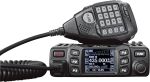
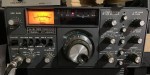
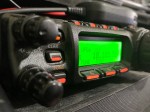
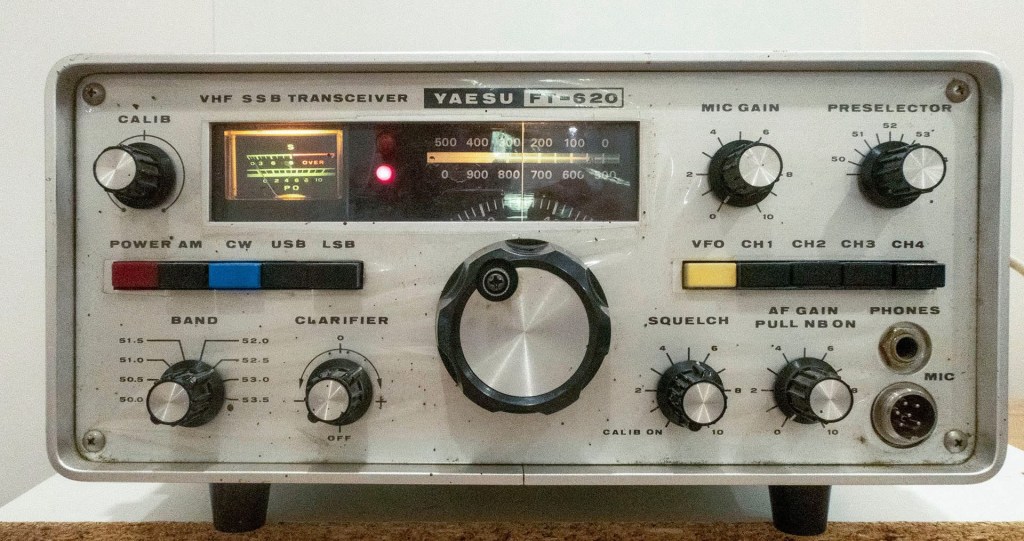
My original 6m radio – still works today

However, after many requests from the WIA to the DoTC back in 1989, it was agreed that this section of the 6m band could be used with some minor amendments.

VK5, VK6, VK8, VK9 & VK0

It was decided VK5, VK6, VK8, VK9 & VK0 stations may operate anywhere between 50 – 52 MHz provided there was no interference caused to the reception of Channel 0 transmissions up to a maximum of 400 watts.

VK2, VK3, VK4 & VK7 (eastern states)

Stations located in VK2, VK3, VK4 & VK7 are permitted to operate provided there was no interference caused to the reception of Channel 0 in the sub-band 50.05 – 50.20 MHz provided they are:

  • 120 km from Channel 0 main television stations
  • 60 km from Channel 0 translator stations
  • 60 km from translator stations with Channel 0 inputs, and
  • They must only use emission modes of CW and SSB with a maximum of 100 watts.

VK1 ACT

Stations in VK1 can do the same as other eastern states but without the distance restrictions.

Today

Well that was back in 1989, today TV is all digital and the band is less restrictive now.

A short time ago I happened to make contact with Japan on 6m and also happened to be recording as well. You can watch the whole thing here:

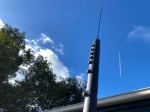
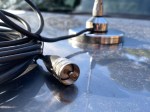
You can see my 6m antenna in this video:

If you want to know more about 6m, see more information here. https://vk3tbs.home.blog/category/amateur-radio/hf/6m/

I personally love 6m and the challenge of it. It works well locally and well when the band is open. But it can close suddenly without notice. Sometimes I’ve spoken long distances and either has received no signal strength at all, but a full S5 copy.

I also enjoy adjusting between vertical and horizontal polarisation.

If you enjoyed this read, please take the time to like and follow this blog. Or let me know what you think of 6m from where you are in the comments below.


If you enjoyed this read, here are some others you may enjoy.

  • Interference
    Interference in Amateur Radio refers to unwanted signals that disrupt radio communication. This interference can reduce signal clarity, make contacts difficult, or completely block communication between amateur radio operators. Radio Frequency Interference (RFI) is…
  • 6m and TV Channel 0
    Prior to 1989, it was illegal to operate between 50 MHz and 52 MHz in Australia. It was a real pain as that was where all the action was when the band opened up.…
  • Dipole Antennas Vs Long Wire Antennas
    I’ve heard a lot about dipole antennas, and I’ve heard a lot about long wire antennas also. I would say I’ve seen more dipoles than long wire antennas. So why is that? What is…
  • Repeater-START
    Repeater-START is a multi-platform app designed for ham radio and radio-operator enthusiasts who need fast access to repeater information. The app provides a detailed repeater map as well as a distance-sorted list, allowing users…
  • The 6-Meter Amateur Radio Band
    What Is the 6m Band? The 6-meter band, spanning roughly 50–54 MHz, is a section of the VHF spectrum assigned to amateur radio operators. Its wavelength is six meters, and its position between HF…
  • Anytone AT-778UV
    Overview The Anytone AT-778UV is a dual-band VHF/UHF mobile transceiver designed for amateur radio operators. It operates on the 136–174 MHz (VHF) and 400–490 MHz (UHF) bands, offering reliable two-way communication for both ham…
  • 160 Meters Band
    160 meters band is known as the “Gentlemen’s band”. It is right next to the AM commercial band, known as medium wave. The 160-meter band is the radio frequencies between 1.8 and 2 MHz.…
  • What does this Antenna do?
    Have you ever had an antenna and forgotten what it is for? Maybe you have been given one and wasn’t told exactly what it was used for. I got given an antenna at at…

The 6-Meter Amateur Radio Band

What Is the 6m Band?

The 6-meter band, spanning roughly 50–54 MHz, is a section of the VHF spectrum assigned to amateur radio operators.

Its wavelength is six meters, and its position between HF and VHF makes it behave like a mix of both services.

Why It’s Called the “Magic Band”

6 meters has an almost unpredictable personality.

Sometimes it acts like a local VHF band; other times it opens up suddenly and supports long-distance DX like HF.

Because of these rapid and surprising changes, operators refer to it as the Magic Band.

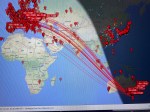
Contacts I had across to Europe

Propagation Characteristics

6 meters supports a wide range of radio propagation mechanisms:

Sporadic-E

Dense patches of ionization in the E-layer

Allows contacts hundreds to thousands of kilometers away

Most common from late spring through summer and again in winter

F-Layer / F2 Propagation

Appears during strong solar activity

Enables global, long-haul communication

Can keep the band open for long stretches

Tropospheric Enhancement

Weather-related bending in the lower atmosphere

Extends VHF-range signals over much longer distances

Meteor Scatter

Radio waves reflect off meteor trails

Excellent during meteor showers

Modern digital modes—especially MSK144—dominate this technique

Auroral Propagation

Signals scatter from auroral activity

Produces a very distinct, rough sound

Common at northern latitudes

Trans-Equatorial Propagation (TEP)

Occurs near the geomagnetic equator

Allows north–south DX paths across continents

Modes of Operation

6 meters accommodates virtually every common amateur mode

Weak-Signal & DX

SSB, CW

Digital

FT8 (primary mode for most openings)

FT4, JT65

MSK144 (meteor scatter)

FM

Simplex and repeater use in certain regions

AM

Niche but still used by some hobbyists

Equipment and Antennas

Radio

Many modern HF transceivers include the 6-meter band. Examples include:

Icom IC-7300

Yaesu FT-991A

Icom IC-705

Dedicated 6-meter rigs and transverters are also popular among weak-signal operators.

Antennas

6-meter antennas are small enough to install easily yet large enough to perform well.

Common options:

Dipoles

Verticals (good for FM)

Yagis (excellent for DX)

Moxons

Loops

End-fed half waves

Even a small Yagi can work impressive DX during an opening.

Seasonal and Solar Patterns

May–August: Prime Sporadic-E season

December–January: Smaller Es season

Active solar years: Best chances for worldwide F2 propagation

Meteor showers: Ideal for MSK144 activity

What Makes 6 Meters Appealing

Sudden, exciting band openings

Possibility of worldwide communication with small antennas

Plenty of room for experimentation

A wide variety of propagation modes

Generally less crowded than HF

The band blends scientific curiosity, operating skill, and pure luck — which is exactly why many operators love it.

Example

I love 6m when it is active. But I also love 6m when it isn’t open as a few of us use it to chat on it.

The Japanese love 6m. They seem to use it all year perhaps because they don’t need the band to be open to use it and talk across their country.

Below is a video where the band was open for a few minutes. Only a few contacts were made and I happen to be one of them.

After my contact, the bad suddenly closed, making this contact all the more special.


Other Reads

If you enjoyed this, here are some others you may enjoy also.

  • Interference
    Interference in Amateur Radio refers to unwanted signals that disrupt radio communication. This interference can reduce signal clarity, make contacts difficult, or completely block communication between amateur radio operators.…
  • 6m and TV Channel 0
    Prior to 1989, it was illegal to operate between 50 MHz and 52 MHz in Australia. It was a real pain as that was where all the action was…
  • Dipole Antennas Vs Long Wire Antennas
    I’ve heard a lot about dipole antennas, and I’ve heard a lot about long wire antennas also. I would say I’ve seen more dipoles than long wire antennas. So…
  • Repeater-START
    Repeater-START is a multi-platform app designed for ham radio and radio-operator enthusiasts who need fast access to repeater information. The app provides a detailed repeater map as well as…
  • The 6-Meter Amateur Radio Band
    What Is the 6m Band? The 6-meter band, spanning roughly 50–54 MHz, is a section of the VHF spectrum assigned to amateur radio operators. Its wavelength is six meters,…
  • Anytone AT-778UV
    Overview The Anytone AT-778UV is a dual-band VHF/UHF mobile transceiver designed for amateur radio operators. It operates on the 136–174 MHz (VHF) and 400–490 MHz (UHF) bands, offering reliable…
  • 160 Meters Band
    160 meters band is known as the “Gentlemen’s band”. It is right next to the AM commercial band, known as medium wave. The 160-meter band is the radio frequencies…
  • What does this Antenna do?
    Have you ever had an antenna and forgotten what it is for? Maybe you have been given one and wasn’t told exactly what it was used for. I got…
  • Olivia Digital Mode MFSK
    Yes, this popular girl name is actually an Amateur Radio term. Christian, DK8EW, put me onto Olivia after we chatted on VARA HF. I had heard about Olivia before,…
  • Yaesu FT-620
    The Yaesu FT-620 (and its updated version, the FT-620B) is a vintage amateur radio transceiver designed specifically for the 6-meter band (50–54 MHz). Produced in the 1970s, it offers support for AM, CW, and SSB…
  • FreeDV
    I came across something different, FreeDV. The name FreeDV insinuates it is free, but is it? What is it? And what does it do? They say it will be…
  • Anytone 778UV Key Assignment
    Key Assignment For some reason, not all the key assignment options are in the manual and after a bit of searching, I found no complete list.  Hopefully this below…
  • Kenwood – did you know this?
    Everyone that has been into radio for a while will know the brand Kenwood.  And most know Kenwood isn’t only into Amateur radio, they are bigger than that, and…
  • VK3AHR Ron
    Today (20/06/25) I head Ron, VK3AHR, on the 7.100 40-meter net. I understand he ran this net for over 7 years, but hasn’t been able to for the last…

Yaesu FT-620

The Yaesu FT-620 (and its updated version, the FT-620B) is a vintage amateur radio transceiver designed specifically for the 6-meter band (50–54 MHz). Produced in the 1970s, it offers support for AM, CW, and SSB (USB/LSB) modes, making it a versatile rig for its time, especially during the era when 6 meters was gaining popularity for both local and DX communications. It was part of Yaesu’s early generation of VHF monoband rigs, built with a solid metal chassis and analog controls, reflecting the rugged, durable engineering of the period.

In terms of performance, the FT-620 delivers approximately 20 watts PEP on SSB and CW, and around 4–8 watts on AM. Receiver sensitivity is quite good for a rig of its era, typically around 0.5 µV for 10 dB S/N in SSB/CW modes. The transceiver divides the 6-meter band into multiple segments using a bandswitch, and offers decent selectivity for SSB and CW operation. It can be powered from AC mains or 12–14 VDC, providing some flexibility for mobile or backup use. However, it lacks FM capability, which limits its use with modern 6m FM repeaters or simplex FM operations.

While the FT-620 is highly regarded for its build quality and straightforward analog operation, it does show its age. There’s no digital display, DSP, or modern filtering, and some units may require refurbishment—such as replacing aging capacitors or realigning circuits for optimal performance. Its bulk and weight (~8 kg) also make it less convenient for portable use. Nonetheless, for those interested in classic radios or operating 6 meters on SSB/CW, it remains a capable and enjoyable rig, particularly when paired with a good antenna.

Overall, the FT-620 is best suited to enthusiasts who appreciate vintage gear and are willing to maintain it. It still holds practical value today in the right hands—especially for those focused on SSB or CW operation during band openings. While it won’t compete with modern rigs in terms of features or integration, its simplicity, durability, and vintage charm continue to appeal to collectors and seasoned hams alike.

See my video below where I fire it up and give it a test.

See me fire up this old girl

More interesting reads

If you enjoyed this read, here are some more I think you will like.

The History Of Yaesu

As licensed Amateur Radio operators, we have all heard about Yaesu. We have all seen a Yaesu radio and most of us have used and even own one.

I’ve had and have several Yaesu radios. From extremely old ones full of valves and extremely heavy. One can only assume they were transported to where we live by sea and not air given their weight.

But what do you know about the company Yaesu? We can assume it is or was a Japanese company, but I just felt there might be something interesting about the history of this company. Let me show you what I found after some research.

Let’s go to the beginning

Prior to 1959 Sako Hasegawa had been operating a company called General Television Co Ltd in Ota-ku, Tokyo since 1956. His first SSB Equipment had been manufactured under the General Television Co Ltd name in 1957. Sako Hasegawa’s ambition seems to have been to design and manufacture modern HF single sideband equipment for the amateur radio market.

Yaesu is a Japanese brand of amateur radio equipment, founded as Yaesu Musen Co. Ltd. in 1959 by a Japanese radio amateur Sako Hasegawa call sign JA1MP. He lived in Yaesu, Japan, a district of Tokyo.

Yaesu Musen Co’s first product was a crystal controlled monoband 40 metre transmitter, the FL-10/40. The second radio was released soon after the first which was a 5 band crystal controlled mechanical filter HF transmitter called the FL-20.

Yaesu had initially been formed with the intention to develop and manufacture commercial and amateur radio transceivers just for the Japanese market, but only five years after its formation, the company had signed foreign sales agreements for export to Australia and Germany.

Bail Radio & TV Service sold the FL-100B direct throughout Australia from their premises in the Melbourne, Victoria, suburb of Box Hill.

1963 and the Swiss

In Europe, the equipment was sold under the Yaesu brand and the Sommerkamp brand. In 1963, four years after the company started, the Swiss firm Sommerkamp imported Yaesu equipment and sold it using their own brand.

1965 and the Americans

In 1965, Yaesu’s equipment was first imported into America by Spectronics, Inc. located in Signal Hill, California. Today most companies try to import into America first, but that isn’t Yaesu’s story.

Yaesu became an important presence in the American amateur radio market with the introduction and improvement of its very popular FT-101 in the 1970s.

FT-101

The FL-100 was a crystal controlled 5 band HF transmitter but with an SSB power input of 100 watts PEP.

Sako Hasegawa death

Sako Hasegawa, who founded the company, died in 1993. Following his death, Jun Hasegawa took over as managing director.

1998 Vertex Standard

Yaesu Musen acquired the STANDARD radio equipment brand from Marantz Japan in 1998 and changed the company name to Vertex Standard Co. Ltd. 

2007 Motorola

Vertex Standard didn’t last long by itself. In 2007, Motorola announced its intention to purchase 80% of Vertex Standard and form a joint venture with Tokogiken (a privately held Japanese company controlled by Jun Hasegawa), which would hold the other 20%. This deal was completed in January 2008. The joint venture was dissolved effective January 1, 2012.

The Vertex Standard land mobile division operates as a wholly-owned subsidiary headquartered in Tokyo, Japan. The Amateur Radio, Airband and Marine Radio business was transferred to the new company “Yaesu Musen”.

Taken from Motorola’s website, Motorola Solutions combined the best of Vertex Standard’s portfolio with our industry-leading two-way radio lineup.

2000’s Minimal – Shift – Keying

In the early 2000s, minimum-shift keying (GMSK) technology emerged in amateur radio. It was the dominant digital mode.

2013 – Digital Mode “Fusion”

In 2013, YAESU launched its own digital mode of operation for amateur radio known as: “System Fusion”. Or known as Fusion.

Like most other digital modes, Fusion utilises a narrower radio bandwidth. However, with System Fusion, Yaesu gave it special attention to compatibility with analog FM radio. Their intended goal was to simplify migration of the existing amateur radio repeaters from analog to digital.

Yaesu is the only company with System Fusion-enabled devices. 

C4FM

C4FM, or Continuous Four-Level Frequency Modulation, is a digital communication mode used in amateur radio, particularly by Yaesu and System Fusion radios. It is a type of 4FSK (Four-Frequency Shift Keying) that, when combined with FDMA (Frequency Division Multiple Access), allows for digital voice and data transmission.

C4FM offers features like digital voice with clear audio, data transmission, and internet connectivity through WIRES-X nodes, enabling features like real-time navigation and text messaging.

The System Fusion communication protocol enables devices to analyze an incoming signal and automatically determine if it is using C4FM or conventional FM mode. System Fusion also enables data transfer at full rate with speeds reaching up to 9,600 bits per second.

Other Popular Digital Modes

ICOM developed devices using the D-STAR protocol. Other brands use DMR, among other modes. The list goes on and on.

My thoughts on Yaesu

For what it’s worth, I’ve always been happy with Yaesu products.  I have several radios with their name on it and have never had a problem with them.

Yaesu Musen, is still a Japanese company. It is a well-known manufacturer of amateur, marine, and commercial radio equipment.  Yaesu is well recognised for its amateur radio equipment.

So tell me, what are your thoughts on Yaesu? What products do you have of theirs? Do you like their products? Do you prefer something else? Perhaps you liked their earlier products compared to their current stock? Please share your thoughts in the comments below so others can see.

Yaesu did not play any part in this post. It is just information I found out about the company.


If you enjoyed that read, please subscribe and like. You may enjoy some of my other posts below.

  • Interference
    Interference in Amateur Radio refers to unwanted signals that disrupt radio communication. This interference can reduce signal clarity, make contacts difficult, or completely block communication between amateur radio operators. Radio…
  • 6m and TV Channel 0
    Prior to 1989, it was illegal to operate between 50 MHz and 52 MHz in Australia. It was a real pain as that was where all the action was when…
  • Dipole Antennas Vs Long Wire Antennas
    I’ve heard a lot about dipole antennas, and I’ve heard a lot about long wire antennas also. I would say I’ve seen more dipoles than long wire antennas. So why…
  • Repeater-START
    Repeater-START is a multi-platform app designed for ham radio and radio-operator enthusiasts who need fast access to repeater information. The app provides a detailed repeater map as well as a…
  • The 6-Meter Amateur Radio Band
    What Is the 6m Band? The 6-meter band, spanning roughly 50–54 MHz, is a section of the VHF spectrum assigned to amateur radio operators. Its wavelength is six meters, and…
  • Anytone AT-778UV
    Overview The Anytone AT-778UV is a dual-band VHF/UHF mobile transceiver designed for amateur radio operators. It operates on the 136–174 MHz (VHF) and 400–490 MHz (UHF) bands, offering reliable two-way…
  • 160 Meters Band
    160 meters band is known as the “Gentlemen’s band”. It is right next to the AM commercial band, known as medium wave. The 160-meter band is the radio frequencies between…
  • What does this Antenna do?
    Have you ever had an antenna and forgotten what it is for? Maybe you have been given one and wasn’t told exactly what it was used for. I got given…
  • Olivia Digital Mode MFSK
    Yes, this popular girl name is actually an Amateur Radio term. Christian, DK8EW, put me onto Olivia after we chatted on VARA HF. I had heard about Olivia before, but…
  • Yaesu FT-620
    The Yaesu FT-620 (and its updated version, the FT-620B) is a vintage amateur radio transceiver designed specifically for the 6-meter band (50–54 MHz). Produced in the 1970s, it offers support for AM, CW, and SSB (USB/LSB) modes,…
  • FreeDV
    I came across something different, FreeDV. The name FreeDV insinuates it is free, but is it? What is it? And what does it do? They say it will be the…
  • Anytone 778UV Key Assignment
    Key Assignment For some reason, not all the key assignment options are in the manual and after a bit of searching, I found no complete list.  Hopefully this below helps…
  • Kenwood – did you know this?
    Everyone that has been into radio for a while will know the brand Kenwood.  And most know Kenwood isn’t only into Amateur radio, they are bigger than that, and have…

Yaesu 857D

A great radio that does all bands up to 70cm. Using all modes also you can talk on SSB on VHF and UHF.

If you haven’t done SSB on 2m and 70cm, then I’d encourage you to do so. it is a lot of fun.

This radio will do it and so will a lot of the old radios. There are very few new ones that do it now.

Some very old radios only do SSB on one band or another.

Please see my review of the 857D. It’s a great old radio but so small in size making it an ideal portable or mobile radio.


If you enjoyed this post, there are heaps of others you may enjoy here:

Yaesu FT-225R

The 2m band has always been an interesting one for me. It used to be swamped with pager interference, but it actually is a great band. Inversion allows your signal to travel long distances at times, especially on SSB.

This video is about the Yaesu FT-225R 2m all band radio. While the radio is huge, it is a beautiful radio any collector would love to have.

If you want to look at the manual, you can look at it here. I love these old manuals, where they state every component in them as well as circuit diagrams.

According to all reports, I sounded excellent on receive and I loved the sound from it on revive at my end also. You can plug in an external speaker, but I was happy with what it had.

Special thanks to Michael VK3CMC who let me use the radio so I could access the 2m SSB net.

The FT-225R

The two metre band probably should be used more than it is, but it is a good fun band.

Hopefully we can make contact with each other on that band one day!


If you enjoyed that, here is some more you may be interested in.

Band Stacking

Have you ever tried Band Stacking before? This is where you have three options per band every time you go to that band. For example, you may have one set up on SSB, one on CW and another on Data, all on the same band. You can easily switch between them all.

For example, if you are on 20 metres, press band and 14 again, and if band stacking is on, it will keep you on 20 metres but to the different stack. This different stack could have a different mode. You usually have three per band.

Have a look at the video for more on how to use it and turn it on:

If you enjoyed that, below are some more interesting reads you may enjoy:

  • DNR – Digital Noise Reduction
    As per the Yaesu FT-710 manual, the Digital Noise Reduction (DNR) system is designed to reduce the level of ambient noise found on the HF and 50 MHz bands. The (DNR) system is especially effective during SSB operation. Any of 15 different noise-reduction algorithms can be selected; each of these algorithms was created to deal…
  • Band Stacking
    Have you ever tried Band Stacking before? This is where you have three options per band every time you go to that band. For example, you may have one set up on SSB, one on CW and another on Data, all on the same band. You can easily switch between them all. For example, if…
  • The History Of Yaesu
    As licensed Amateur Radio operators, we have all heard about Yaesu. We have all seen a Yaesu radio and most of us have used and even own one. I’ve had and have several Yaesu radios. From extremely old ones full of valves and extremely heavy. One can only assume they were transported to where we…

DNR – Digital Noise Reduction

As per the Yaesu FT-710 manual, the Digital Noise Reduction (DNR) system is designed to reduce the level of ambient noise found on the HF and 50 MHz bands. The (DNR) system is especially effective during SSB operation. Any of 15 different noise-reduction algorithms can be selected; each of these algorithms was created to deal with a different noise profile. You will want to experiment with the DNR system to find the best setting corresponding to the noise currently being experienced.

The DNR function can be operated individually for VFO-A band and VFO-B.

But have you ever tried this trick with the RF-Gain. Have a look at this video to see more:

Press the [DNR] key to enable the DNR operation. To disable DNR operation, press the [DNR] key once more. If you turn your RF gain back to 12 o’clock, it will sound super.

I would love to hear your views on this, and how you have used it. Please like or comment below.

If you enjoyed this read, here are some others you may like:

  • The History Of Yaesu
    As licensed Amateur Radio operators, we have all heard about Yaesu. We have all seen a Yaesu radio and most of us have used and even own one. I’ve had and have several Yaesu radios. From extremely…
  • Band Stacking
    Have you ever tried Band Stacking before? This is where you have three options per band every time you go to that band. For example, you may have one set up on SSB, one on CW and…
  • DNR – Digital Noise Reduction
    As per the Yaesu FT-710 manual, the Digital Noise Reduction (DNR) system is designed to reduce the level of ambient noise found on the HF and 50 MHz bands. The (DNR) system is especially effective during SSB…
  • Interference
    Interference in Amateur Radio refers to unwanted signals that disrupt radio communication. This interference can reduce signal clarity, make contacts difficult, or completely block communication between amateur radio operators. Radio Frequency Interference (RFI) is one of the…
  • 6m and TV Channel 0
    Prior to 1989, it was illegal to operate between 50 MHz and 52 MHz in Australia. It was a real pain as that was where all the action was when the band opened up. However, after many…
  • Dipole Antennas Vs Long Wire Antennas
    I’ve heard a lot about dipole antennas, and I’ve heard a lot about long wire antennas also. I would say I’ve seen more dipoles than long wire antennas. So why is that? What is the difference between…
  • The 6-Meter Amateur Radio Band
    What Is the 6m Band? The 6-meter band, spanning roughly 50–54 MHz, is a section of the VHF spectrum assigned to amateur radio operators. Its wavelength is six meters, and its position between HF and VHF makes…
  • 160 Meters Band
    160 meters band is known as the “Gentlemen’s band”. It is right next to the AM commercial band, known as medium wave. The 160-meter band is the radio frequencies between 1.8 and 2 MHz. For many decades…
  • Olivia Digital Mode MFSK
    Yes, this popular girl name is actually an Amateur Radio term. Christian, DK8EW, put me onto Olivia after we chatted on VARA HF. I had heard about Olivia before, but he encouraged me to give it ago.…
  • Yaesu FT-620
    The Yaesu FT-620 (and its updated version, the FT-620B) is a vintage amateur radio transceiver designed specifically for the 6-meter band (50–54 MHz). Produced in the 1970s, it offers support for AM, CW, and SSB (USB/LSB) modes, making it a versatile rig for its…
  • FreeDV
    I came across something different, FreeDV. The name FreeDV insinuates it is free, but is it? What is it? And what does it do? They say it will be the new SSB of radio. They say it…
  • Yaesu 857D
    A great radio that does all bands up to 70cm. Using all modes also you can talk on SSB on VHF and UHF. If you haven’t done SSB on 2m and 70cm, then I’d encourage you to…
  • Flowerpot Antennas
    Have you heard of a flowerpot antenna? I hadn’t until recently, and I enjoy gardening also. But this antenna has nothing to do with gardening apart from why it was named flowerpot and it will probably end…

DROID-Star

After talking to a friend just to the north of me, he told me about the app DROID-Star for Android. As I only have apple devices, this wasn’t initially an option for me, however I do have an Android TV box which I use for Amateur Radio, so will review it from that device.

At the time of writing this review, I must state it is an Early Access version. It has been updated slightly since.

This app connects to D-Star and Yaesu System Fusion reflectors and repeaters via UDP and decodes audio and data in software. No AMBE hardware is required. It is written by Doug McLain.

Start screen to DROID-Star

The two option menus at the top of the screen allow you to Reload DMR IDs, Reload host files, and check the current version. I recommend reloading these.

From here you have the following options:

  • Mode – select what mode you want, this could be REF, XRF, DCS, YSF, DMR, P25 or NXDN.
  • Before pressing connect, select your Host, and fill in the other details.

Once working you will be able to listen into the room you select and it will display the call sign and even caller ID (if there is one), on the user that is transmitting.

As I said earlier, this app will no doubt be updated. I will try and keep this review updated as the app changes, but this may not be possible. Thanks for reading, I hope you enjoyed. If there are other apps you would like us to look at or think we should know about, please let me know. Don’t forget to subscribe to our posts by putting in your email address on the above follow us page.

I also spoke to Doug AD8DP, who wrote this app, and he said to mention that the app is very much in beta development stage. He plans on users being able to add custom reflectors/servers and so on. He also wants to add TX ability with the choice between on board software IMBE/AMBE encoding or remote AMBE server. He also said to me that he APK installer file can be downloaded directly here for Amazon Fire users and others without access to the Google Play Store: http://www.dudetronics.com/radio/DroidStar.apk

Another site is here (it keeps changing): https://napkforpc.com/apk/org.dudetronics.droidstar/?fbclid=IwAR2S2Xmi-WZBcseYtkk0oNJkj7t-xPXTLblR5LKfzE_VL-DU67bvCyRh5-4

UPDATE:

I have now heard many people use this app with great ease. The biggest question I have had is what is the password. Just put in your DMR network username and password.

One of the good rooms is YSF with Host 0-0-CQ-UK-Aussie. Then again, I am from downunder, but you might hear me on this one.

Please post and questions or comments below. Or join the discussion at https://groups.io/g/DroidStar

If you enjoyed this read, please don’t forget to subscribe to our page so you get updates every time we post new updates.

Using DMR with DROID-Star

I have found most people struggle to use this app on DMR. DMR requires a few other options to be set as other networks do not need all these filled out correctly or at all.

After you have installed the software, go to settings area and put in the following. First put in your call sign then your DMR ID number. If you don’t have one, then you will need to get one.

You should then update the ESSID number other than blank. If it is a second radio, I use 2.

Then put in your Password that you put in for your BrandMeister account. If your unsure what that is, go to BrandMeister Self Care area and set it again.

Once the above has been done, click on ‘Update Hosts” then “Update ID files”, and this will make sure everything is updated.

Then return to the main screen and change the mode to DMR. Change the host to BM_3102_United_States (for example, this can be changed later). Then enter the talk group you want to go to adn press the connect button. Press the big blue button and start testing.

I suggest you test it on a quiet talk group and if you have another radio, listen to what you sound like. Adjust the mic gain as often this can be set to high. You don’t want to test it on a very busy talk group – it only upsets people.

Just remember, DROID-Star is being made by a volunteer, so updates will come in time. Currently it is really important you check your audio first as it can be very clear you are using a PC and not a radio.

Hope this has helped. Please let me know. Below are some other interesting reads you may enjoy also.

Other Interesting Reads

  • HamClock
    HamClock has always fascinated me, as it seems such an amazing program specifically set up for Amateur Radio. I have seen countless videos on…
  • NanoVNA H4 USB Control to PC
    If you haven’t seen my previous blog on the NanoVNA Analyser, then I suggest you look at that first before reading this blog. This…
  • Flrig
    Flrig is a transceiver control program designed to be used either stand alone or as an adjunct to fldigi (see my review on this).…
  • VARA – VARAC
    Ever heard this sound on HF / VHF / UHF? I know I have more and more recently. After a bit of research, someone…
  • EchoLink CQ
    I’ve been using EchoLink well before smartphones where the only way I knew how to connect to a different station was via the radio.…
  • NetTime
    When using digital over the radio, it is particularly important you have the correct time. Even a second out will stop you from making…
  • GD-77 Won’t connect to PC
    I have been using my Radioddity now for some years and love it.  Though upgrading this to the OpenGD77 opened a whole new world…
  • DudeStar
    Here is a free windows program that will connect your PC to: DMR Yaesu Fusion DStar M17 P25 NXDN You can do all this…
  • Welle.io
    Welle.io is a DAB and DAB+ software defined radio (SDR). It runs on Windows, Linux and embedded devices like the Raspberry Pi 2 and…
  • Treehouse
    An unusual name, but a catchy name no less, just like Peanut that was written by the same person, David PA7LIM. If you like Peanut, then you will like this project also. This project, like Peanut, includes some amazing coding and thinking.…
  • Software Defined Radio (SDR)
    If you don’t have one of the latest and greatest expensive scanners, you will struggle to listen to a lot of transmissions. While there…
  • BlueDV Windows 10 GD-77
    I found it hard to find useful information on how to run the OpenGD-77 hotpot mode with Windows 10. At the time of writing this, there is a lot about this topic using a pistar and even android or ISO, but not much with Windows 10. This is my experence with BlueDV and Open GD-77 using a Windows 10 PC.…
  • Iphone won’t download photos
    I get the “Device is unreachable” Error message when trying to import media from iPhone to Windows 10 PC. …
  • ProScan and ProScan Client Update
    I recently started using ProScan after years of using FreeScan. I have always enjoyed using FreeScan as it is easy to setup, I can download outputs from the software, and the main reason “it works”. However ProScan seems to be more graphical and has different features also.…
  • ProScan and ProScan Client
    I recently started using ProScan after years of using FreeScan. I have always enjoyed using FreeScan as it is easy to setup, I can download outputs from the software, and the main reason “it works”. However ProScan seems to be more graphical and has different features also.…
  • USB Device Error PL2303HXA
    I went into the device manager and found the error, my cable no longer worked. This same issue happened to a USB Card reader also.…