
Prior to 1989, it was illegal to operate between 50 MHz and 52 MHz in Australia. It was a real pain as that was where all the action was when the band opened up.
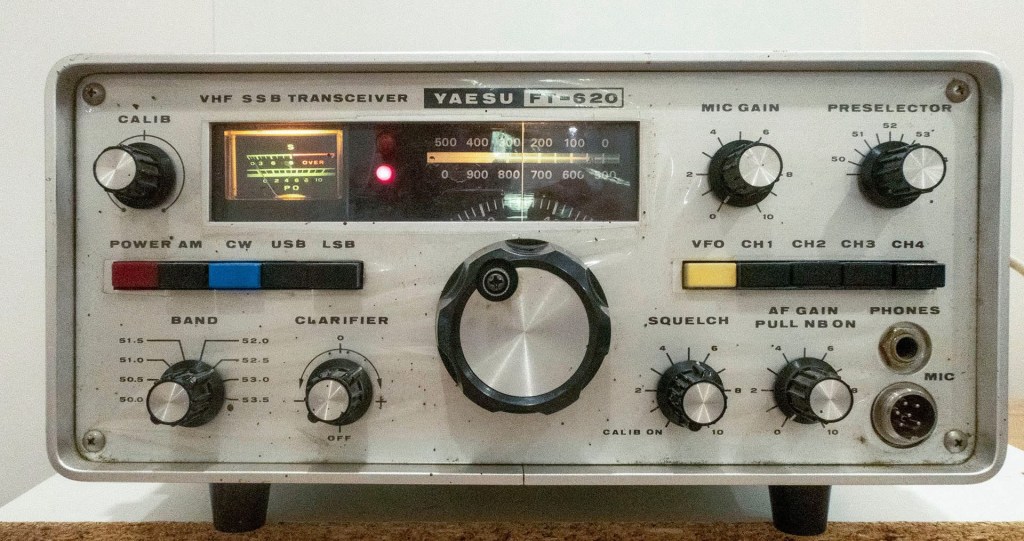
However, after many requests from the WIA to the DoTC back in 1989, it was agreed that this section of the 6m band could be used with some minor amendments.
VK5, VK6, VK8, VK9 & VK0
It was decided VK5, VK6, VK8, VK9 & VK0 stations may operate anywhere between 50 – 52 MHz provided there was no interference caused to the reception of Channel 0 transmissions up to a maximum of 400 watts.
VK2, VK3, VK4 & VK7 (eastern states)
Stations located in VK2, VK3, VK4 & VK7 are permitted to operate provided there was no interference caused to the reception of Channel 0 in the sub-band 50.05 – 50.20 MHz provided they are:
- 120 km from Channel 0 main television stations
- 60 km from Channel 0 translator stations
- 60 km from translator stations with Channel 0 inputs, and
- They must only use emission modes of CW and SSB with a maximum of 100 watts.
VK1 ACT
Stations in VK1 can do the same as other eastern states but without the distance restrictions.
Today
Well that was back in 1989, today TV is all digital and the band is less restrictive now.
A short time ago I happened to make contact with Japan on 6m and also happened to be recording as well. You can watch the whole thing here:
You can see my 6m antenna in this video:
If you want to know more about 6m, see more information here. https://vk3tbs.home.blog/category/amateur-radio/hf/6m/
I personally love 6m and the challenge of it. It works well locally and well when the band is open. But it can close suddenly without notice. Sometimes I’ve spoken long distances and either has received no signal strength at all, but a full S5 copy.
I also enjoy adjusting between vertical and horizontal polarisation.
If you enjoyed this read, please take the time to like and follow this blog. Or let me know what you think of 6m from where you are in the comments below.
If you enjoyed this read, here are some others you may enjoy.
- Baofeng Celebrates 25 Years of Two-Way Radio Innovation
 In 2026, Baofeng celebrates 25 years as one of the world’s best-known manufacturers of affordable two-way radios. Founded in 2001 as Fujian Baofeng Electronics Co., Ltd., the company has grown from a small Chinese…
 - 20m vs 17m
 One day I was checking the bands and noticed the 17m band is open for a short period. I have noticed this over a long period that it often opens and provides reliable DX…
 - HF on a Hand Held?
 Radioditty sent the new GS-10B Pro to me before it was released as they wanted you to see it first. When sending it, they never told me what to say, only to review it.…
 - CW Skimmer
 CW Skimmer is a popular amateur radio software program used for decoding Morse code signals on the HF bands. The program is widely used by ham radio operators, DX chasers, and contest stations because…
 - ADIF Master
 ADIF Master is a popular amateur radio logging software tool used for editing and managing ADIF log files. ADIF stands for Amateur Data Interchange Format, which is the worldwide standard used by ham radio…
 - 15 Metre band
 The 15 metre band is one of the most popular HF amateur radio bands for long-distance communication, offering an excellent balance between reliability and worldwide reach. Frequency Range The standard frequency range for the…
 - AOR AR1000XLT Fix
 The AOR AR1000XLT is a popular wideband scanner receiver that became well known among radio enthusiasts, amateur radio operators, aviation listeners, and shortwave hobbyists during the late 1980s and early 1990s. The scanner was…
 - Maximum Usable Frequency (MUF) in HF Radio Propagation
 Maximum Usable Frequency (MUF) is an important concept in HF radio propagation and amateur radio communications. It refers to the highest frequency that can be used for reliable communication between two locations by reflecting…
 VK3TBS