HamClock

HamClock has always fascinated me, as it seems such an amazing program specifically set up for Amateur Radio. I have seen countless videos on it but the draw back was always needing to have a Raspberry Pi. While I am not afraid to get one, and learn how to use it, I just didn’t feel like taking the plunge into that world just yet. Though I think that world is about to come, and I will end up regretting not doing it sooner!

So, what is HamClock?

Glad you asked. According to their website (https://www.clearskyinstitute.com/ham/HamClock/) HamClock is a kiosk-style application that provides real time space weather, radio propagation models, operating events and other information particularly useful to the radio amateur.

It is designed to provide ham radio enthusiasts with real-time information about the sun’s position, ionospheric conditions, and DX cluster spots. HamClock is an open source application which is a tool for the shack providing live up to date information all on one screen. It was originally written by Elwood Downey WB0OEW.

HamClock displays a map showing the sun’s position, illumination (daylight/darkness), and the “grey line” (the transition between day and night). This information is crucial for understanding propagation conditions, as the grey line is often a prime time for DX (long-distance) communication.

Usually it needs to be installed on Quadra or lynix, but I have recently found out you can install it on Windows.

Installing HamClock on Windows

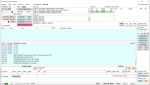
Guess what, this is possible, and may feel overwhelming at first, but after following the video below, I was able to do it in real time along with this video. I was shocked how easy it was and super surprised I had not done this earlier.

The instructions (a text file) are available via this link, and are referred to in the video. https://www.clearskyinstitute.com/ham/HamClock/hamclock-contrib/HamClock%20Windows10.txt So, have the instructions open while you watch the video. Please note, this is not my video and you should do this at your own risk – however it worked for me easily!

Before doing the video, I suggest you read all the points below it as there were a couple of things I changed.

The video starts with music, but just do what it says. Then the author will talk you through the steps after the initial install.

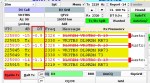
The bit I got stuck on was setting up Cluster in HamClock. This is about 12:50 into the video, perhaps it was because I had an updated version of HamClock since the above video was done. So, instead, I put in the following settings:

Setting Up HamClock

There are countless ways to set up HamClock. As a starting point, I stuck with the video above as he shows you how to from 13:30. Below is a link to that point in the above video.

This video below is from a friend who also shows you in great detail how to set up your HamClock to get the most of it. Some things are slightly different, but after seeing this, you can have an informed choice.

I found this video below very good also, as it goes into detail regarding the map in HamClock. As you will see it is done by the same person. He talks about the maps and how to customise it easily.

After a Windows Reboot

When you next do a windows reboot, you will need to restart HamClock. To do this, open a CMD window by typing CMD in the windows search menu.

Then type in :

wsl sudo hamclock &

and put in your password you made for lynx and you should be able to open it again. Make sure you do n ot close the comand screen until you are finished.

Summary

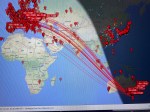
Below is what my HamClock looks like. I like the background “terrain” map as well as the night and day showing on the map. I would value your thoughts though, as I know I am about the last one to finally get onto HamClock.

With all of these tools, we should remember propagation shown is using data, but the rest of it is predictions based on knowledge.

If these propagation tools show there isn’t anything happening, always give it a try anyway. You never know without trying. You may be higher than other stations, or put out more power. You might just get an opening before other stations.

All the propagation websites are a summary of conditions recorded and sent in. HamClock is a good tool, it looks good, and gives you a lot of information on the one screen. You can adjust it easily also.

Please tell me your thoughts, and what you think. Do you use it? Perhaps you use it differently and have some advice for me and other readers. Hope you enjoyed the read.


Other Reads

If you enjoyed this read, here are some other ones you may be interested in. Please remember to subscribe and comment if this is helpful.

  • USB Device Error PL2303HXA
    I went into the device manager and found the error, my cable no longer worked. This same issue happened to a USB Card reader also.…
  • ProScan and ProScan Client
    I recently started using ProScan after years of using FreeScan. I have always enjoyed using FreeScan as it is easy to setup, I can download outputs from the software, and the main reason “it works”. However ProScan seems to be more graphical and has different features also.…
  • ProScan and ProScan Client Update
    I recently started using ProScan after years of using FreeScan. I have always enjoyed using FreeScan as it is easy to setup, I can download outputs from the software, and the main reason “it works”. However ProScan seems to be more graphical and has different features also.…
  • Iphone won’t download photos
    I get the “Device is unreachable” Error message when trying to import media from iPhone to Windows 10 PC. …
  • BlueDV Windows 10 GD-77
    I found it hard to find useful information on how to run the OpenGD-77 hotpot mode with Windows 10. At the time of writing this, there is a lot about this topic using a pistar and even android or ISO, but not much with Windows 10. This is my experence with BlueDV and Open GD-77 using a Windows 10 PC.…
  • Software Defined Radio (SDR)
    If you don’t have one of the latest and greatest expensive scanners, you will struggle to listen to a lot of transmissions. While there is still a lot of Analogue transmissions today, even a lot still on AM especially when it comes to Aviation, however most have gone…
  • Treehouse
    An unusual name, but a catchy name no less, just like Peanut that was written by the same person, David PA7LIM. If you like Peanut, then you will like this project also. This project, like Peanut, includes some amazing coding and thinking.…
  • Welle.io
    Welle.io is a DAB and DAB+ software defined radio (SDR). It runs on Windows, Linux and embedded devices like the Raspberry Pi 2 and 3. You can find the program and where to download it from their website. Using the Software With all these things, the software is…
  • DudeStar
    Here is a free windows program that will connect your PC to: DMR Yaesu Fusion DStar M17 P25 NXDN You can do all this without needing to purchase a radio. I prefer to use a radio, however I thought I would put this review together to help others…
  • GD-77 Won’t connect to PC
    I have been using my Radioddity now for some years and love it.  Though upgrading this to the OpenGD77 opened a whole new world and it gets better all the time. One issue I had for a period was not being able to connect to it via my…
  • NetTime
    When using digital over the radio, it is particularly important you have the correct time. Even a second out will stop you from making contacts. I relied on Windows to update the time and got an email from a helpful amateur telling me my time was out. You…
  • EchoLink CQ
    I’ve been using EchoLink well before smartphones where the only way I knew how to connect to a different station was via the radio. The internet wasn’t as extensive as it is now and you had to dial the node you wanted via the radio. You can still…
  • VARA – VARAC
    Ever heard this sound on HF / VHF / UHF? I know I have more and more recently. After a bit of research, someone told me it was VARAC. https://www.varac-hamradio.com/ As I understand it, the project started with Irad Deutsch 4Z1AC. It is free of charge for amateur…
  • Flrig
    Flrig is a transceiver control program designed to be used either stand alone or as an adjunct to fldigi (see my review on this). The supported transceivers all have some degree of CAT. The flrig user interface changes to accommodate the degree of CAT support available for the…
  • NanoVNA H4 USB Control to PC
    If you haven’t seen my previous blog on the NanoVNA Analyser, then I suggest you look at that first before reading this blog. This one will talk about how to connect your NanoVNA to your PC via the USB cable, so I am assuming you know the basics…

Flowerpot Antennas

Have you heard of a flowerpot antenna? I hadn’t until recently, and I enjoy gardening also. But this antenna has nothing to do with gardening apart from why it was named flowerpot and it will probably end up either on your roof or garden.

A good friend of mine put me onto it as I was having trouble on 6m. A small group of us think 6m is under-utilised so we all get on their and chat for a while either on AM or SSB.

My antenna worked reasonably well, but they suggested I build my own using the flowerpot method. Given I’m always up for learning something new, I couldn’t resist.

The best but about the antenna is it is extremely cheap to make, easy to put together and the antenna works really well.

Flowerpot Antenna by VK2ZOI https://vk2zoi.com/articles/half-wave-flower-pot/ is a great site and has all the measurements.

You can make a flowerpot antenna for either 6m, 2m or 70cm. You can hang it in a tree if you wish, in a pvc pipe like I did, or using a pole or something else.

There were only two parts I needed, everything else I already had. But if I had bought everything, it would have cost me I total about $15. Not bad for a great antenna and one you can say you built yourself.

All I needed to buy was the pvc pole, which is optional and a slightly wider pipe to make the coil on I already had the RG58 coax, and it even had a pl259 plug on it!

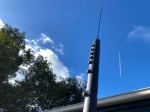
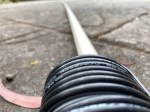
My flowerpot antenna

Items I purchased included:
PVC Pipe. Make sure you give it a shake in the store before buying. If it is too flexible then it may bend and snap in the wind. But you don’t want it to heavy either.

Coupling Plumber Part to make my 50mm coil on:
https://www.bunnings.com.au/holman-50mm-pvc-dwv-straight-coupling_p4756318

If you want more information on how to make it and how I put it together, have a look at my video.

Hope you enjoyed the read. If you have any questions please let me know.


Other reads

If you enjoyed this post, you may enjoy some of my other posts:

  • Lightning Storm & HF Radio
    HF radio and lightning storms are closely connected because lightning creates strong radio frequency interference that affects HF radio communication (3–30 MHz). High Frequency radio is commonly used…
  • OpenHamClock
    OpenHamClock is an open-source amateur radio dashboard designed as a modern successor to the original HamClock used by radio amateurs worldwide. It provides a real-time visual display of…
  • Radtel P8 PoC radio
    The Radtel P8 PoC radio is a Push-to-Talk over Cellular (PoC) device that looks like a traditional walkie-talkie but communicates using 4G/LTE mobile networks instead of UHF/VHF radio…
  • What is an Antenna Coupler
    An antenna coupler (also called an antenna tuner or matching network) is a device used in radio systems to ensure impedance matching between a transmitter and an antenna.…
  • Antennas
    Amateur radio operators use many different antenna types, each designed for specific bands, space limits, and operating goals. Here’s a clear overview of the most common ones and…
  • Dipole Antenna for Portable Use – Make your own!
    A dipole antenna is a basic radio antenna made of two conductive elements fed at the center. It is typically a half-wavelength long and is widely used as…
  • Interference
    Interference in Amateur Radio refers to unwanted signals that disrupt radio communication. This interference can reduce signal clarity, make contacts difficult, or completely block communication between amateur radio…
  • 6m and TV Channel 0
    Prior to 1989, it was illegal to operate between 50 MHz and 52 MHz in Australia. It was a real pain as that was where all the action…
  • Dipole Antennas Vs Long Wire Antennas
    I’ve heard a lot about dipole antennas, and I’ve heard a lot about long wire antennas also. I would say I’ve seen more dipoles than long wire antennas.…
  • Repeater-START
    Repeater-START is a multi-platform app designed for ham radio and radio-operator enthusiasts who need fast access to repeater information. The app provides a detailed repeater map as well…
  • The 6-Meter Amateur Radio Band
    What Is the 6m Band? The 6-meter band, spanning roughly 50–54 MHz, is a section of the VHF spectrum assigned to amateur radio operators. Its wavelength is six…
  • Anytone AT-778UV
    Overview The Anytone AT-778UV is a dual-band VHF/UHF mobile transceiver designed for amateur radio operators. It operates on the 136–174 MHz (VHF) and 400–490 MHz (UHF) bands, offering…
  • 160 Meters Band
    160 meters band is known as the “Gentlemen’s band”. It is right next to the AM commercial band, known as medium wave. The 160-meter band is the radio…
  • What does this Antenna do?
    Have you ever had an antenna and forgotten what it is for? Maybe you have been given one and wasn’t told exactly what it was used for. I…
  • Olivia Digital Mode MFSK
    Yes, this popular girl name is actually an Amateur Radio term. Christian, DK8EW, put me onto Olivia after we chatted on VARA HF. I had heard about Olivia…
  • Yaesu FT-620
    The Yaesu FT-620 (and its updated version, the FT-620B) is a vintage amateur radio transceiver designed specifically for the 6-meter band (50–54 MHz). Produced in the 1970s, it offers support for AM, CW, and…
  • FreeDV
    I came across something different, FreeDV. The name FreeDV insinuates it is free, but is it? What is it? And what does it do? They say it will…
  • Anytone 778UV Key Assignment
    Key Assignment For some reason, not all the key assignment options are in the manual and after a bit of searching, I found no complete list.  Hopefully this…
  • Kenwood – did you know this?
    Everyone that has been into radio for a while will know the brand Kenwood.  And most know Kenwood isn’t only into Amateur radio, they are bigger than that,…
  • VK3AHR Ron
    Today (20/06/25) I head Ron, VK3AHR, on the 7.100 40-meter net. I understand he ran this net for over 7 years, but hasn’t been able to for the…
  • The History Of Yaesu
    As licensed Amateur Radio operators, we have all heard about Yaesu. We have all seen a Yaesu radio and most of us have used and even own one.…
  • Parks & Peaks App
    I’ve been using the Parks and Peaks app on iphone and ipad for a little while now and quite enjoyed it.  There don’t seem to be many iphone…
  • DMR Explained
    With digital radio changing so quickly, below is a bit of an update in regards to DMR radio networks. DMR stands for Digital Mobile Radio and is an…
  • Baofeng K5 Plus Radio
    I managed to get one of these radios and was rather impressed with it and what it came with. Have a look what my box had in it.…
  • Zastone D9000 Number Lock
    I purchased this radio from a friend, and it worked well. He hadn’t really used it, so I did a factory reset. This was a bit of a…
  • HamClock
    HamClock has always fascinated me, as it seems such an amazing program specifically set up for Amateur Radio. I have seen countless videos on it but the draw…
  • Baofeng Radios
    You could say every amateur radio operator knows about the Baofeng if they have been around long enough. Most have held one of their radios and lots have…
  • Yaesu 857D
    A great radio that does all bands up to 70cm. Using all modes also you can talk on SSB on VHF and UHF. If you haven’t done SSB…
  • Hiroyasu IC-980 Pro
    I recently got my hands on the Hiroyasu IC-980 Pro dual band base radio. This is pronounced as “Hiro-Yasu”. When I say, got my hands on it, the…
  • Flowerpot Antennas
    Have you heard of a flowerpot antenna? I hadn’t until recently, and I enjoy gardening also. But this antenna has nothing to do with gardening apart from why…
  • Daiwa CN-460M Meter
    The Daiwa CN-460M is a small cross-needle meter displays both forward and reflected power for 2m and 70cm. It measures in ranges of 15/150 watts forward and 5/50 watts reflected.…
  • Yaesu FT-225R
    The 2m band has always been an interesting one for me. It used to be swamped with pager interference, but it actually is a great band. Inversion allows…

Daiwa CN-460M Meter

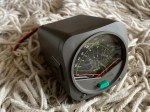
The Daiwa CN-460M is a small cross-needle meter displays both forward and reflected power for 2m and 70cm.

It measures in ranges of 15/150 watts forward and 5/50 watts reflected. SO-239 jacks.

It includes a mobile mounting bracket and meter illumination option if you connect the power cable.

I believe it was new in the early 1990’s but all reviews I’ve read say they are still happy with it today.

The user manual shows they brought out similar models including the CN-410 CN-412 CN-460 CN-465 CN-490.

Using it is really easy. Have a look at the video below where I show how to test an antenna.


If you have enjoyed this, please see some of my other posts:

RH1 Radio Cup Holder

Why does a radio need a cup holder? I agree it’s a bit odd. But this isn’t a product that involves a cup. Rather it uses a cup holder.

Almost every car now has a cup holder, but they are all different sizes and locations in the car. Some are large for bottles, others are small for a small coffee. Some are in the door, others are in the centre console of the car, while others are half under the dashboard. Unless it is the same model car, they all seem to be a bit different.

One thing I’ve noticed is a cup holder is never the same size as a hand held radio. What are they thinking! As a radio operator you would think they would build cars to house our radios! Seriously though, cars hardly have any space for much extra.

My current car has almost no space to mount a radio at all. I have a radio that has all the controls on the microphone because of this. I also have a hand held radio that sits on the center console between the two front seats. But this is far from ideal as if I have to brake suddenly, the radio goes flying. Not ideal!

I saw this cup holder radio bracket that is adjustable and fits into a cup holder. It is very adjustable and fits sturdily into a cup or bottle holder.

At the top of the swivel, you can attach a fixture to attach any hand held radio via its belt clip or attach a small remote head radio via its bracket.

Once it is all secured, it works well. Now I have a hand held radio in my car, that doesn’t move around the car. It’s legal and sturdy plus I can see the screen when driving.

The other advantage of this device, apart from how easy it is to install and how versatile it is, was how easy it is to remove. So if I’m in the car for the day, or a year, I can take it out when I am done and return the car the way I found it.

Installing

Here are some quick steps how to install this device.

  • After unpacking the box, get the RH1 cup holder.
  • Attach the Angle-Adjusted Connector to the top.
  • Attach the Handheld radio holder to the Angle Adjustment Connector. Alternatively, you can attach your radio attachment plate to the Angle Adjustment Connector if using a remote head radio or light weight radio.
  • Place the RH1 in your cup holder and twist so it expands to a firm fit in the car.
  • Adjust all the available angles from the bottom up to your desired location, then tighten each angle once set. Make sure it does not obstruct you driving the car or your view.
  • Attach your radio
  • Start using your radio!

Yes it is that easy! See the video as I do it.

Purchasing Tips

If you go via this link, you will get a discount:
https://radioddity.refr.cc/bensangster then search for your product you want.

https://www.radioddity.com/products/radioddity-rh1-cup-holder-radio-mount

Other reads

  • Zastone D9000 Number Lock
    I purchased this radio from a friend, and it worked well. He hadn’t really used it, so I did a factory reset. This was a bit of a mistake, as it did a few things like turning everything…
  • Yaesu FT-620
    The Yaesu FT-620 (and its updated version, the FT-620B) is a vintage amateur radio transceiver designed specifically for the 6-meter band (50–54 MHz). Produced in the 1970s, it offers support for AM, CW, and SSB (USB/LSB) modes, making it a versatile rig for its time,…
  • Yaesu FT-225R
    The 2m band has always been an interesting one for me. It used to be swamped with pager interference, but it actually is a great band. Inversion allows your signal to travel long distances at times, especially on…
  • Yaesu 857D
    A great radio that does all bands up to 70cm. Using all modes also you can talk on SSB on VHF and UHF. If you haven’t done SSB on 2m and 70cm, then I’d encourage you to do…
  • WizNet DMR
    The WizNet DMR app is still in beta testing, and at the time of writing this, you have to not only have a currently have a licence as an Amateur Radio Operator, but approved to be part of…
  • What is an Antenna Coupler
    An antenna coupler (also called an antenna tuner or matching network) is a device used in radio systems to ensure impedance matching between a transmitter and an antenna. Most transmitters are designed for a specific impedance, commonly 50…
  • What does this Antenna do?
    Have you ever had an antenna and forgotten what it is for? Maybe you have been given one and wasn’t told exactly what it was used for. I got given an antenna at at ham fest because it…
  • Welle.io
    Welle.io is a DAB and DAB+ software defined radio (SDR). It runs on Windows, Linux and embedded devices like the Raspberry Pi 2 and 3. You can find the program and where to download it from their website.…
  • Welcome to the site
    Hi there from Down Under, Melbourne Australia. Thank you for visiting my radio web site. Below is what items by category is available on this web site. Thanks again for visiting. This web site is still being built,…
  • VK3AHR Ron
    Today (20/06/25) I head Ron, VK3AHR, on the 7.100 40-meter net. I understand he ran this net for over 7 years, but hasn’t been able to for the last few weeks due to bad health. At 10am this…
  • VARA – VARAC
    Ever heard this sound on HF / VHF / UHF? I know I have more and more recently. After a bit of research, someone told me it was VARAC. https://www.varac-hamradio.com/ As I understand it, the project started with…
  • Using an Android TV Box for Ham Radio
    If you want to get onto Digital Radio for less (way less) than $100, then you may be interested in this. I have Apple equipment, and therefore miss out on a lot of the testing apps that are…
  • USB Device Error PL2303HXA
    I went into the device manager and found the error, my cable no longer worked. This same issue happened to a USB Card reader also.…
  • Upgrade to OpenGD77
    This page is just a help to friends I have spoke to who are interested in upgrading the Radioditty GD-77 to the OpenGD77 software. This is not my work, however I really do appreciate Roger and his team have done to put this together. I claim no responsibility if it breaks your radio, however I have not hear this happen now in some time. I am not an expert at all with OpenGD77, I have just put this together to help people who have asked me how to do it.…
  • Updating GD-77 Firmware
    Updating the firmware on the GD-77 can be daunting, as you can easily “brick” your radio. So be extremely careful. Make sure you understand why you are updating your firmware first. Since there is the option of “Bricking”…
  • Treehouse
    An unusual name, but a catchy name no less, just like Peanut that was written by the same person, David PA7LIM. If you like Peanut, then you will like this project also. This project, like Peanut, includes some amazing coding and thinking.…
  • The Radio Box
    How do you stop a hand held radio from falling and being damaged? Do you sometimes put the radio down on a bench or desk between overs or while you are waiting for someone to call you? Some…
  • The History Of Yaesu
    As licensed Amateur Radio operators, we have all heard about Yaesu. We have all seen a Yaesu radio and most of us have used and even own one. I’ve had and have several Yaesu radios. From extremely old…

Radioddity RA-UV712 Magnet Mount Antenna

There are lots of duel band antennas available, but most required extra mounting brackets. These brackets often restrict you as to where you can mount the antenna on your car.

One of my first mobile antennas for the car was a magnet mount antenna. I used it on the family car before I even had a driver’s license. I could mount it right in the centre of the roof, giving me excellent reflection from the car.

It was also easy to remove when I wasn’t in the car, or if we had to park the car in a low garage.

The dual band antenna is easy to put together on the magnetic base, and heavy-duty cable with PL-259 connector.

It comes with a very strong magnetic base that measures 91mm /3.6’’ across.  After using it on the car, I doubt any wind or speed will blow it off the car like my older smaller magnet base antennas.

See our video for more information:

Purchasing Tips

If you go via this link, and search for your item, you will get a discount:
https://radioddity.refr.cc/bensangster 

A direct link to this antenna is available here: https://www.radioddity.com/products/radioddity-ra-uv712-antenna-kithttps://www.radioddity.com/products/radioddity-ra-uv712-antenna-kit

Other option

While this antenna comes in silver with a PL259 plug, the other option is a black antenna with a SMA plug. That is the RA-UV713 available here https://www.radioddity.com/products/radioddity-ra-uv713-antenna-kithttps://www.radioddity.com/products/radioddity-ra-uv713-antenna-kit

Other Reads

  • Lightning Storm & HF Radio
    HF radio and lightning storms are closely connected because lightning creates strong radio frequency interference that affects HF radio communication (3–30 MHz). High Frequency radio is commonly used for amateur radio…
  • OpenHamClock
    OpenHamClock is an open-source amateur radio dashboard designed as a modern successor to the original HamClock used by radio amateurs worldwide. It provides a real-time visual display of essential ham radio…
  • Radtel P8 PoC radio
    The Radtel P8 PoC radio is a Push-to-Talk over Cellular (PoC) device that looks like a traditional walkie-talkie but communicates using 4G/LTE mobile networks instead of UHF/VHF radio frequencies. This means…
  • What is an Antenna Coupler
    An antenna coupler (also called an antenna tuner or matching network) is a device used in radio systems to ensure impedance matching between a transmitter and an antenna. Most transmitters are…
  • Antennas
    Amateur radio operators use many different antenna types, each designed for specific bands, space limits, and operating goals. Here’s a clear overview of the most common ones and why hams choose…
  • Dipole Antenna for Portable Use – Make your own!
    A dipole antenna is a basic radio antenna made of two conductive elements fed at the center. It is typically a half-wavelength long and is widely used as a reference antenna…
  • Interference
    Interference in Amateur Radio refers to unwanted signals that disrupt radio communication. This interference can reduce signal clarity, make contacts difficult, or completely block communication between amateur radio operators. Radio Frequency…
  • 6m and TV Channel 0
    Prior to 1989, it was illegal to operate between 50 MHz and 52 MHz in Australia. It was a real pain as that was where all the action was when the…
  • Dipole Antennas Vs Long Wire Antennas
    I’ve heard a lot about dipole antennas, and I’ve heard a lot about long wire antennas also. I would say I’ve seen more dipoles than long wire antennas. So why is…
  • Repeater-START
    Repeater-START is a multi-platform app designed for ham radio and radio-operator enthusiasts who need fast access to repeater information. The app provides a detailed repeater map as well as a distance-sorted…
  • The 6-Meter Amateur Radio Band
    What Is the 6m Band? The 6-meter band, spanning roughly 50–54 MHz, is a section of the VHF spectrum assigned to amateur radio operators. Its wavelength is six meters, and its…
  • Anytone AT-778UV
    Overview The Anytone AT-778UV is a dual-band VHF/UHF mobile transceiver designed for amateur radio operators. It operates on the 136–174 MHz (VHF) and 400–490 MHz (UHF) bands, offering reliable two-way communication…
  • 160 Meters Band
    160 meters band is known as the “Gentlemen’s band”. It is right next to the AM commercial band, known as medium wave. The 160-meter band is the radio frequencies between 1.8…
  • What does this Antenna do?
    Have you ever had an antenna and forgotten what it is for? Maybe you have been given one and wasn’t told exactly what it was used for. I got given an…
  • Olivia Digital Mode MFSK
    Yes, this popular girl name is actually an Amateur Radio term. Christian, DK8EW, put me onto Olivia after we chatted on VARA HF. I had heard about Olivia before, but he…
  • Yaesu FT-620
    The Yaesu FT-620 (and its updated version, the FT-620B) is a vintage amateur radio transceiver designed specifically for the 6-meter band (50–54 MHz). Produced in the 1970s, it offers support for AM, CW, and SSB (USB/LSB) modes, making…

Remote testing Antennas

I’ve always wanted to take the radio with me while on holidays and I always do. However I’ve always been limited to 2m and 70cm including local repeaters and digital work.

Our family enjoy holidays all over Australia into some of the most remote places without water, power or any mobile signal. Sometimes this can last week’s at a time.

If your keen to learn more about our travels around Australia and learn more, please let me know.

Most of these remote locations means limited activity on 2m or 70cm as there are no repeaters for days!

Because of this remoteness, there are several outback radio networks we can join or listen to. They make quite interesting listening.

However, when on holidays, we amateurs don’t want to just listen, we want to be part of the action! And HF is the next best thing.

I’m currently on holiday in the Victorian high country, also known as “The Man from Snowy River” country. It is rugged, beautiful and high. So up here I can actually can receive several 2m and 70cm repeaters, but this is a good test for HF work.

High up on Mount Buffalo

With me, I brought a battery pack, that has a 12 volt lithium battery which we run our camping fridge off.  I now run my HF gear off it!

I also brought my new QT-80 radio, which is small in size yet puts out 80 watts.  I have placed a video below on this radio if you are not familiar with it.

I used a magnet mount antenna base as the car I was using is not mine. This mount sticks to the car like glue, but also comes off on demand so you can adjust the antenna as required.

I brought two antennas to test.  The first one was the HF-008 antenna that covers more bands than the QT80.  I have a video on both these below for you if you are not familiar with it.

I also brought the new CBL-561 HF antenna so I could compare the two antennas. This antenna can be used while mobile unlike the HF-008 antenna. I have another video for you to show you that antenna below:

Before leaving home, I went to the hardware store and bought two lengths of pipe with caps that could safely store each antenna. I could then almost throw them in the boot of the car and not be worried about them being damaged or caught on something as I pulled them out of the boot.

Hot Tip

The funny thing was, while on holidays, I forgot to bring a measuring tape to adjust the antenna. Fortunately one of my children had a ruler with them so I was able to mark measurements down the side of the tube with a sharpie.

I also wrote down next to the measurements the lengths Radioddity recommended and then as I tuned in the antenna myself with the lowest SWR, I marked the pipe to my best measurements which were very close to the same as Radioddity.

This Tip I am sure will be very useful going forward when I’m out in the Australian outback or somewhere that I have no ruler!

Results

Both antennas fitted the same magnetic base which made this setup work well.

On testing both antennas using the same frequency to the same long distance contact, I and they couldn’t tell the difference between us. I found both antennas easy to tune in and get the SWA right down before making any contacts.

I then tried again from the top of Mount Buffalo, one of our highest mountains and got the same results where both myself and the contacts I spoke to didn’t know I had even changed the antenna.

There are differences between the antennas though which may help you decide which antenna is right for you.

Compare Antennas

HF-008

This antenna covers a lot of HF bands, as covered in the video above. However it cannot be used while mobile, mainly due to the jumper cable. It is a great antenna and can be used with a radio that puts out a lot more watts than the small QT-80 radio I used.

CBL-561

The CBL-561R antenna does not cover as many HF bands as the HF-008 does, but if you are using the bands it does cover, then this antenna might be good for you. One big advantage to this antenna is that it can be used while mobile, not just stationary.

Both antennas will need adjusting if you switch bands or switch from one end of the band to another. So setting the antenna to a permanent mount on the car on the top of the roof where it ends up out of reach, then you may want to rethink this. I found the magnet mount ideal, as you can still have it on the highest point of the car and access it easily.

Another option I also use is a bull bar mount that I use on my 4×4.

I’d encourage you to watch my video below as it explains what I discovered.

Remember the old saying Hight is Might and going portable gives you an opportunity to test this theory.


Hope you enjoyed this read. Below are some other interesting articles I have also written that you may enjoy.

HF Mobile Antenna CBL-561

CBL-561 Review

The new CBL-561 antenna is strong and light that is fit for mobile work, camping or remote radio use. I plan to use this on our next outback trip!

This antenna supports a frequency range of 25-30MHz, covering both 10-meter and 11-meter bands.

With a SWR of ≤1.3:1 and a high power capacity of up to 500W, this makes an ideal mobile or camping antenna.

This antenna is compatible with the following radios:

Radioddity QT40

Radioddity QT60

Radioddity QT80

Radioddity CS-47

Radioddity CB-27 Pro

Radioddity CB-500

Radioddity CB-900 Pro

and all other brand’s that transmit in the range of 25-30MHz.

I use the QT80 radio with this antenna, so I highly recommend you seeing that review.

Tuning the antenna

I found tuning the antenna was simple. Just a small Allen Key allowed for adjustment between bands, however some bands were close enough as you can see in my video.

If you mark the antenna to the correct lengths, then it becomes easier still.

The antenna is built from aluminium alloy, so it shouldn’t rust. It is strong and windproof plus I’ve tested it mobile with the M916 base (extra) with great success.

The coil on the antenna is strong and doesn’t rattle at all.

The antenna has a standard PL259 on the bottom of the antenna so it fits my antenna connector that was already on my 4×4 which will save me wiring it all in.

More information

More information is available on my YouTube channel here.

There are several mounting options to the car, this is the base we use, th M916 Heavy Duty Magnetic Antenna:

Purchasing Tips

If you go via this link, you will get a discount (then search for CBL-561):
https://radioddity.refr.cc/bensangster

Radio is here https://www.radioddity.com/products/radioddity-cbl-561

Other reads you may also enjoy:

  • My Radio Diddity GD-77
    Starting in digital can be a little overwhelming to start with, no matter how many years you have had your licence.…
  • Updating GD-77 Firmware
    Updating the firmware on the GD-77 can be daunting, as you can easily “brick” your radio. So be extremely careful. Make sure you understand why you…
  • Chirp
    CHIRP is a free, open-source tool for programming your amateur radio. It supports a large number of manufacturers and models, as well as provides a way…
  • Power without Power
    In 2019 my family and I went on a five week trip through outback Australia to some of the remotest parts. We had no access to…
  • Welcome to the site
    Hi there from Down Under, Melbourne Australia. Thank you for visiting my radio web site. Below is what items by category is available on this web…
  • Using an Android TV Box for Ham Radio
    If you want to get onto Digital Radio for less (way less) than $100, then you may be interested in this. I have Apple equipment, and…
  • Orion Push to Talk
    Orion is an app that isn’t really known in my world, perhaps because it isn’t available on all platforms, or because it does transmit your exact…
  • Mini Keyboard Options
    I bought this wireless keyboard/mouse which was very cheap. It does not come with batteries, but come with a USB dongle. It has a fantastic range since it is 2.4GHz RF. The back also has good grip which apparently isn’t common on all models. You can select what colour you want the plastic to be also.…
  • WizNet DMR
    The WizNet DMR app is still in beta testing, and at the time of writing this, you have to not only have a currently have a…
  • The Radio Box
    How do you stop a hand held radio from falling and being damaged? Do you sometimes put the radio down on a bench or desk between…
  • Amateur Radio Nets
    A list of Radio nets we have gathered from web pages around the world, as well as friends etc.…
  • USB Device Error PL2303HXA
    I went into the device manager and found the error, my cable no longer worked. This same issue happened to a USB Card reader also.…
  • ProScan and ProScan Client
    I recently started using ProScan after years of using FreeScan. I have always enjoyed using FreeScan as it is easy to setup, I can download outputs from the software, and the main reason “it works”. However ProScan seems to be more graphical and has different features also.…
  • ProScan and ProScan Client Update
    I recently started using ProScan after years of using FreeScan. I have always enjoyed using FreeScan as it is easy to setup, I can download outputs from the software, and the main reason “it works”. However ProScan seems to be more graphical and has different features also.…
  • The History of Ham Radio
    A good friend of mine, Mike VK5ZC, put the information below together and asked me to put it on my web site. He has spent a lot of time putting it together with pictures and videos, so I encourage you to have a good read.…
  • Basic Antenna Fundamentals
    A good friend of mine, Mike VK5ZC, put the information below together and asked me to put it on my web site. He has spent a lot of time putting it together with pictures and videos, so I encourage you to have a good read.…
  • Upgrade to OpenGD77
    This page is just a help to friends I have spoke to who are interested in upgrading the Radioditty GD-77 to the OpenGD77 software. This is not my work, however I really do appreciate Roger and his team have done to put this together. I claim no responsibility if it breaks your radio, however I have not hear this happen now in some time. I am not an expert at all with OpenGD77, I have just put this together to help people who have asked me how to do it.…
  • Australian DMR Repeaters
    There are several DMR networks around the world, and more and more start all the time. The Australian DMR network currently covers the entire country and…

Fishing Line Antenna DIY

With so many different HF antennas available, I often wondered what people in high rise buildings did.  If they can not put an antenna on the roof, what options are left for them?  I talk to so many people from Asian cities who would have this problem, and occasionally I see what they do.

The easiest option is to stay on digital like DMR.  These only require internet, and a hand held radio, but this always asks the question, is this real amateur radio?  My opinion is if it connects people that are licenced and only licenced people can uses it, then I guess it is, while understanding it may not be everyone’s cuppa.  I do understand there are many even in Australia in retirement villages who only have the option of digital radio due to restrictions on antennas.

Today, I made contact with Lok Shui Fan VR2VAZ in Hong Kong, and on his QRZ page, he came up with an amazing idea that clearly works for him.  While it is not going to be the best antenna ever seen, it is perhaps the best antenna he is able to use.  Given we are about 7450 km (4627 miles) apart, and still made contact on this antenna, you can’t say it doesn’t work.

On his QRZ page, Lok says “This is my DIY HF Fish Pole Antenna. Can be used under 80M,40M,30M, 20M, 17M, 15M, 12M, 10M band.”

He also says “If I am not playing radio, all the antenna will be hidden in flower bed”.

There are more photo’s on his QRZ page. He even has a youtube video on it.

I guess it would feel like catching contacts everytime you made a contact. If you enjoyed fishing and radio, this might be a bit of fun for you?

I think it is a fantastic idea.  What do you think? Have you built your own antenna that camouflage’s when not in use?

If you enjoyed this read, here are some other reads you may enjoy also:

  • Using an Android TV Box for Ham Radio
    If you want to get onto Digital Radio for less (way less) than $100, then you may be interested in this. I have Apple equipment, and therefore miss out on a lot of the testing apps that are only available…
  • Orion Push to Talk
    Orion is an app that isn’t really known in my world, perhaps because it isn’t available on all platforms, or because it does transmit your exact location to everyone on the channel. However there are some benefits to this mode…
  • WizNet DMR
    The WizNet DMR app is still in beta testing, and at the time of writing this, you have to not only have a currently have a licence as an Amateur Radio Operator, but approved to be part of the beta…
  • The Radio Box
    How do you stop a hand held radio from falling and being damaged? Do you sometimes put the radio down on a bench or desk between overs or while you are waiting for someone to call you? Some radio’s don’t…
  • Amateur Radio Nets
    A list of Radio nets we have gathered from web pages around the world, as well as friends etc.…
  • USB Device Error PL2303HXA
    I went into the device manager and found the error, my cable no longer worked. This same issue happened to a USB Card reader also.…
  • The History of Ham Radio
    A good friend of mine, Mike VK5ZC, put the information below together and asked me to put it on my web site. He has spent a lot of time putting it together with pictures and videos, so I encourage you to have a good read.…
  • Basic Antenna Fundamentals
    A good friend of mine, Mike VK5ZC, put the information below together and asked me to put it on my web site. He has spent a lot of time putting it together with pictures and videos, so I encourage you to have a good read.…
  • Australian DMR Repeaters
    There are several DMR networks around the world, and more and more start all the time. The Australian DMR network currently covers the entire country and is for Australian residents only. It can often be hard to find which DMR…
  • BlueDV Windows 10 GD-77
    I found it hard to find useful information on how to run the OpenGD-77 hotpot mode with Windows 10. At the time of writing this, there is a lot about this topic using a pistar and even android or ISO, but not much with Windows 10. This is my experence with BlueDV and Open GD-77 using a Windows 10 PC.…

Portable HF all band Antenna and Mount

I recently got the Radioddity M916 Heavy duty antenna magnetic mound with the Radioditty HF-008 all band portable antenna. I had always wanted to use HF more while camping or going on adventures around Australia (see our adventures page if you are interested), and now I am a step closer to doing that.

What the Antenna looks like. Radioditty HF-008

This quick video above and below shows how it arrived and what is in the box.

What the magnetic base looks like. Radioditty M916

The Antenna

Let’s talk about the antenna first…

The antenna is a portable telescopic antenna that covers HF bands 80m up to 6m. It comes with several parts that you adjust according to the band you want to use. You can also adjust it to the part of that band if you want the best SWR. I was surprised at first that there was only one page of instructions, however, I soon realised that is really all you need.

You can download manual here if you want to see how easy it is. My video below shows you how to do it and how I went. I connected my NanoVNA to it to see what the SWR is which was very interesting.

The antenna worked great when I took it away from my house and other buildings. Clearly height is an advantage when on HF, and having this antenna on the top of the car is best. But it is also great if you have your car parked up high on a hill.

I was easily able to talk to others on the antenna, and it took no time at all to change bands, especially if you mark the antenna with your best settings. It may be best to use a grey led pencil to start with so you can adjust as required. My video below shows the step by step process.

Although I didn’t video every band, I did manage to tune it in on all bands as advertised. This included 80 metres through to 6 metres. All the connectors were well built, looked good, and easy to use. According to the specifications, this antenna can withstand a PEP of 200W SSB and 100W CW.

This antenna is made for portable use, so clearly this would be a great POTA antenna. It is best used with the base as mentioned below.

Before I talk about the base, one final tip. I got some PVC pipe from the hardware store so it can slide into it protected. This way nothing gets lost or broken. Everything stays together in transit. Have a look in my video below as to what mine looks like.

You can purchase the antenna via this link, or use the following link to receive a discount.

The Base

The base is very strong and heavy, as you would expect it to be, as it has three large magnets on it. I did like the RG58 coax from it. Sometimes the coax can be in-flexible, however this coax was great and soft. It can easily go into the car or beside it to your radio.

The antenna has a SO-239 connector, so you could use this base with other antennas that are smaller, like a dual band UHF/VHF antenna and then you could use it mobile. I tried this and it worked well.

I have had several magnetic antennas before over the last few decades. If you are going to use it while mobile, you need to make sure the antenna will not get blown off while mobile. The last thing you want is a large antenna blown off and it takes the mount with it and breaks your vehicle. This base with the HF-008 is only for still operations, not while mobile. But you can leave the base on the roof and just unscrew your antenna. Just put the protective cup back on the SO-239 to keep any water and dust off it.

Magnetic bases are great, as you get the antenna right in the centre of the car roof without drilling holes into the vehicle. This centre position is the best position.

See how I went setting this antenna up

In Summary

In summary, this appears to be a great portable antenna for remote use. I strongly recommend getting some PVC pipe though to keep it safe. As a family, we do a lot of traveling, all over Australia, and I plan on taking this setup with my on our next trip. I might even put the magnetic base on our caravan which is higher than the car, and then CQ the world from inside our van.

Hopefully you hear me while we travel soon.

If this helped you, please give us a thumbs up below, and don’t forget to subscribe to this blog for more updates. There is a lot more information on this website which I have put together to help other people enjoy the hobby as much as I do.

Other Reads

If you enjoyed this read, here are some other things you may enjoy also:

EchoLink CQ

I’ve been using EchoLink well before smartphones where the only way I knew how to connect to a different station was via the radio. The internet wasn’t as extensive as it is now and you had to dial the node you wanted via the radio. You can still do this today but I don’t think anywhere near as many do it.

I always felt EchoLink was well ahead of its time. Started well before any digital radio was thought of. Connecting the world via the internet.

It was great to be able to talk to the UK or States while mobile on the way to work just using a small whip antenna on the car.

Given I’m in Australia, it can be difficult to remember when overseas nets are on, or what part of the world is awake and up for a chat and which ones are not. But EchoLink has a CQ feature.

Calling CQ

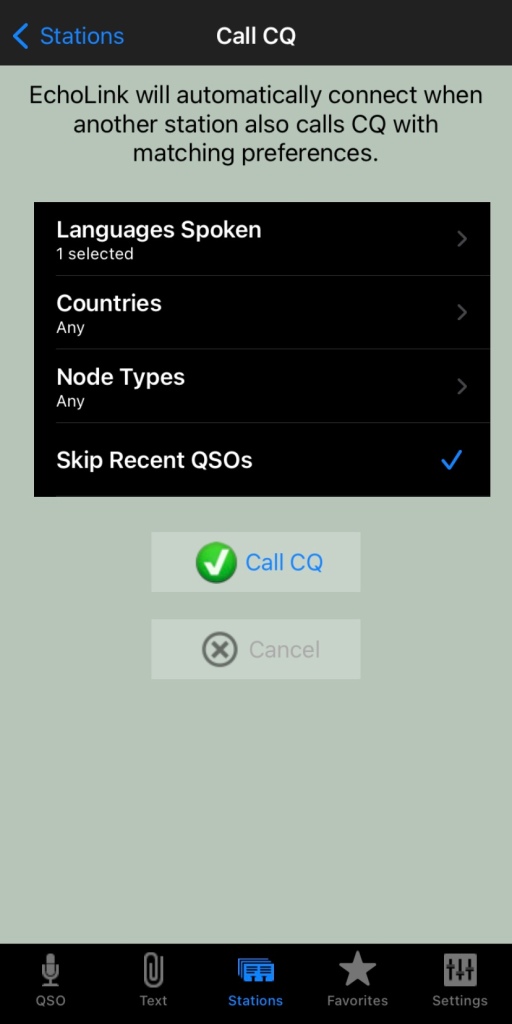
EchoLink had a CQ feature where you can call CQ and it will automatically connect to someone who is calling CQ also.

From the Stations screen select call CQ.

  • Then select your language.
  • Select the country, if you leave it as any, you will not limit your connection options
  • Select the node type, again, leave as any to start with
  • And you can skip recent if you want to.

Then press Call CQ

It will call CQ for a while searching for a connection that matches your settings. I find that sometimes it tries to connect to another node but can fail. This is perhaps because the connection drops out for whatever reason. Just try again.

The good thing about this option is you will get someone who is wanting to talk to someone just like you do!

What is your experience with EchoLink? What is your favourite nodes? Why don’t you put it in the comments below so we can all learn from your experiences.

Some similar reading

  • Lightning Storm & HF Radio
    HF radio and lightning storms are closely connected because lightning creates strong radio frequency interference that affects HF radio communication (3–30 MHz). High Frequency radio is commonly used for amateur radio (ham radio), marine radio,…
  • OpenHamClock
    OpenHamClock is an open-source amateur radio dashboard designed as a modern successor to the original HamClock used by radio amateurs worldwide. It provides a real-time visual display of essential ham radio propagation data, world clocks,…
  • Radtel P8 PoC radio
    The Radtel P8 PoC radio is a Push-to-Talk over Cellular (PoC) device that looks like a traditional walkie-talkie but communicates using 4G/LTE mobile networks instead of UHF/VHF radio frequencies. This means its effective range is…
  • What is an Antenna Coupler
    An antenna coupler (also called an antenna tuner or matching network) is a device used in radio systems to ensure impedance matching between a transmitter and an antenna. Most transmitters are designed for a specific…
  • Antennas
    Amateur radio operators use many different antenna types, each designed for specific bands, space limits, and operating goals. Here’s a clear overview of the most common ones and why hams choose them. Wire Antennas These…
  • Dipole Antenna for Portable Use – Make your own!
    A dipole antenna is a basic radio antenna made of two conductive elements fed at the center. It is typically a half-wavelength long and is widely used as a reference antenna in antenna theory and…
  • Interference
    Interference in Amateur Radio refers to unwanted signals that disrupt radio communication. This interference can reduce signal clarity, make contacts difficult, or completely block communication between amateur radio operators. Radio Frequency Interference (RFI) is one…
  • 6m and TV Channel 0
    Prior to 1989, it was illegal to operate between 50 MHz and 52 MHz in Australia. It was a real pain as that was where all the action was when the band opened up. However,…
  • Dipole Antennas Vs Long Wire Antennas
    I’ve heard a lot about dipole antennas, and I’ve heard a lot about long wire antennas also. I would say I’ve seen more dipoles than long wire antennas. So why is that? What is the…
  • Repeater-START
    Repeater-START is a multi-platform app designed for ham radio and radio-operator enthusiasts who need fast access to repeater information. The app provides a detailed repeater map as well as a distance-sorted list, allowing users to…