Parks & Peaks App

I’ve been using the Parks and Peaks app on iphone and ipad for a little while now and quite enjoyed it.  There don’t seem to be many iphone apps compared to android, so when there is one, I usually have a look.  This one caught my eye as it was not only free, but useful.

After using it for a while, I contacted the author of the app, Sue Southcott, VK5AYL where she was thrilled that I would do a review on this free app, and provided me with a bit more information about her and the app.

The current version is for iphone only at this stage, but I think there are plans to expand this.  It allows users to Spot, Alert and export in ADIF and or spreadsheet format.

The app also allows users to search for sites including parks, peaks and silos by site ID. Or you can search by partial site name or by using the inbuilt map.

Setting up the map and connecting site data by longitude/latitude co-ordinates has been Sue’s favourite part.  Sue said “I already had the experience of connecting data to mapping systems during my career.

The following awards are handled – WWFF, SOTA, HEMA, IOTA, KRMNPA, SANPCPA, SIOTA, SHIRES, ZLOTA & POTA. 

Parks & Peaks is an Australian website that collects data from Amateur Radio operators who get out of their shacks and operate their radios portable in parks or on peaks.  It also collects data from those who Spot them.

AU/NZ sites can be downloaded to the device for use when there is no network available.

It will also produce multiple logs for one activation, so if you are on a Summit in a WWFF Park with a Pota reference, you will get 3 logs, one for SOTA, one for WWFF and one for POTA.

There is also a quick way to log activators as I show in the video below.

About Sue VK5AYL….

Sue has had her Advanced Amateur licence for a very long time and it led to her decision to study IT back in the 80s. 

For over 30 years, she had a successful career as an IT Manager, Analyst/Programmer, TAFE Lecturer and even my own software business, contracting to many organisations.

Most of her work involved working on client/server applications for large businesses. 

In 2014, Sue decided to learn how to write an iOS app and along came Parks & Peaks, which gave me something to work on. After purchasing a Mac Pro Sue had to learn how to use it very quickly, along with the new Apple language. 

In 2015, Sue presented version 1 to the WIA AGM in SA.  Since then, Sue has released versions 2 and 3 and compared to version 1, they had many more features.  Sue told me she loved every minute of developing the app as it has been a massive challenge and allowed her to continue with my love of programming.

Why not have a look at my video on this app where you can see it in full operation:


If you enjoyed that read, please remember to like and subscribe so you get updates as they happen. Below are some more reads you may enjoy from this site:

Flrig

Flrig is a transceiver control program designed to be used either stand alone or as an adjunct to fldigi (see my review on this). The supported transceivers all have some degree of CAT. The flrig user interface changes to accommodate the degree of CAT support available for the transceiver in use.

Download Flrig here, but not via the green button, select the setup.exe file below (if for windows).

Once installed, all I did was press the Config menu and select Setup and Transceiver. From this window, I selected my radio on the receiver page, then the relevant com port, baud rate as per the radio and selected Init. and it just worked.

While in that area, you may want to return to the Config menu and then select UI and then turn tool tips on. This will help you around the program.

The picture to the right shows a few screens of Flrig working with my radio. You can see live SWR, power used and a few others. Down the bottom is how I can quickly switch bands. If you have band stacking on this works in well also. The second bottom screen is the VFO A or B (B is on in this example)

I can tune in a frequency via Flrig, or Flrig will update should I change settings on the radio.

Another benefit of this simple software is you can point other software to it. This may include logging software and digital decoding software.

A great little free program with a lot of benefits.

Links

  • Download Flrig here, but not via the green button, but the setup.exe file below (if for windows)

If you enjoyed that read, here are some more you may enjoy:

  • Using an Android TV Box for Ham Radio
    If you want to get onto Digital Radio for less (way less) than $100, then you may be interested in this. I have Apple equipment, and therefore miss out on a lot…
  • Orion Push to Talk
    Orion is an app that isn’t really known in my world, perhaps because it isn’t available on all platforms, or because it does transmit your exact location to everyone on the channel.…
  • WizNet DMR
    The WizNet DMR app is still in beta testing, and at the time of writing this, you have to not only have a currently have a licence as an Amateur Radio Operator,…
  • The Radio Box
    How do you stop a hand held radio from falling and being damaged? Do you sometimes put the radio down on a bench or desk between overs or while you are waiting…
  • Amateur Radio Nets
    A list of Radio nets we have gathered from web pages around the world, as well as friends etc.…
  • USB Device Error PL2303HXA
    I went into the device manager and found the error, my cable no longer worked. This same issue happened to a USB Card reader also.…
  • ProScan and ProScan Client
    I recently started using ProScan after years of using FreeScan. I have always enjoyed using FreeScan as it is easy to setup, I can download outputs from the software, and the main reason “it works”. However ProScan seems to be more graphical and has different features also.…
  • ProScan and ProScan Client Update
    I recently started using ProScan after years of using FreeScan. I have always enjoyed using FreeScan as it is easy to setup, I can download outputs from the software, and the main reason “it works”. However ProScan seems to be more graphical and has different features also.…
  • The History of Ham Radio
    A good friend of mine, Mike VK5ZC, put the information below together and asked me to put it on my web site. He has spent a lot of time putting it together with pictures and videos, so I encourage you to have a good read.…
  • Basic Antenna Fundamentals
    A good friend of mine, Mike VK5ZC, put the information below together and asked me to put it on my web site. He has spent a lot of time putting it together with pictures and videos, so I encourage you to have a good read.…
  • Australian DMR Repeaters
    There are several DMR networks around the world, and more and more start all the time. The Australian DMR network currently covers the entire country and is for Australian residents only. It…
  • Iphone won’t download photos
    I get the “Device is unreachable” Error message when trying to import media from iPhone to Windows 10 PC. …

Fishing Line Antenna DIY

With so many different HF antennas available, I often wondered what people in high rise buildings did.  If they can not put an antenna on the roof, what options are left for them?  I talk to so many people from Asian cities who would have this problem, and occasionally I see what they do.

The easiest option is to stay on digital like DMR.  These only require internet, and a hand held radio, but this always asks the question, is this real amateur radio?  My opinion is if it connects people that are licenced and only licenced people can uses it, then I guess it is, while understanding it may not be everyone’s cuppa.  I do understand there are many even in Australia in retirement villages who only have the option of digital radio due to restrictions on antennas.

Today, I made contact with Lok Shui Fan VR2VAZ in Hong Kong, and on his QRZ page, he came up with an amazing idea that clearly works for him.  While it is not going to be the best antenna ever seen, it is perhaps the best antenna he is able to use.  Given we are about 7450 km (4627 miles) apart, and still made contact on this antenna, you can’t say it doesn’t work.

On his QRZ page, Lok says “This is my DIY HF Fish Pole Antenna. Can be used under 80M,40M,30M, 20M, 17M, 15M, 12M, 10M band.”

He also says “If I am not playing radio, all the antenna will be hidden in flower bed”.

There are more photo’s on his QRZ page. He even has a youtube video on it.

I guess it would feel like catching contacts everytime you made a contact. If you enjoyed fishing and radio, this might be a bit of fun for you?

I think it is a fantastic idea.  What do you think? Have you built your own antenna that camouflage’s when not in use?

If you enjoyed this read, here are some other reads you may enjoy also:

  • Using an Android TV Box for Ham Radio
    If you want to get onto Digital Radio for less (way less) than $100, then you may be interested in this. I have Apple equipment, and therefore miss out on a lot of the testing apps that are only available…
  • Orion Push to Talk
    Orion is an app that isn’t really known in my world, perhaps because it isn’t available on all platforms, or because it does transmit your exact location to everyone on the channel. However there are some benefits to this mode…
  • WizNet DMR
    The WizNet DMR app is still in beta testing, and at the time of writing this, you have to not only have a currently have a licence as an Amateur Radio Operator, but approved to be part of the beta…
  • The Radio Box
    How do you stop a hand held radio from falling and being damaged? Do you sometimes put the radio down on a bench or desk between overs or while you are waiting for someone to call you? Some radio’s don’t…
  • Amateur Radio Nets
    A list of Radio nets we have gathered from web pages around the world, as well as friends etc.…
  • USB Device Error PL2303HXA
    I went into the device manager and found the error, my cable no longer worked. This same issue happened to a USB Card reader also.…
  • The History of Ham Radio
    A good friend of mine, Mike VK5ZC, put the information below together and asked me to put it on my web site. He has spent a lot of time putting it together with pictures and videos, so I encourage you to have a good read.…
  • Basic Antenna Fundamentals
    A good friend of mine, Mike VK5ZC, put the information below together and asked me to put it on my web site. He has spent a lot of time putting it together with pictures and videos, so I encourage you to have a good read.…
  • Australian DMR Repeaters
    There are several DMR networks around the world, and more and more start all the time. The Australian DMR network currently covers the entire country and is for Australian residents only. It can often be hard to find which DMR…
  • BlueDV Windows 10 GD-77
    I found it hard to find useful information on how to run the OpenGD-77 hotpot mode with Windows 10. At the time of writing this, there is a lot about this topic using a pistar and even android or ISO, but not much with Windows 10. This is my experence with BlueDV and Open GD-77 using a Windows 10 PC.…

Portable HF all band Antenna and Mount
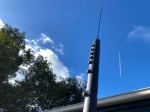
I recently got the Radioddity M916 Heavy duty antenna magnetic mound with the Radioditty HF-008 all band portable antenna. I had always wanted to use HF more while camping or going on adventures around Australia (see our adventures page if you are interested), and now I am a step closer to doing that.

What the Antenna looks like. Radioditty HF-008

This quick video above and below shows how it arrived and what is in the box.

What the magnetic base looks like. Radioditty M916

The Antenna

Let’s talk about the antenna first…

The antenna is a portable telescopic antenna that covers HF bands 80m up to 6m. It comes with several parts that you adjust according to the band you want to use. You can also adjust it to the part of that band if you want the best SWR. I was surprised at first that there was only one page of instructions, however, I soon realised that is really all you need.

You can download manual here if you want to see how easy it is. My video below shows you how to do it and how I went. I connected my NanoVNA to it to see what the SWR is which was very interesting.

The antenna worked great when I took it away from my house and other buildings. Clearly height is an advantage when on HF, and having this antenna on the top of the car is best. But it is also great if you have your car parked up high on a hill.

I was easily able to talk to others on the antenna, and it took no time at all to change bands, especially if you mark the antenna with your best settings. It may be best to use a grey led pencil to start with so you can adjust as required. My video below shows the step by step process.

Although I didn’t video every band, I did manage to tune it in on all bands as advertised. This included 80 metres through to 6 metres. All the connectors were well built, looked good, and easy to use. According to the specifications, this antenna can withstand a PEP of 200W SSB and 100W CW.

This antenna is made for portable use, so clearly this would be a great POTA antenna. It is best used with the base as mentioned below.

Before I talk about the base, one final tip. I got some PVC pipe from the hardware store so it can slide into it protected. This way nothing gets lost or broken. Everything stays together in transit. Have a look in my video below as to what mine looks like.

You can purchase the antenna via this link, or use the following link to receive a discount.

The Base

The base is very strong and heavy, as you would expect it to be, as it has three large magnets on it. I did like the RG58 coax from it. Sometimes the coax can be in-flexible, however this coax was great and soft. It can easily go into the car or beside it to your radio.

The antenna has a SO-239 connector, so you could use this base with other antennas that are smaller, like a dual band UHF/VHF antenna and then you could use it mobile. I tried this and it worked well.

I have had several magnetic antennas before over the last few decades. If you are going to use it while mobile, you need to make sure the antenna will not get blown off while mobile. The last thing you want is a large antenna blown off and it takes the mount with it and breaks your vehicle. This base with the HF-008 is only for still operations, not while mobile. But you can leave the base on the roof and just unscrew your antenna. Just put the protective cup back on the SO-239 to keep any water and dust off it.

Magnetic bases are great, as you get the antenna right in the centre of the car roof without drilling holes into the vehicle. This centre position is the best position.

See how I went setting this antenna up

In Summary

In summary, this appears to be a great portable antenna for remote use. I strongly recommend getting some PVC pipe though to keep it safe. As a family, we do a lot of traveling, all over Australia, and I plan on taking this setup with my on our next trip. I might even put the magnetic base on our caravan which is higher than the car, and then CQ the world from inside our van.

Hopefully you hear me while we travel soon.

If this helped you, please give us a thumbs up below, and don’t forget to subscribe to this blog for more updates. There is a lot more information on this website which I have put together to help other people enjoy the hobby as much as I do.

Other Reads

If you enjoyed this read, here are some other things you may enjoy also: