
Interference in Amateur Radio refers to unwanted signals that disrupt radio communication. This interference can reduce signal clarity, make contacts difficult, or completely block communication between amateur radio operators.

Radio Frequency Interference (RFI) is one of the most common problems in amateur radio. It often comes from man-made electronic devices such as phone chargers, computers, LED lights, televisions, and power supplies. These devices can produce continuous noise or buzzing sounds across radio bands.
Natural Interference also affects amateur radio operations. Lightning causes static noise, while solar activity can disrupt or enhance signals, especially on HF bands. Atmospheric conditions play a major role in how radio waves travel and how much noise is present.
Adjacent Channel Interference and Harmonics occur when signals spill over into nearby frequencies or when transmitters emit unwanted signals outside their assigned band. This is usually caused by poor filtering, excessive power, or improperly adjusted equipment.
Managing and Reducing Interference is an important responsibility for amateur radio operators. Techniques include proper grounding, using quality cables, installing filters, adding ferrite chokes, and ensuring transmitters produce clean signals.
Rules and Responsibilities in Amateur Radio require operators to avoid causing harmful interference, accept interference from other legal users, and correct any problems their station may cause. Cooperation among amateur radio operators helps identify and resolve interference issues effectively.
Options
Amateur radio interference can be reduced by controlling unwanted radio-frequency (RF) energy and improving how equipment handles it. One of the most effective methods is using ferrite chokes on coaxial cables, power leads, and the cables of affected devices. These chokes block RF from traveling along cables and significantly reduce interference.
Good grounding and bonding are also essential. The radio, power supply, and antenna system should be properly grounded, with metal parts bonded together using short, thick wires. A single, well-designed ground point helps prevent RF from spreading into household wiring and electronics.
The antenna system plays a major role in interference. A properly tuned antenna with low SWR reduces stray RF, and placing the antenna farther from buildings and electronics helps limit interference. Using baluns or common-mode chokes at the antenna feed point can further prevent RF from flowing back along the coax.
Interference can also be reduced by lowering transmit power to only what is necessary and by using filters such as low-pass or band-pass filters. Replacing or relocating noisy household electronics—like cheap power adapters or LED lights—can improve reception. Finally, using shielded cables, keeping wiring short, and changing frequency or band when needed can help minimize interference even further.
What about you?
I would love to hear what you have experienced and done about radio interference. Did you cause it? Did you experience it? What helped?
If you enjoyed this read, here are some others you may enjoy
- 10 metres 28.490
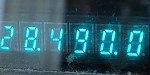 On the 10-metre band, 28.490 is the unofficial calling frequency for Australia and New Zealand. This is interesting as the Band plans state it is 28.390 as the recommended intra-VK calling frequency. That said, 28.490 is more recognised as the unofficial calling…
 - 160 Meters Band
 160 meters band is known as the “Gentlemen’s band”. It is right next to the AM commercial band, known as medium wave. The 160-meter band is the radio frequencies between 1.8 and 2 MHz. For many decades it was the lowest radio…
 - 6m and TV Channel 0
 Prior to 1989, it was illegal to operate between 50 MHz and 52 MHz in Australia. It was a real pain as that was where all the action was when the band opened up. However, after many requests from the WIA to…
 - Amateur Radio NetsA list of Radio nets we have gathered from web pages around the world, as well as friends etc.…
- Amateur TV
 Amateur Radio Television (ATV), often called “ham TV,” is a niche part of amateur television where licensed radio operators transmit live video and audio over radio frequencies instead of traditional broadcast networks. It is essentially an extension of amateur (ham) radio, using…
 - Antennas
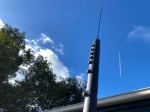 Amateur radio operators use many different antenna types, each designed for specific bands, space limits, and operating goals. Here’s a clear overview of the most common ones and why hams choose them. Wire Antennas These are some of the simplest and most…
 - Anytone 778UV Key Assignment
 Key Assignment For some reason, not all the key assignment options are in the manual and after a bit of searching, I found no complete list. Hopefully this below helps you in selecting your Key Assignments on the main unit P1-P6 keys,…
 - Anytone AT-778UV
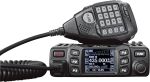 Overview The Anytone AT-778UV is a dual-band VHF/UHF mobile transceiver designed for amateur radio operators. It operates on the 136–174 MHz (VHF) and 400–490 MHz (UHF) bands, offering reliable two-way communication for both ham radio and commercial use (depending on firmware version).…
 - Australian DMR RepeatersThere are several DMR networks around the world, and more and more start all the time. The Australian DMR network currently covers the entire country and is for Australian residents only. It can often be hard to find which DMR repeaters are…
- Band Stacking
 Have you ever tried Band Stacking before? This is where you have three options per band every time you go to that band. For example, you may have one set up on SSB, one on CW and another on Data, all on…
 VK3TBS