
The Baofeng UV-5R Mini handheld radio is a popular and affordable dual-band amateur radio transceiver widely used by beginners and experienced ham radio operators. Designed as a compact version of the original UV-5R, this small and lightweight VHF/UHF walkie talkie offers solid performance for everyday communication, making it a common choice for those getting started in amateur radio (ham radio).

The UV-5R Mini operates on both VHF (136–174 MHz) and UHF (400–520 MHz) frequencies, supporting communication on the 2 metre and 70 centimetre amateur bands. With a typical output power of around 5 watts, it is suitable for short to medium range communication, including simplex operation and repeater use. Many versions include features such as CTCSS and DCS tones, allowing access to repeaters and private channel setups.
This compact handheld radio includes a range of useful functions, such as 128 memory channels, a built-in FM broadcast radio receiver, VOX hands-free operation, and a small LED flashlight. Some newer UV-5R Mini models also support USB-C charging and Bluetooth programming, making them easier to configure using smartphone apps or software like CHIRP programming software on a computer.
Compared to the standard UV-5R, the Mini version is more portable and pocket-friendly, though it often comes with a smaller battery and display. Despite the reduced size, the RF performance is generally similar, making it a convenient option for portable use, hiking, or as a backup two-way radio.
The Baofeng UV-5R Mini is known for being a budget-friendly handheld transceiver, which is one of its biggest advantages. It provides access to amateur radio communication, repeater networks, and frequency scanning at a very low cost.
In Australia, the UV-5R Mini can be used legally for listening to radio frequencies, but transmitting requires an amateur radio licence issued by the ACMA. It is important to note that this radio is not approved for UHF CB (477 MHz) or commercial radio use, which are governed by different regulations.
In real-world use, the Baofeng UV-5R Mini typically achieves a range of 1 to 3 kilometres in urban environments, and up to 5 to 10 kilometres or more when using repeaters or operating from elevated locations. Performance can be significantly improved by upgrading to a better antenna or connecting the radio to an external base antenna.
Overall, the Baofeng UV-5R Mini dual-band handheld radio is a great entry-level option for those interested in ham radio communication, repeater operation, and portable VHF/UHF use. It is especially useful as a backup radio or learning tool.
Please comment if you have any thoughts.
If you go via this link, you will get a discount:
https://radioddity.refr.cc/bensangster then search for your item
Direct link here:
If you enjoyed this review, here are some more you may enjoy:
- Anytone 778UV Key Assignment
 Key Assignment For some reason, not all the key assignment options are in the manual and after a bit of searching, I found no complete list. Hopefully this below helps you in selecting your Key Assignments on the main unit P1-P6…
 - Anytone AT-778UV
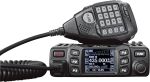 Overview The Anytone AT-778UV is a dual-band VHF/UHF mobile transceiver designed for amateur radio operators. It operates on the 136–174 MHz (VHF) and 400–490 MHz (UHF) bands, offering reliable two-way communication for both ham radio and commercial use (depending on firmware…
 - Baofeng GT-5R Pro
 The first thing I noticed after receiving the radio was the size of the radio. It is small yet not to small that it is hard to use. It fits comfortably in your hand. Not only is it physically small, the…
 - Baofeng K5 Plus Radio
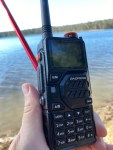 I managed to get one of these radios and was rather impressed with it and what it came with. Have a look what my box had in it. Some of the things I liked included: It is a Tri-Band radio which…
 - Baofeng Radios
 You could say every amateur radio operator knows about the Baofeng if they have been around long enough. Most have held one of their radios and lots have at least one. They have made a huge amount of radios. According to…
 - Baofeng UV-17R Plus Series ReviewI recently got my hands on a new Baofeng UV-17R Plus Series radio. It didn’t take long at all to arrive and was not expensive at all. People these days pay more for a UHF CB radio than a radio that…
- Baofeng UV-5R Mini
 The Baofeng UV-5R Mini handheld radio is a popular and affordable dual-band amateur radio transceiver widely used by beginners and experienced ham radio operators. Designed as a compact version of the original UV-5R, this small and lightweight VHF/UHF walkie talkie offers…
 - Daiwa CN-460M Meter
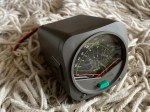 The Daiwa CN-460M is a small cross-needle meter displays both forward and reflected power for 2m and 70cm. It measures in ranges of 15/150 watts forward and 5/50 watts reflected. SO-239 jacks. It includes a mobile mounting bracket and meter illumination option if…
 - DNR – Digital Noise Reduction
 As per the Yaesu FT-710 manual, the Digital Noise Reduction (DNR) system is designed to reduce the level of ambient noise found on the HF and 50 MHz bands. The (DNR) system is especially effective during SSB operation. Any of 15…
 - HF Mobile Antenna CBL-561
 CBL-561 Review The new CBL-561 antenna is strong and light that is fit for mobile work, camping or remote radio use. I plan to use this on our next outback trip! This antenna supports a frequency range of 25-30MHz, covering both…
 - Hiroyasu IC-980 Pro
 I recently got my hands on the Hiroyasu IC-980 Pro dual band base radio. This is pronounced as “Hiro-Yasu”. When I say, got my hands on it, the unit is so small, you only need one hand really! This analogue radio…
 - Portable HF all band Antenna and Mount
 I recently got the Radioddity M916 Heavy duty antenna magnetic mound with the Radioditty HF-008 all band portable antenna. I had always wanted to use HF more while camping or going on adventures around Australia (see our adventures page if you…
 - Radioddity QT80
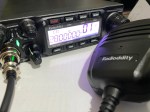 The new QT80 radio by Radioddity is a fantastic radio and I have a lot of contacts on it already. QT60 Vs QT80 This is a QT80 model but there is also the QT60 model so what’s the difference? One thing…
 - Radioddity RA-UV712 Magnet Mount Antenna
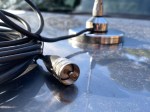 There are lots of duel band antennas available, but most required extra mounting brackets. These brackets often restrict you as to where you can mount the antenna on your car. One of my first mobile antennas for the car was a…
 - Radtel P8 PoC radio
 The Radtel P8 PoC radio is a Push-to-Talk over Cellular (PoC) device that looks like a traditional walkie-talkie but communicates using 4G/LTE mobile networks instead of UHF/VHF radio frequencies. This means its effective range is not limited to a few kilometres…









 VK3TBS