
Prior to 1989, it was illegal to operate between 50 MHz and 52 MHz in Australia. It was a real pain as that was where all the action was when the band opened up.
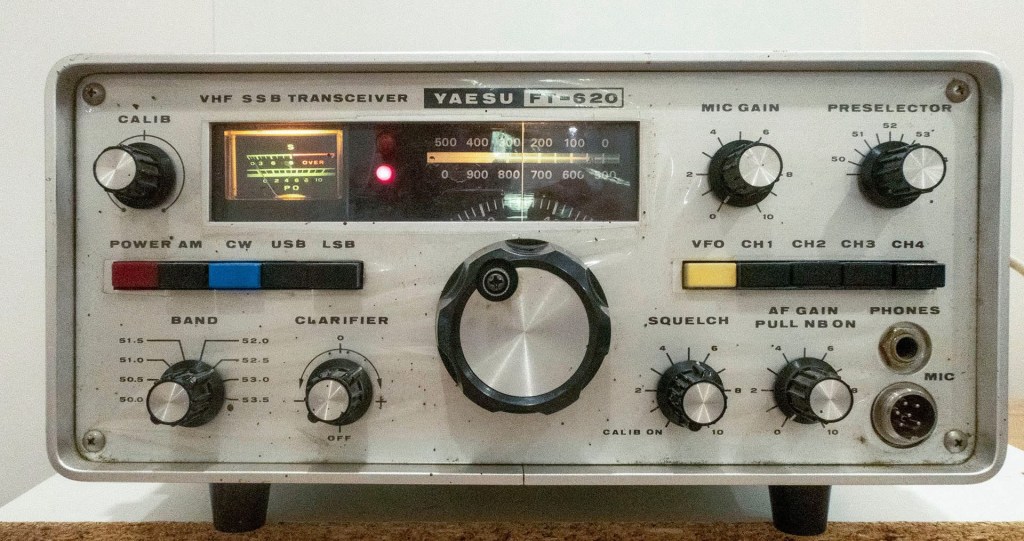
However, after many requests from the WIA to the DoTC back in 1989, it was agreed that this section of the 6m band could be used with some minor amendments.
VK5, VK6, VK8, VK9 & VK0
It was decided VK5, VK6, VK8, VK9 & VK0 stations may operate anywhere between 50 – 52 MHz provided there was no interference caused to the reception of Channel 0 transmissions up to a maximum of 400 watts.
VK2, VK3, VK4 & VK7 (eastern states)
Stations located in VK2, VK3, VK4 & VK7 are permitted to operate provided there was no interference caused to the reception of Channel 0 in the sub-band 50.05 – 50.20 MHz provided they are:
- 120 km from Channel 0 main television stations
- 60 km from Channel 0 translator stations
- 60 km from translator stations with Channel 0 inputs, and
- They must only use emission modes of CW and SSB with a maximum of 100 watts.
VK1 ACT
Stations in VK1 can do the same as other eastern states but without the distance restrictions.
Today
Well that was back in 1989, today TV is all digital and the band is less restrictive now.
A short time ago I happened to make contact with Japan on 6m and also happened to be recording as well. You can watch the whole thing here:
You can see my 6m antenna in this video:
If you want to know more about 6m, see more information here. https://vk3tbs.home.blog/category/amateur-radio/hf/6m/
I personally love 6m and the challenge of it. It works well locally and well when the band is open. But it can close suddenly without notice. Sometimes I’ve spoken long distances and either has received no signal strength at all, but a full S5 copy.
I also enjoy adjusting between vertical and horizontal polarisation.
If you enjoyed this read, please take the time to like and follow this blog. Or let me know what you think of 6m from where you are in the comments below.
If you enjoyed this read, here are some others you may enjoy.
- Baofeng UV-5R Mini
 The Baofeng UV-5R Mini handheld radio is a popular and affordable dual-band amateur radio transceiver widely used by beginners and experienced ham radio operators. Designed as a compact version of the original UV-5R, this…
 - Lightning Storm & HF Radio
 HF radio and lightning storms are closely connected because lightning creates strong radio frequency interference that affects HF radio communication (3–30 MHz). High Frequency radio is commonly used for amateur radio (ham radio), marine…
 - OpenHamClock
 OpenHamClock is an open-source amateur radio dashboard designed as a modern successor to the original HamClock used by radio amateurs worldwide. It provides a real-time visual display of essential ham radio propagation data, world…
 - Radtel P8 PoC radio
 The Radtel P8 PoC radio is a Push-to-Talk over Cellular (PoC) device that looks like a traditional walkie-talkie but communicates using 4G/LTE mobile networks instead of UHF/VHF radio frequencies. This means its effective range…
 - What is an Antenna Coupler
 An antenna coupler (also called an antenna tuner or matching network) is a device used in radio systems to ensure impedance matching between a transmitter and an antenna. Most transmitters are designed for a…
 - Antennas
 Amateur radio operators use many different antenna types, each designed for specific bands, space limits, and operating goals. Here’s a clear overview of the most common ones and why hams choose them. Wire Antennas…
 - Dipole Antenna for Portable Use – Make your own!
 A dipole antenna is a basic radio antenna made of two conductive elements fed at the center. It is typically a half-wavelength long and is widely used as a reference antenna in antenna theory…
 - Interference
 Interference in Amateur Radio refers to unwanted signals that disrupt radio communication. This interference can reduce signal clarity, make contacts difficult, or completely block communication between amateur radio operators. Radio Frequency Interference (RFI) is…
 VK3TBS