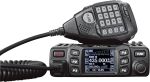
For some reason, not all the key assignment options are in the manual and after a bit of searching, I found no complete list. Hopefully this below helps you in selecting your Key Assignments on the main unit P1-P6 keys, as well as on the microphone PA-PD keys. I have listed them in alphabetical order however under it I have how I have my radio set up.
Selection
Description
A/B
Switch Main Display from A or B
BND
Bandwidth (adjust for low signals)
CAL
Calibration (non-functional)
CDT
CTCSS / DCS options
DIR
Direction of display
MON
Disables squelch
NULL
Will make button do nothing.
POW
Power Level, Low Med Hi
RDW
Dual Watch
REV
Reverse transmit offset and frequency
SCN
Scan, channels or frequencies
SFT
Frequency Offset
SQL
Squelch
TALK
Turns TX off for any particular channel
TRF
Busy channel lockout
VOL
Volume Level, press to change volume instead of channel
VOX
Vox toggle on or off
V/M
Switch from VFO to Memory Channel
Please let me know if I got any wrong or have missed one.
This is how I have set mine up, but as I use the radio, I will change this to suit my needs:
P1
A/B
P2
V/M
P3
MON
P4
SCN
P5
SQL
P6
VOL
P1 mode 2
DIR
P2 mode 2
SFT
P3 mode 2
RDW
P4 mode 2
POW
P5 mode 2
CDT
P6 mode 2
BND
PA
SCN
PB
VOL
PC
POW
PD
RDW
So what are your thoughts on this? How do you setup your radio? Please let me know via the comments below.
Here are some video’s you may enjoy also:
If you enjoyed this, here are some more reads you may enjoy:
The Retevis RT73 and Kydera CDR300UV are identical radios. They are a DMR/FM duel band radio for Amateur radio use. This is great, as most of the early DMR radios available were commercial radios that…
I recently got my hands on a new Baofeng UV-17R Plus Series radio. It didn’t take long at all to arrive and was not expensive at all. People these days pay more for a UHF…
As per the Yaesu FT-710 manual, the Digital Noise Reduction (DNR) system is designed to reduce the level of ambient noise found on the HF and 50 MHz bands. The (DNR) system is especially effective…
I recently got the Radioddity M916 Heavy duty antenna magnetic mound with the Radioditty HF-008 all band portable antenna. I had always wanted to use HF more while camping or going on adventures around Australia…
The first thing I noticed after receiving the radio was the size of the radio. It is small yet not to small that it is hard to use. It fits comfortably in your hand. Not…
The new QT80 radio by Radioddity is a fantastic radio and I have a lot of contacts on it already. QT60 Vs QT80 This is a QT80 model but there is also the QT60 model…
CBL-561 Review The new CBL-561 antenna is strong and light that is fit for mobile work, camping or remote radio use. I plan to use this on our next outback trip! This antenna supports a…
There are lots of duel band antennas available, but most required extra mounting brackets. These brackets often restrict you as to where you can mount the antenna on your car. One of my first mobile…
Why does a radio need a cup holder? I agree it’s a bit odd. But this isn’t a product that involves a cup. Rather it uses a cup holder. Almost every car now has a…
The 2m band has always been an interesting one for me. It used to be swamped with pager interference, but it actually is a great band. Inversion allows your signal to travel long distances at…
Everyone that has been into radio for a while will know the brand Kenwood. And most know Kenwood isn’t only into Amateur radio, they are bigger than that, and have been also. But are you sure it started in Japan? What else do they make? How big are they today? And what does the name Kenwood stand for?
Kenwood is a Japanese brand of consumer electronics.
In December 1946, Kenwood was established as the Kasuga Radio Co. Ltd. in Komagane, Nagano Prefecture, Japan
In 1958 the company put its first amateur radio on sale.
In 1960, the company was renamed Trio Corporation.
In 1962 they launched the industry’s first transistor amplifier
In 1963, the company established its first overseas office in Los Angeles County, California, United States. It began to sell overseas.
During the 1960s, Trio’s products were rebranded and sold by the Lafayette Radio Company, which focused on citizens band (CB) radio.
The name Kenwood was invented by Kasuga as a combination of
“Ken” which is a name common to Japan and North America and was considered acceptable to American consumers, and
“Wood” which was referring to the material wood, as well as suggesting a relation to Hollywood, California.
In 1966 they introduced the fully transistorised audio products for the first time in the industry.
In 1969 the TR-7100 2m amateur radio for the car goes on sale.
In 1979 the company established the first production overseas in Singapore.
In 1986, Trio acquired Kenwood and subsequently rebranded itself as Kenwood Corporation. This was because Kenwood was more widely recognised than Trio.
In 1991 Kenwood signs an official supply contract with McLearen to provide wireless radio equipment for the F1 Championship
In 1992 they produced their first car navigation system
In 1995, the Mir Space Station carries Kenwood’s amateur wireless equipment.
In 1996 the company was renamed from Tri-Kenwood to Kenwood which coincided with the company’s 50th anniversary.
In 1997 Kenwood made Japan’s first car mounted DAB receivers.
In 2001, Kenwood releases its first digital transceiver operating on P25.
In 2002 they withdrew from the test and measuring equipment business
In 2005, Kenwood joins up with Icom to jointly research the standardisation of technical specifications for digital wireless radio equipment (NXDN).
Since October 2008, Kenwood has been owned by JVC-Kenwood because of a merger between Kenwood Corporation and JVC.
Kenwood has manufactured electronic equipment such as
AM/FM stereo receivers,
cassette tape decks/recorders,
amateur radio (ham radio) equipment,
radios,
televisions,
mobile phones,
speakers, and
other consumer electronics.
Radio
Kenwood has produced two-way radios for a variety of communications standards, including:
wireless DECT intercom systems,
the radio frequency PMR446 and its digital counterpart DPMR446,
DPMR, the Project 25 standards suite,
DMR and
NXDN
Kenwood Today
The Kenwood radio catalogue of today shows what radios they are selling now.
These include
hand held radios that are single, dual and tri band radios
Mobile dual band radios some complete with remote heads. Again single and dual band radios.
All band HF radios some small, some are large and covered in buttons and options
And all band HF, VHF and UHF radios
Today their website shows they are into
Car electronics including digital technology and enhanced in-car comfort and navigation. They have some very cool photos of their motorsports equipment on their website. https://www.kenwood.com/e/motorsports/
Communications using digital technology handheld and base stations, from Professional through to CB radios
Audio and digital communications
Kenwood Logo
So, what do you know about the Kenwood logo?
If you go to their smart website, you can see the red triangle in the logo isn’t there to just look pretty.
The red triangle is the core part of their logo and represents the three values of the Kenwood brand.
Advanced
High Quality
Sharpness
But it doesn’t stop there, the four corners of the W stands for
Precision
Innovation
Emotion
Communication
Your thoughts
So, what do you think, does Kenwood measure up to your expectations? Tell me in the comments below.
What Kenwood radios did, or do you have? What did you think of it? I’d love to know.
For me, I have had a few but still use occasionally the Kenwood TS-120V. It was one of my first HF radio’s and I bought it before the internet was available. I though it was the 100W version, but quickly found out it is not. That said, I enjoy using it every now and then.
So, what did what you learn? I know I learnt a bit. I’m keen to hear what you learnt today.
How many of the Kenwood Radios do you know that I have shown in this video?
If you enjoyed that read, then you may enjoy some of these, including my post on Yaesu which is just as informative.
Radioditty sent the new GS-10B Pro to me before it was released as they wanted you to see it first. When sending it, they never told me what to say, only to review it. So below is what I honestly experienced. This handheld radio is…
CW Skimmer is a popular amateur radio software program used for decoding Morse code signals on the HF bands. The program is widely used by ham radio operators, DX chasers, and contest stations because it can monitor and decode many CW signals at the same…
ADIF Master is a popular amateur radio logging software tool used for editing and managing ADIF log files. ADIF stands for Amateur Data Interchange Format, which is the worldwide standard used by ham radio operators to share QSO log information between different logging programs and…
The 15 metre band is one of the most popular HF amateur radio bands for long-distance communication, offering an excellent balance between reliability and worldwide reach. Frequency Range The standard frequency range for the 15m band is 21.000 MHz to 21.450 MHz. Within this range,…
The AOR AR1000XLT is a popular wideband scanner receiver that became well known among radio enthusiasts, amateur radio operators, aviation listeners, and shortwave hobbyists during the late 1980s and early 1990s. The scanner was designed to receive a massive range of radio frequencies, making it…
Maximum Usable Frequency (MUF) is an important concept in HF radio propagation and amateur radio communications. It refers to the highest frequency that can be used for reliable communication between two locations by reflecting off the ionosphere. If a radio signal is transmitted above the…
World Amateur Radio Day is celebrated every year on April 18, marking the founding of the International Amateur Radio Union (IARU) in 1925. The organisation was established in Paris when amateur radio societies from around the world joined together to represent radio operators and protect…
Amateur Radio Television (ATV), often called “ham TV,” is a niche part of amateur television where licensed radio operators transmit live video and audio over radio frequencies instead of traditional broadcast networks. It is essentially an extension of amateur (ham) radio, using higher bandwidth signals…
The Baofeng UV-5R Mini handheld radio is a popular and affordable dual-band amateur radio transceiver widely used by beginners and experienced ham radio operators. Designed as a compact version of the original UV-5R, this small and lightweight VHF/UHF walkie talkie offers solid performance for everyday…
HF radio and lightning storms are closely connected because lightning creates strong radio frequency interference that affects HF radio communication (3–30 MHz). High Frequency radio is commonly used for amateur radio (ham radio), marine radio, aviation HF communication, emergency communications, and long-distance shortwave listening. HF…
OpenHamClock is an open-source amateur radio dashboard designed as a modern successor to the original HamClock used by radio amateurs worldwide. It provides a real-time visual display of essential ham radio propagation data, world clocks, DX activity, and space weather information in a single, easy-to-read…
The Radtel P8 PoC radio is a Push-to-Talk over Cellular (PoC) device that looks like a traditional walkie-talkie but communicates using 4G/LTE mobile networks instead of UHF/VHF radio frequencies. This means its effective range is not limited to a few kilometres like standard two-way radios,…
An antenna coupler (also called an antenna tuner or matching network) is a device used in radio systems to ensure impedance matching between a transmitter and an antenna. Most transmitters are designed for a specific impedance, commonly 50 ohms, while antennas often vary depending on…
Amateur radio operators use many different antenna types, each designed for specific bands, space limits, and operating goals. Here’s a clear overview of the most common ones and why hams choose them. Wire Antennas These are some of the simplest and most popular antennas that…
A dipole antenna is a basic radio antenna made of two conductive elements fed at the center. It is typically a half-wavelength long and is widely used as a reference antenna in antenna theory and practice. Dipole antennas work by converting alternating current into electromagnetic…
Interference in Amateur Radio refers to unwanted signals that disrupt radio communication. This interference can reduce signal clarity, make contacts difficult, or completely block communication between amateur radio operators. Radio Frequency Interference (RFI) is one of the most common problems in amateur radio. It often…
Prior to 1989, it was illegal to operate between 50 MHz and 52 MHz in Australia. It was a real pain as that was where all the action was when the band opened up. However, after many requests from the WIA to the DoTC back…
I’ve heard a lot about dipole antennas, and I’ve heard a lot about long wire antennas also. I would say I’ve seen more dipoles than long wire antennas. So why is that? What is the difference between them? Which is better? If one is a…
Repeater-START is a multi-platform app designed for ham radio and radio-operator enthusiasts who need fast access to repeater information. The app provides a detailed repeater map as well as a distance-sorted list, allowing users to easily locate nearby communication points wherever they travel. Because it…
What Is the 6m Band? The 6-meter band, spanning roughly 50–54 MHz, is a section of the VHF spectrum assigned to amateur radio operators. Its wavelength is six meters, and its position between HF and VHF makes it behave like a mix of both services.…
Overview The Anytone AT-778UV is a dual-band VHF/UHF mobile transceiver designed for amateur radio operators. It operates on the 136–174 MHz (VHF) and 400–490 MHz (UHF) bands, offering reliable two-way communication for both ham radio and commercial use (depending on firmware version). Power Output This…
160 meters band is known as the “Gentlemen’s band”. It is right next to the AM commercial band, known as medium wave. The 160-meter band is the radio frequencies between 1.8 and 2 MHz. For many decades it was the lowest radio frequency band allocated…
Have you ever had an antenna and forgotten what it is for? Maybe you have been given one and wasn’t told exactly what it was used for. I got given an antenna at at ham fest because it didn’t sell. Funny enough after I got…
Yes, this popular girl name is actually an Amateur Radio term. Christian, DK8EW, put me onto Olivia after we chatted on VARA HF. I had heard about Olivia before, but he encouraged me to give it ago. Soon I made contact with VK4XP and must…
The Yaesu FT-620 (and its updated version, the FT-620B) is a vintage amateur radio transceiver designed specifically for the 6-meter band (50–54 MHz). Produced in the 1970s, it offers support for AM, CW, and SSB (USB/LSB) modes, making it a versatile rig for its time, especially during the era when 6 meters…
I came across something different, FreeDV. The name FreeDV insinuates it is free, but is it? What is it? And what does it do? They say it will be the new SSB of radio. They say it is clear and goes further when conditions are…

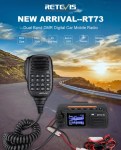 The Retevis RT73 and Kydera CDR300UV are identical radios. They are a DMR/FM duel band radio for Amateur radio use. This is great, as most of the early DMR radios available were commercial radios that…
 I recently got my hands on a new Baofeng UV-17R Plus Series radio. It didn’t take long at all to arrive and was not expensive at all. People these days pay more for a UHF…
 As per the Yaesu FT-710 manual, the Digital Noise Reduction (DNR) system is designed to reduce the level of ambient noise found on the HF and 50 MHz bands. The (DNR) system is especially effective…
 I recently got the Radioddity M916 Heavy duty antenna magnetic mound with the Radioditty HF-008 all band portable antenna. I had always wanted to use HF more while camping or going on adventures around Australia…
 The first thing I noticed after receiving the radio was the size of the radio. It is small yet not to small that it is hard to use. It fits comfortably in your hand. Not…
 The new QT80 radio by Radioddity is a fantastic radio and I have a lot of contacts on it already. QT60 Vs QT80 This is a QT80 model but there is also the QT60 model…
 CBL-561 Review The new CBL-561 antenna is strong and light that is fit for mobile work, camping or remote radio use. I plan to use this on our next outback trip! This antenna supports a…
 There are lots of duel band antennas available, but most required extra mounting brackets. These brackets often restrict you as to where you can mount the antenna on your car. One of my first mobile…
 Why does a radio need a cup holder? I agree it’s a bit odd. But this isn’t a product that involves a cup. Rather it uses a cup holder. Almost every car now has a…
 The 2m band has always been an interesting one for me. It used to be swamped with pager interference, but it actually is a great band. Inversion allows your signal to travel long distances at…



 VK3TBS