
I came across something different, FreeDV. The name FreeDV insinuates it is free, but is it? What is it? And what does it do?
They say it will be the new SSB of radio. They say it is clear and goes further when conditions are not great.
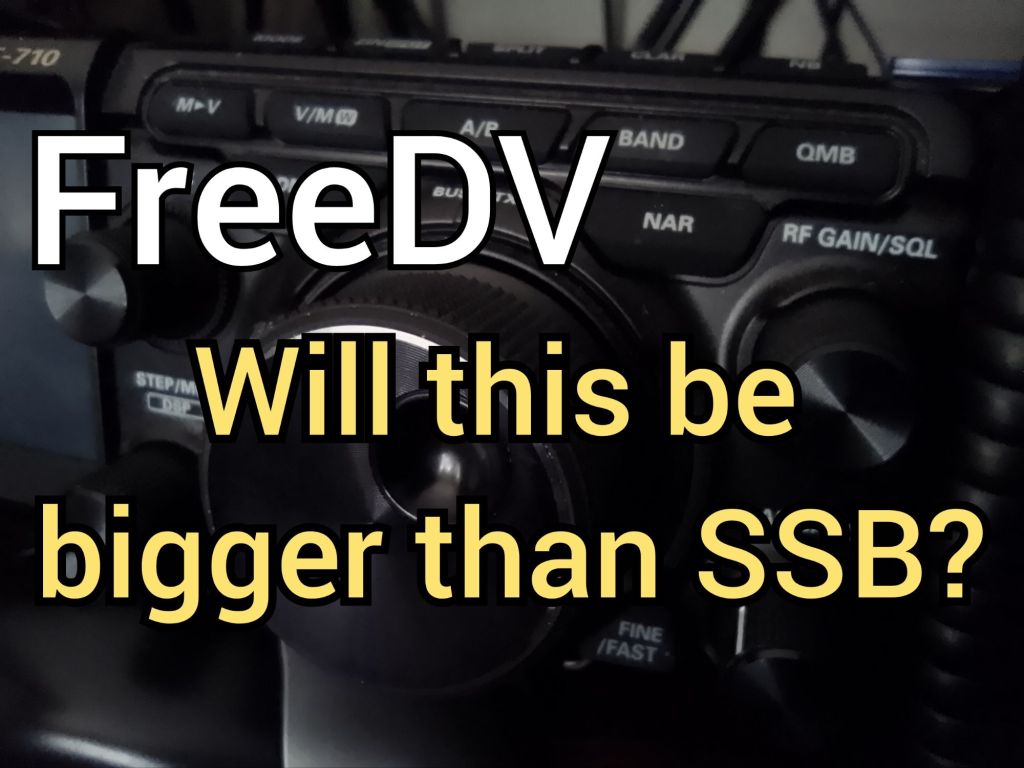
Here is what else I found:
FreeDV is an open-source digital voice mode designed for amateur radio operators, enabling digital communicationover HF (high-frequency) bands. It uses the Codec2 audio codec for low bit-rate voice compression, allowing clear voice transmission in narrow bandwidths (typically 1.1–1.6 kHz), which is more efficient than traditional SSB (Single Sideband).
The system requires:
- A computer with the FreeDV software,
- An HF transceiver, and
- An audio interface or sound card for connection.
As a free and open-source project, FreeDV supports experimentation, digital innovation, and promotes efficient spectrum use within the ham radio community.
Rade
RADE V1 (Radio Autoencoder) is the latest digital voice mode introduced in FreeDV 2.0.0 (released June 2025). It combines Machine Learning (ML) and Digital Signal Processing (DSP) to provide a neural voice codec optimized for HF (high-frequency) amateur radio.
Key Features:
- ML-based autoencoder architecture integrates voice compression, modulation, and error correction.
- Operates within 1.5 kHz bandwidth, suitable for narrowband HF channels.
- Achieves intelligible voice transmission down to –2 dB SNR, outperforming analog SSB and earlier FreeDV modes like 700D or 1600.
- Uses the Codec2 framework as part of its signal chain.
Performance & Enhancements:
- Enhanced voice quality, robustness under weak-signal, fading, and QRM conditions.
- Integrated with FreeDV Reporter and PSK Reporter for real-time signal tracking.
- Latest builds (e.g.,
2.0.0‑20250130) include:- Live SNR monitoring
- Improved sync algorithms
- Optimized C-based signal processing backend
- Signed macOS binaries, and better Python startup performance
Some FreeDV videos
Below are some videos I’ve done on this project.
I’d encourage you to give FreeDV a go. It seems to work well and so clear. But I am keen to hear what your thoughts are on this? Have you used it? Have you tried? Please let me know in the comments.
If you enjoyed this read, here are some more things you may have missed
- Olivia Digital Mode MFSK
 Yes, this popular girl name is actually an Amateur Radio term. Christian, DK8EW, put me onto Olivia after we chatted on VARA HF. I had heard about Olivia before, but he encouraged me to give it ago. Soon I made contact with VK4XP and must say…
 - FreeDV
 I came across something different, FreeDV. The name FreeDV insinuates it is free, but is it? What is it? And what does it do? They say it will be the new SSB of radio. They say it is clear and goes further when conditions are not…
 - VARA – VARAC
 Ever heard this sound on HF / VHF / UHF? I know I have more and more recently. After a bit of research, someone told me it was VARAC. https://www.varac-hamradio.com/ As I understand it, the project started with Irad Deutsch 4Z1AC. It is free of charge…
 - DXHeat.com
 DXHeat.com is a great website that can update you the current conditions on each band. The website has filtering of incoming DX Spots which can be displayed instantly using great graphical tools. From the main landing page dxheat.com you can do a search by call sign…
 - NetTime
 When using digital over the radio, it is particularly important you have the correct time. Even a second out will stop you from making contacts. I relied on Windows to update the time and got an email from a helpful amateur telling me my time was…
- Baofeng UV-5R Mini
 The Baofeng UV-5R Mini handheld radio is a popular and affordable dual-band amateur radio transceiver widely used by beginners and experienced ham radio operators. Designed as a compact version of the original UV-5R, this small and lightweight VHF/UHF walkie talkie offers solid performance for everyday communication, making…
 - Lightning Storm & HF Radio
 HF radio and lightning storms are closely connected because lightning creates strong radio frequency interference that affects HF radio communication (3–30 MHz). High Frequency radio is commonly used for amateur radio (ham radio), marine radio, aviation HF communication, emergency communications, and long-distance shortwave listening. HF signals travel…
 - OpenHamClock
 OpenHamClock is an open-source amateur radio dashboard designed as a modern successor to the original HamClock used by radio amateurs worldwide. It provides a real-time visual display of essential ham radio propagation data, world clocks, DX activity, and space weather information in a single, easy-to-read interface. Built…
 - Radtel P8 PoC radio
 The Radtel P8 PoC radio is a Push-to-Talk over Cellular (PoC) device that looks like a traditional walkie-talkie but communicates using 4G/LTE mobile networks instead of UHF/VHF radio frequencies. This means its effective range is not limited to a few kilometres like standard two-way radios, but instead…
 - What is an Antenna Coupler
 An antenna coupler (also called an antenna tuner or matching network) is a device used in radio systems to ensure impedance matching between a transmitter and an antenna. Most transmitters are designed for a specific impedance, commonly 50 ohms, while antennas often vary depending on frequency and…
 - Antennas
 Amateur radio operators use many different antenna types, each designed for specific bands, space limits, and operating goals. Here’s a clear overview of the most common ones and why hams choose them. Wire Antennas These are some of the simplest and most popular antennas that include: Dipole…
 - Dipole Antenna for Portable Use – Make your own!
 A dipole antenna is a basic radio antenna made of two conductive elements fed at the center. It is typically a half-wavelength long and is widely used as a reference antenna in antenna theory and practice. Dipole antennas work by converting alternating current into electromagnetic waves. Their…
 - Interference
 Interference in Amateur Radio refers to unwanted signals that disrupt radio communication. This interference can reduce signal clarity, make contacts difficult, or completely block communication between amateur radio operators. Radio Frequency Interference (RFI) is one of the most common problems in amateur radio. It often comes from…
 - 6m and TV Channel 0
 Prior to 1989, it was illegal to operate between 50 MHz and 52 MHz in Australia. It was a real pain as that was where all the action was when the band opened up. However, after many requests from the WIA to the DoTC back in 1989,…
 - Dipole Antennas Vs Long Wire Antennas
 I’ve heard a lot about dipole antennas, and I’ve heard a lot about long wire antennas also. I would say I’ve seen more dipoles than long wire antennas. So why is that? What is the difference between them? Which is better? If one is a clear winner,…
 - Repeater-START
 Repeater-START is a multi-platform app designed for ham radio and radio-operator enthusiasts who need fast access to repeater information. The app provides a detailed repeater map as well as a distance-sorted list, allowing users to easily locate nearby communication points wherever they travel. Because it uses open…
 - The 6-Meter Amateur Radio Band
 What Is the 6m Band? The 6-meter band, spanning roughly 50–54 MHz, is a section of the VHF spectrum assigned to amateur radio operators. Its wavelength is six meters, and its position between HF and VHF makes it behave like a mix of both services. Why It’s…
 - Anytone AT-778UV
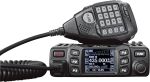 Overview The Anytone AT-778UV is a dual-band VHF/UHF mobile transceiver designed for amateur radio operators. It operates on the 136–174 MHz (VHF) and 400–490 MHz (UHF) bands, offering reliable two-way communication for both ham radio and commercial use (depending on firmware version). Power Output This transceiver provides…
 - 160 Meters Band160 meters band is known as the “Gentlemen’s band”. It is right next to the AM commercial band, known as medium wave. The 160-meter band is the radio frequencies between 1.8 and 2 MHz. For many decades it was the lowest radio frequency band allocated for use…
 VK3TBS