
160 meters band is known as the “Gentlemen’s band”. It is right next to the AM commercial band, known as medium wave.
The 160-meter band is the radio frequencies between 1.8 and 2 MHz. For many decades it was the lowest radio frequency band allocated for use by amateur radio, before the 630 and 2200 meter bands were introduced.
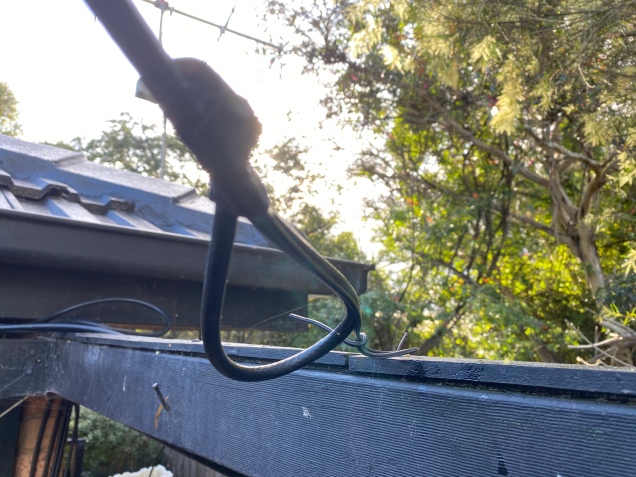
Amateur operators often refer to the 160 meters as the Top Band because it was for some time.
The 160-meter band is the oldest amateur band. Antennas are usually huge in size due to the wavelength at this frequency, making the higher bands a lot easier to get into given they have shorter wavelengths, requiring smaller antennas. Small antennas lead to less space required and less cost.
During the day propagation is limited to local contacts, but long distance contacts are possible at night, especially around sunrise and sunset.
How it started for me
The hobby started for me on Medium Wave, where I was shocked to receive long distance AM radio signals from interstate radio stations. The distances were huge, across countries if I was in Europe. As a kid I loved listening to interstate radio and sometimes phoned them to let them know. They were shocked I could hear them and often mentioned me by name soon after my phone call.
My Antenna’s
I’ve tried several antennas on this band. They include:
- A horizontal dipole antenna. This worked really well though it was huge. The problem I had with this antenna was most people in my area use vertical antennas so they couldn’t hear me well.
- A horizontal long wire antenna. This antenna was also huge, and also not vertical. So it worked well for close contacts, but not as good if I tried to contact a few suburbs away.
- An inverted L antenna. This worked the best as my local contacts used vertical antennas. I tried to get the vertical part as high and as long as I could before doing that horizontal part. Given the length of the wire needed, most of the wire was still horizontal, but at least the first but was vertical. Though the secret to this antenna was the ground wires. I started with two of them and ran one around the house about 2 feet from the ground. The other was around the fence. I will put at least two more out which should also help improve things.
Summary
Getting on 160m was a bit of a challenge due to the wavelength. I could be heard on SSB, but AM was the biggest challenge. With AM, my radios would put out less watts so I had to rely more on my antenna.
Below is a small video of my 160m antenna and how I made the inverted L. With amateur radio, there will always be improvements and I am sure this setup isn’t the best, but it is a start and I learned what I could from the other amateurs who had already mastered this band.
Below is an extended video which goes into a bit more detail of how and why I did what I did. I adjusted all my HF antennas to make this 160m antenna work while not upsetting any of the other bands.
As I mentioned in both videos, I am not a professional, but an amateur radio operator and as keen to learn as anyone else. If you have any thoughts on this, I would value them in the comments below. It will not only help me, but others reading this. So don’t forget to have a look at what others have to say.
160m Coffee Break Net
Each weekday in Melbourne, there is a 160m Coffee Break Net. This net is a bit of a challenge to get onto because you must:
- Have a full licence
- Have a vertical antenna (which is the biggest challenge for 160m)
- Have a radio that does AM, and puts a few watts out
As you can see above, I was able to make a 160m vertical antenna, so once I got this working, I was on the air! Many people try their dipole antenna, as did I at first, but on AM, it just doesn’t go far, and since everyone on the net is vertically polarised, they couldn’t hear me. I saw this as a challenge, and one worth trying.
Don’t forget to subscribe to this page, as I am sure I will have a version 2 of these antennas out one day!
If you enjoyed this, here are some other reads you may enjoy:
- Amateur TV
 Amateur Radio Television (ATV), often called “ham TV,” is a niche part of amateur television where licensed radio operators transmit live video and audio over radio…
 - Baofeng UV-5R Mini
 The Baofeng UV-5R Mini handheld radio is a popular and affordable dual-band amateur radio transceiver widely used by beginners and experienced ham radio operators. Designed as…
 - Lightning Storm & HF Radio
 HF radio and lightning storms are closely connected because lightning creates strong radio frequency interference that affects HF radio communication (3–30 MHz). High Frequency radio is…
 - OpenHamClock
 OpenHamClock is an open-source amateur radio dashboard designed as a modern successor to the original HamClock used by radio amateurs worldwide. It provides a real-time visual…
 - Radtel P8 PoC radio
 The Radtel P8 PoC radio is a Push-to-Talk over Cellular (PoC) device that looks like a traditional walkie-talkie but communicates using 4G/LTE mobile networks instead of…
 - What is an Antenna Coupler
 An antenna coupler (also called an antenna tuner or matching network) is a device used in radio systems to ensure impedance matching between a transmitter and…
 - Antennas
 Amateur radio operators use many different antenna types, each designed for specific bands, space limits, and operating goals. Here’s a clear overview of the most common…
 - Dipole Antenna for Portable Use – Make your own!
 A dipole antenna is a basic radio antenna made of two conductive elements fed at the center. It is typically a half-wavelength long and is widely…
 - Interference
 Interference in Amateur Radio refers to unwanted signals that disrupt radio communication. This interference can reduce signal clarity, make contacts difficult, or completely block communication between…
 - 6m and TV Channel 0
 Prior to 1989, it was illegal to operate between 50 MHz and 52 MHz in Australia. It was a real pain as that was where all…
 - Dipole Antennas Vs Long Wire Antennas
 I’ve heard a lot about dipole antennas, and I’ve heard a lot about long wire antennas also. I would say I’ve seen more dipoles than long…
 - Repeater-START
 Repeater-START is a multi-platform app designed for ham radio and radio-operator enthusiasts who need fast access to repeater information. The app provides a detailed repeater map…
 - The 6-Meter Amateur Radio Band
 What Is the 6m Band? The 6-meter band, spanning roughly 50–54 MHz, is a section of the VHF spectrum assigned to amateur radio operators. Its wavelength…
 - Anytone AT-778UV
 Overview The Anytone AT-778UV is a dual-band VHF/UHF mobile transceiver designed for amateur radio operators. It operates on the 136–174 MHz (VHF) and 400–490 MHz (UHF)…
 - 160 Meters Band160 meters band is known as the “Gentlemen’s band”. It is right next to the AM commercial band, known as medium wave. The 160-meter band is…
- What does this Antenna do?
 Have you ever had an antenna and forgotten what it is for? Maybe you have been given one and wasn’t told exactly what it was used…
 VK3TBS