
With digital radio changing so quickly, below is a bit of an update in regards to DMR radio networks.
DMR stands for Digital Mobile Radio and is an internation standard for digital radios since about 2005. It can contain voice and data. It was created as a standard so it remained low cost and could be used and made by any country.
DMR was designs with three tires where tire 3 is usually for trunked radio networks, however this didn’t start until about 2012. DMR is used between 30MHz and 1GHz
DMR uses 12.5 channel spacing but had two voice channels per frequency. This is done by having the two voice channels on two different time slots. In very basic terms, the radio will listen to 30ms of each time slot and only play the selected one. This means you will miss every second 30 millisecond, but as this is so short, you wouldn’t notice any of the voice missing unless the signal is weak.
Within each time slot, you can have talk groups. So, if you are not on the right frequency, time slot and talk group, you may not hear anything or be heard.

DMR Conventional
This can be either DMR Duplex (as in a base repeater) or DMR Simplex ( where uses talk direct to each other without a repeater). Radios can be lower in transmission power, and best suited to individuals or companies in outdoor recreation, small business, or other applications that do not require a lot of radio users and wide-area coverage. However a repeater can be used to widen the range of a DMR network.
DMR Capacity Plus
This is a single site network, is one with no central control channel. All radios on this system scan each frequency at that site continually. There is a maximum 6 frequencies / 12 channels (tier 1 and 2). This could be a Motorola Solutions Cap+ network, PA People Cap+ network and so on. There can be up to 1600 users per site.
Occasionally you will come across a 1 frequency Cap+ site with no second frequency. However single frequency DMR Capacity Plus systems are often preferred to standard conventional because of the following reasons:
- Capacity. You can easily have 4-6 talk groups on a single repeater.
- System wide All Call. You can easily contact every radio when doing a capacity plus all-call if their radio is on and in range.
- System wide Private Call. You can easily connect to your private call recipient if their radio is on and in range.
- System wide radio ping and disable. A radio ping can ping a users radio to see if it is on and in range.
- With Conventional DMR you must be on the right slot and correct talk group in order to do any of the above.
DMR Connect Plus
This is a multi-site Trunked linked by IP and has a centralised control channel. An example of this is the Orion Network commenced in Australia in 2010 with Connect Plus. Also they started the Orion CapMax Tier 3 in 2019, the longer term aim is to move all Connect Plus users over to CapMax Tier 3 and eventually shut down the Connect Plus network. This has already happened in Queensland.
An example is the Orion Con+ on DSD (Site 1-XX).
DMR Capacity Max Tier 3
This is a multi-site Trunked with a centralised control channel with advanced radio features (integrated data applications such as GPS services, text messaging, data services and dispatch console capability). Examples include the Orion CapMax on DSD (Site H2-XXX).
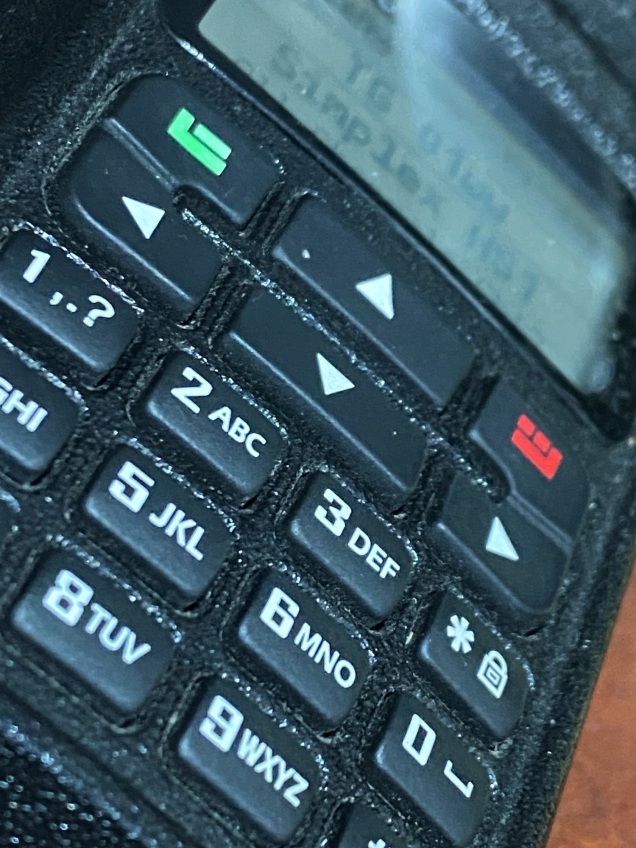
Please let me know what your thoughts about this are. Did it help you? Is there something else you want to know?
If you enjoyed this, below are some other posts you may enjoy also:
- OpenHamClock
 OpenHamClock is an open-source amateur radio dashboard designed as a modern successor to the original HamClock used by radio amateurs worldwide. It provides a real-time visual display of essential ham radio propagation data, world clocks,…
 - Olivia Digital Mode MFSK
 Yes, this popular girl name is actually an Amateur Radio term. Christian, DK8EW, put me onto Olivia after we chatted on VARA HF. I had heard about Olivia before, but he encouraged me to give…
 - FreeDV
 I came across something different, FreeDV. The name FreeDV insinuates it is free, but is it? What is it? And what does it do? They say it will be the new SSB of radio. They…
 - HamClock
 HamClock has always fascinated me, as it seems such an amazing program specifically set up for Amateur Radio. I have seen countless videos on it but the draw back was always needing to have a…
 - NanoVNA H4 USB Control to PC
 If you haven’t seen my previous blog on the NanoVNA Analyser, then I suggest you look at that first before reading this blog. This one will talk about how to connect your NanoVNA to your…
 - Flrig
 Flrig is a transceiver control program designed to be used either stand alone or as an adjunct to fldigi (see my review on this). The supported transceivers all have some degree of CAT. The flrig…
 - VARA – VARAC
 Ever heard this sound on HF / VHF / UHF? I know I have more and more recently. After a bit of research, someone told me it was VARAC. https://www.varac-hamradio.com/ As I understand it, the…
 - DXHeat.com
 DXHeat.com is a great website that can update you the current conditions on each band. The website has filtering of incoming DX Spots which can be displayed instantly using great graphical tools. From the main…
 - EchoLink CQ
 I’ve been using EchoLink well before smartphones where the only way I knew how to connect to a different station was via the radio. The internet wasn’t as extensive as it is now and you…
 - NetTime
 When using digital over the radio, it is particularly important you have the correct time. Even a second out will stop you from making contacts. I relied on Windows to update the time and got…
 - GD-77 Won’t connect to PC
 I have been using my Radioddity now for some years and love it. Though upgrading this to the OpenGD77 opened a whole new world and it gets better all the time. One issue I had…
 VK3TBS
Hi Ben
Ben I just want to congratulate you on the information you put out for us to read it is very informative and great reading I do get a lot of helpful info out of the readings.
Thanks Ben I do appreciate all your work you put into making all these stories together so as we can read them.
Ross (VK7WP)
LikeLiked by 1 person
Hey Ross,
So good to hear from you mate.
Really appreciate the encouragement mate. Yes it takes a while, but if it can help someone then it was all worthwhile.
Hope to talk to you again soon mate!
Thanks again.
Ben VK3TBS
LikeLike